■ Overview
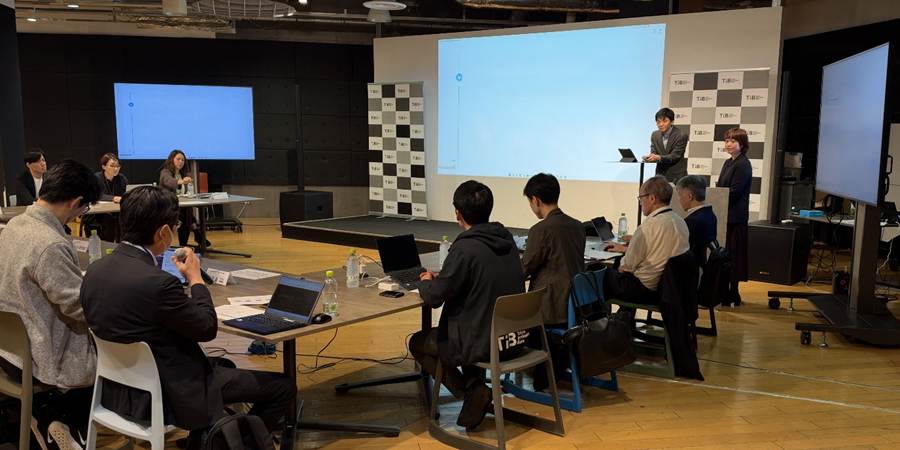
On Monday, October 26, 2026, we held a meeting of the “Globalization Promotion Working Group” at Tokyo Innovation Base (TIB).
This working group was organized with the aim of providing participants with practical tips for effective international outreach. Representatives from startups, local governments, and university technology transfer offices (TLOs) participated in the event, where they shared insights, specific methods, and case studies on international outreach and collaboration under the theme of “Promoting International Outreach from Japan and Collaboration with Overseas Organizations.” The main topics covered are as follows.
- Sharing insights from overseas investors (methods for identifying companies and gathering information; criteria for investment decisions; challenges in identifying Japanese companies; and factors necessary for effective communication with overseas audiences)
- An Introduction to and User Experience with the “Tokyo Global Database (Dealroom)” for Overseas Outreach and Information Gathering
- Introduction to "Case Studies of Support for Overseas Outreach in Collaboration with International Organizations" by Local Governments and University TLOs
- Introduction to “Next Steps for Overseas Outreach and Activities” by Experts in Overseas Outreach
■ Speakers
Foreign investors
Vertex Ventures Southeast Asia & India—Steven Vanada
Vertex Ventures Southeast Asia & India is a leading venture capital firm focused on partnering with early-stage startups with high growth potential in Southeast Asia and India. Leveraging its strong network and strategic expertise, the firm has invested in successful companies such as Grab, FirstCry, Kuku FM, Patsnap, and Nium, supporting innovation and business growth across a variety of sectors.
Global Database Company
Dealroom, Alon Meidan
Dealroom is a global ecosystem platform founded in Amsterdam in 2013 that provides data on startups, investors, fundraising, and innovation. It is used by companies, investors, and venture capital firms around the world, and collaborates with more than 100 government agencies to help visualize startup and innovation ecosystems in various regions.
local government
Ms. Tomoko Awai, Growth Strategy Promotion Division, International Strategy Headquarters for the Waterfront Area, Kawasaki City
University TLO
University of Tsukuba (National University Corporation), Tsukuba Clinical Medicine Research and Development Organization (T-CReDO), Mr. Takashi Kurama
Experts
Abeam Consulting, Inc. Intelligence & Research Institute: Mr. Kenichi Kajitani
After serving as a CTO at a major telecommunications carrier, a think tank, and a deep tech startup, he now specializes in startup finance and innovation policy, with a recent focus on AI governance. He is engaged in policy advocacy and implementation support that bridges government agencies, large corporations, financial institutions, and startups. His work includes conducting startup policy research for the Cabinet Office, establishing a research and development promotion framework for the Ministry of Land, Infrastructure, Transport and Tourism, and formulating a domestic AI business strategy for a major telecommunications carrier.
■ Talk Topics
1) Feedback from Overseas Investors: Sharing the Results of Interviews with Overseas Investors (from the Secretariat)
Based on the needs expressed by Tokyo Consortium members during preliminary interviews—such as the desire to expand their reach overseas and establish connections with international investors—the secretariat presented the results of interviews conducted with six overseas venture capital firms in Europe, the United States, and Asia.
While overseas investors primarily rely on referrals from startup management teams, domestic and international venture capital firms, and existing investors to identify potential investment opportunities, they also combine multiple channels—such as global databases—to search for companies to invest in.It was suggested that the first step toward attracting investment interest is to concisely communicate the company’s business details, track record, and commitment to global expansion in English, while also consistently sharing information through multiple channels—such as websites and global databases—to ensure the company catches the attention of overseas investors and is easily understood.Furthermore, it was noted that it is important to build and maintain relationships through ongoing communication—such as by utilizing events like Demo Days to increase points of contact with overseas investors, following up promptly after the initial meeting, and continuously sharing progress and results thereafter.Furthermore, it was noted that local governments and universities are expected to disseminate information on Japanese market and technology trends, as well as promising companies, in a format easily accessible to overseas investors. They are also expected to play a role in establishing ongoing points of contact and referral channels with overseas investors through collaboration with domestic and international venture capital firms and accelerators.
2) Feedback from Overseas Investors (from Vertex)
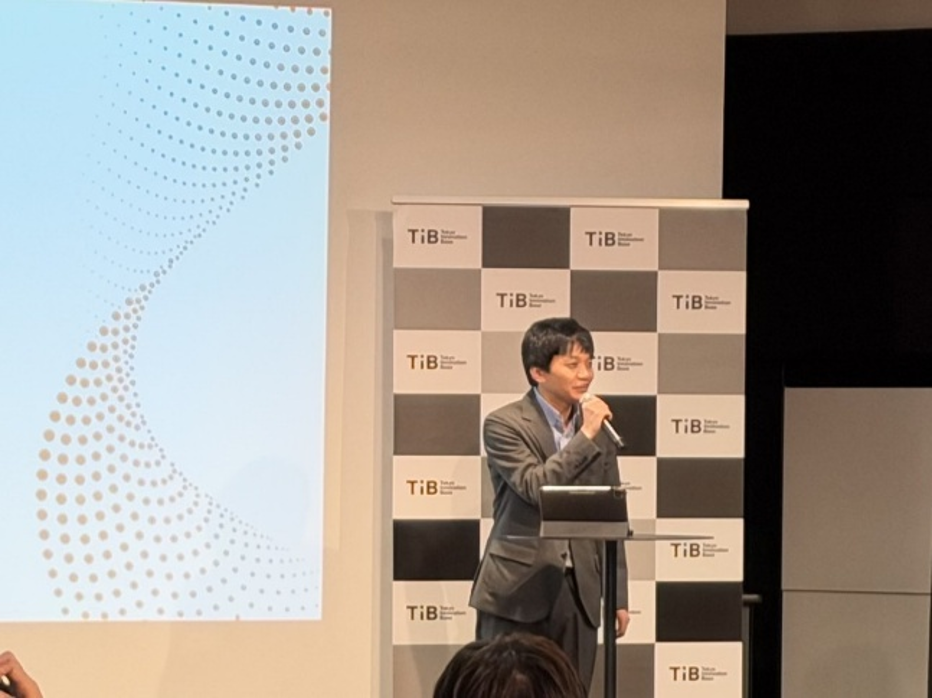
Steven Vanada of Vertex Ventures Southeast Asia & India shared insights on investment criteria, deal sourcing, and due diligence (detailed investigation for investment decisions) in Japan. Drawing on the example of matsuri technologies Co., Ltd.—the firm’s first investment in Japan—he discussed the channels used for sourcing startups, including introductions from venture capitalists and databases.He also emphasized the importance not only of raising international awareness but also of fostering the “INT ENT” among foreign investors—that is, their willingness to devote time to due diligence and seriously consider making an investment.He further explained that to encourage investment from overseas investors, it is crucial not only to demonstrate alignment with each investor’s target regions, themes, and stages but also to convey the “market context”—including Japan’s unique market environment, institutional framework, and growth drivers—which cannot be fully captured by numerical data alone. He noted that this information deepens overseas investors’ understanding and encourages them to actively consider making investments.
3) Utilizing the Global Database; Lecture on How to Use the Tokyo Global Database
The Tokyo Metropolitan Government, in partnership with Dealroom—a provider of global startup and investment data—has launched the “Tokyo Global Database” to visualize the startup ecosystem in the Tokyo metropolitan area.
Alon Meidan of Dealroom highlighted the value of using the global database for both gathering and sharing information—not only by collecting data on overseas startups and investors but also by posting and updating one’s own information to increase visibility abroad.
In addition, the updated Tokyo Global Database was introduced, and participants learned specific ways to use it while gaining hands-on experience.
(Reference) Tokyo Global Database
4) Examples of Support Provided by Local Governments and University Technology Licensing Organizations (TLOs) to Help Startups Promote Themselves Overseas
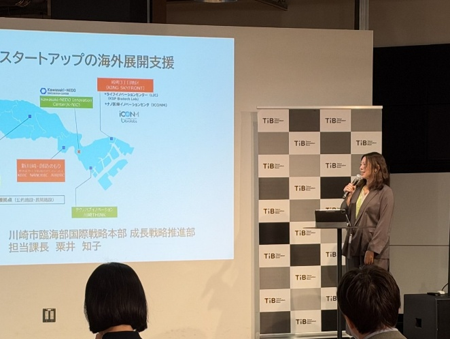
Mr. Aoi from Kawasaki City presented examples of support initiatives that combine the acquisition of knowledge necessary for overseas expansion with the building of international networks, tailored to the growth stage and sector of each startup. Specifically, he highlighted the “Biotech Bootcamp” in the drug discovery sector, which offers an entrepreneurship education program leveraging the expertise of SkyDeck—a university-based accelerator at UC Berkeley—and BioLabs, a U.S.-based life sciences organization.He also shared that the “Kawasaki Global Accelerator” program, focused on the deep tech sector, combines intensive courses led by overseas venture capital firms with networking opportunities in Silicon Valley to provide support aimed at securing overseas funding and expanding business operations abroad.
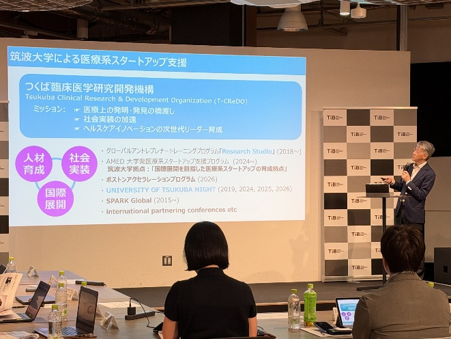
Mr. Kurama of the University of Tsukuba’s Tsukuba Clinical Medicine Research and Development Organization (T-CReDO) presented initiatives that leverage networks with overseas universities and support organizations to facilitate the societal implementation of medical innovations and the international expansion of healthcare startups.Specifically, he explained that through the “Research Studio” entrepreneurship training program, selected teams undergo training at UC San Diego to acquire the knowledge and skills necessary to operate as startups in the United States, while also building relationships with local stakeholders. He also highlighted that the “UNIVERSITY OF TSUKUBA NIGHT” event, hosted in Boston, has yielded tangible results, including partnerships with pharmaceutical companies and academic institutions, the establishment of local offices, talent recruitment, and the development of relationships with clinical development experts.
5) What Will Be the Next Step in Overseas Outreach and Activities?
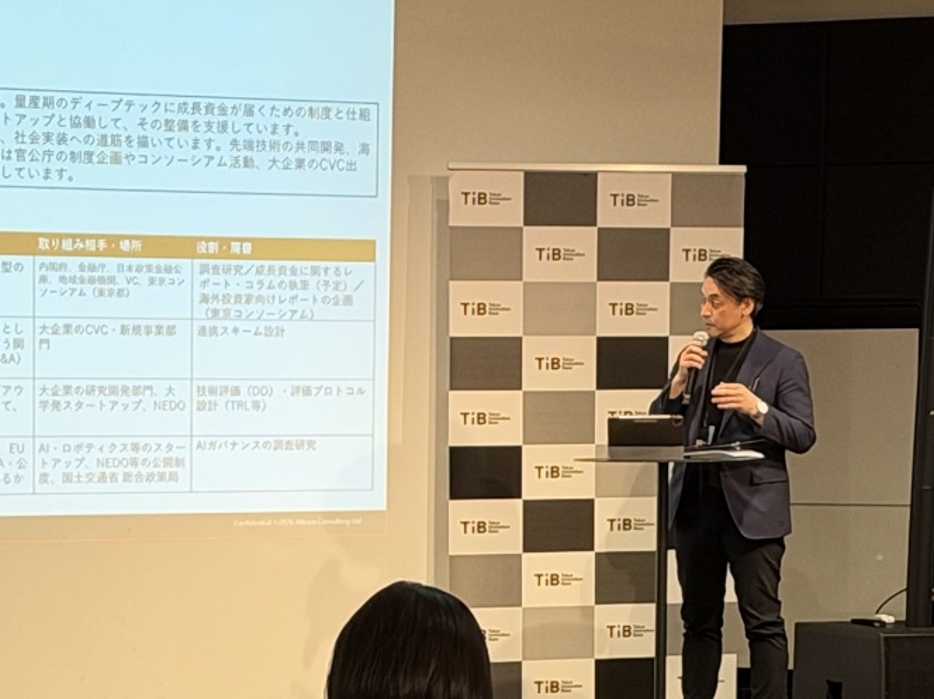
Mr. Kajitani of Abeam Consulting Co., Ltd. identified three key points for future overseas outreach: “getting noticed by overseas investors,” “understanding what overseas investors are interested in,” and “creating channels for introductions.”First, he explained that to ensure overseas investors discover your company, it is effective to list your company’s fundraising status and business information in global databases and update them regularly. Additionally, he noted that as the deal process becomes increasingly automated through AI, it is also important to present your company’s information in a format that is easily readable by AI.
Furthermore, as investors increasingly specialize in specific themes, it was emphasized that it is important to use databases and other tools to understand investment track records and key focus areas, identify points of overlap with one’s own business and technology, and then approach these investors accordingly. In addition, while the use of AI for prospecting and screening is becoming more widespread, it was explained that, when making final investment decisions, it remains crucial to assess compatibility and suitability through in-person meetings and to build ongoing relationships.
■ What Participants Are Saying
In the participant survey (target respondents: participating municipalities, university TLOs, and startups), many respondents expressed a desire to further promote initiatives and support related to international outreach and international collaboration through this working group, as well as a desire to utilize the global database. Additionally, some respondents noted that the specific perspectives gained directly from overseas investors and the insights shared by a diverse range of stakeholders were helpful in defining the direction of future international outreach efforts.
■ Summary
This working group provided an opportunity to share insights—drawn from diverse perspectives, including those of international investors, global database companies, local governments, university technology transfer offices, and experts—that can serve as a reference for taking the first steps in international outreach starting tomorrow and for planning future international expansion.
The Tokyo Consortium will continue to leverage its network of diverse participants to identify the needs of its members and work to provide information and create opportunities for promoting Tokyo internationally and fostering international collaboration.
Share the article