■Overview
On Thursday, July 16, 2026, we held a meeting of the “Tokyo Metropolitan Area Local Government Collaboration Working Group” at Shibusawa MIX.
With “public procurement” as its theme, this working group organized a session for speakers to share their insights and for local governments to exchange views, with the aim of expanding public procurement in the future.
- Sharing Perspectives on the “Significance of Public Procurement” from the Viewpoints of Investors and Startups
- "Introduction to Innovative Public Procurement Examples from Local Governments"
- Exchange of views among local governments on “Challenges and Solutions in Promoting Public Procurement” and “Methods for Defining Administrative Needs”
■Speakers
VC
First Light Capital, Inc. — Ms. Riho Majima
A venture capital firm that invests in early-stage startups in the fields of industrial AI/DX, business AI/DX, physical AI, life design, regional infrastructure, and crisis management, with “Creating New Industries in a Society Facing Population Decline” as its investment theme. The firm has a track record of supporting the expansion of its portfolio startups into local governments, including Monogusa, Inc. (with a track record of implementation in Yokohama) and Monochrome, Inc. (with a track record of implementation in Yokosuka).
Startup
MamaWell Co., Ltd. — Marika Seki
The company provides a health management service for expectant mothers that combines health data with “supportive counseling and personalized care” from dedicated midwives. Founded in 2022, the company conducted a pilot program in Tsukuba City and was subsequently selected for pilot projects by the Ministry of Economy, Trade and Industry (METI) and the Ministry of Health, Labor and Welfare (MHLW), as well as by the Tokyo Metropolitan Government and Shibuya Ward. It was later officially adopted for Shinagawa Ward’s “Online My Midwife” program.
Local Government
Mr. Naoki Ito, Ota Ward Department of Industry and Economy
Mr. Shuhei Sawayama, Ibaraki Prefecture Department of Industrial Strategy
Hiroshima Prefecture Tokyo Office: Mr. Ikuhito Shigemura

■Talk Topics
1) The Significance of Public Procurement (From an Investor’s Perspective)
From an investor’s perspective, Mr. Majima shared his insights on the value of a track record in public procurement.It was noted that a local government’s track record of adopting a product serves as a measure of credibility when approaching other local governments or the private sector, and acts as proof of the product’s usefulness and a key revenue driver. It was also reported that this track record functions as supporting material during fundraising and can help accelerate the next round of funding. On the other hand, concerns were raised regarding the lengthy implementation process, which can significantly impact business plans; it was also mentioned that venture capitalists often view such plans as conservative.
2) The Significance of Public Procurement (From a Startup Perspective)
From a startup perspective, Mr. Seki shared his insights on the value provided by public procurement. Drawing on the MamaWell case study, he reported three key outcomes of the pilot project: “direct access to funding,” “smooth horizontal expansion to other municipalities based on successful implementation in multiple municipalities,” and “certification as an associate member of the Midwives Association.”Additionally, regarding the support startups expect from local governments, the following points were mentioned: “Connecting startups not only with the startup support division but also with officials in the relevant departments at an early stage to facilitate collaboration and dialogue,” and “Sharing in advance the points that are likely to be raised by the finance department or other relevant bodies when securing a budget for the transition to a paid service model.”
3) Presentation of cutting-edge public procurement case studies and exchange of views among local governments
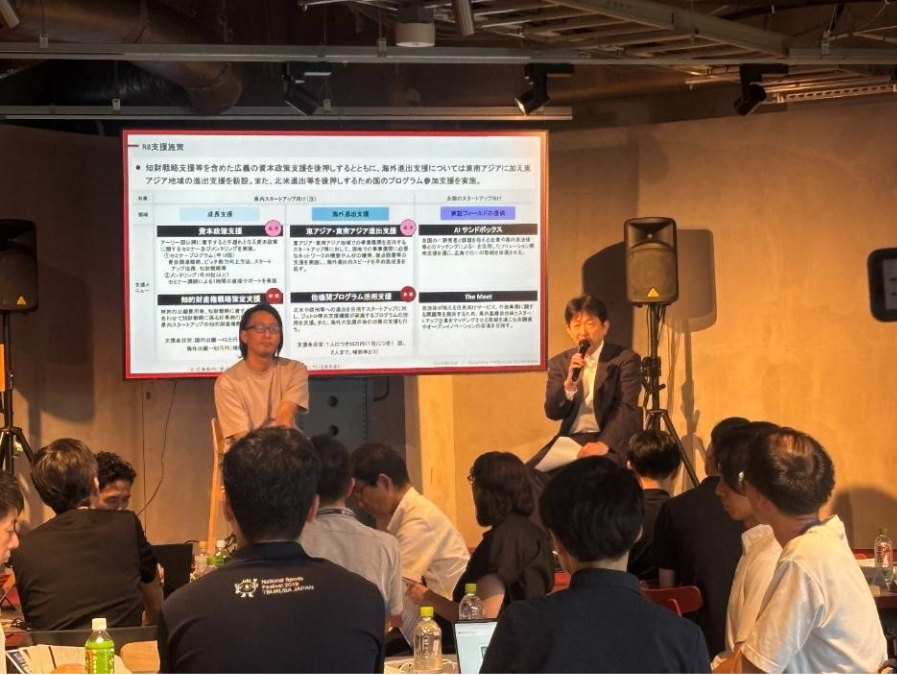
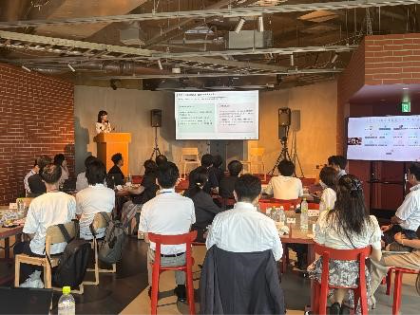
Reports were presented from Ota Ward, Ibaraki Prefecture, and Hiroshima Prefecture on innovative approaches to both the design and implementation of public procurement systems.
Ota Ward reported a case in which it facilitated consensus-building among relevant officials within the ward office by designing a process-based system that led to the adoption of a “discretionary contract for policy purposes” (see glossary) —a type of public procurement contract—following a “two-year pilot program to verify effectiveness.” The ward also shared how strategic initiatives, such as implementing a program to attract outstanding companies to the ward and promote the adoption of new technologies there, proved helpful during internal coordination efforts.
Ibaraki Prefecture reported that it had established a program specifically tailored for venture companies, based on the existing trial program for small and medium-sized enterprises, and that it had certified 12 companies and 13 products to date, procuring all of them. It was also noted that, through collaboration with the Tsukuba Research Support Center, the prefecture is efficiently gathering information on startups.
Hiroshima Prefecture identified the following challenges regarding discretionary contracts for policy purposes (see glossary): a review of the direction of startup support following a change in the head of the local government, and insufficient awareness of this system within the prefectural government. It was noted that “prefecture-wide promotion involving top leadership” and “continuously promoting the system and certified products at internal meetings and other forums” are crucial for revitalizing this system.
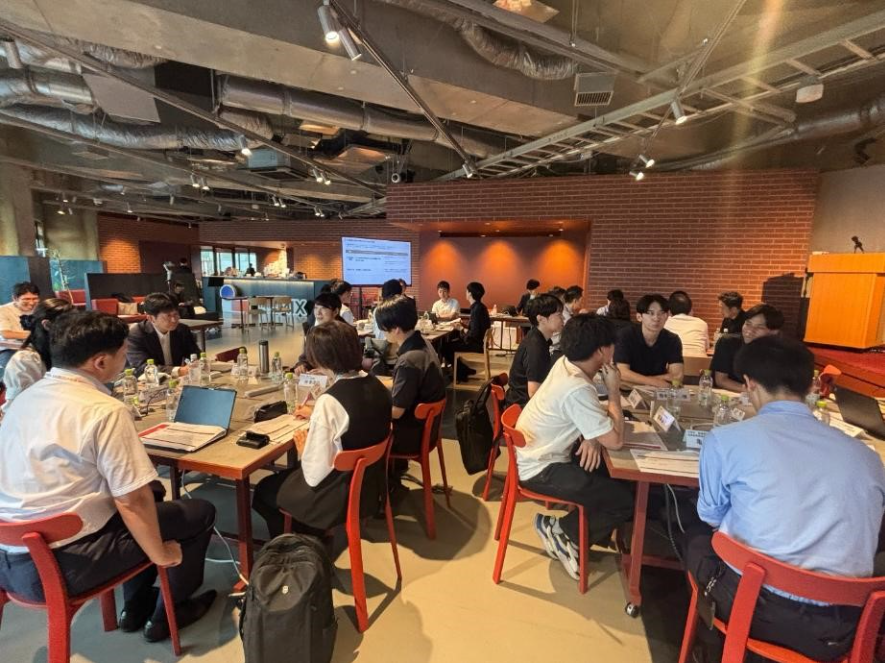
Following the presentation of public procurement case studies, participants—both in person and online—split into groups to discuss (1) barriers to promoting public procurement and potential solutions, and (2) methods for clarifying government needs, and then shared their findings with the entire group.
(Reference) Nationwide Collaboration by the First Customer Alliance (FCA)
The Tokyo Metropolitan Government introduced the First Customer Alliance (FCA) as a framework for local governments nationwide to share information on startups (specifically, certification information regarding discretionary contracts for policy purposes).Benefits of participation cited included “procurement of products certified by other municipalities through discretionary contracts,” “PR opportunities for certified companies in other municipalities,” and “procedural support from the secretariat and knowledge sharing at events.” This framework is expected to accelerate the public procurement of startups’ products and services on a nationwide scale.
(Reference Website) Tokyo First Customer Alliance | Tokyo First Customer Alliance
■Survey
In the survey (respondents: participating municipalities), many respondents reported that the survey provided them with useful information for promoting public procurement and that they were highly satisfied with it.Reasons cited for finding the event beneficial included the ability to visualize how the information could be applied within their own organizations through the sharing of case studies and the exchange of opinions among municipalities, as well as the fact that preliminary consultations helped clarify key issues, leading to smoother discussions. This suggests that the event served as a forum for gaining a multifaceted understanding of the value of public procurement from the perspectives of each participating municipality.
■Summary
This working group provided participating municipalities with an opportunity to understand the significance of public procurement from the perspectives of both investors and startups, and to gain practical insights by sharing case studies from other municipalities. In addition, the exchange of views among municipalities helped strengthen horizontal ties between them. Going forward, we will continue to use this working group to deepen support for startups—including through public procurement—and to strengthen collaboration among municipalities.
■Glossary
[Discretionary Contracts for Policy Purposes]
A “discretionary contract for policy purposes” is one type of contract method used by local governments when conducting public procurement.Typically, public procurement is conducted through open competitive bidding to ensure competitiveness and transparency; however, products and services from companies certified under Article 167-2, Paragraph 1, Item 4 of the Ordinance for Enforcement of the Local Autonomy Act may be procured through discretionary contracts (direct contracts with specific vendors) without competitive bidding. This system allows certified companies to secure procurement opportunities from local governments even if they have limited market track records, providing startups with a crucial pathway to acquiring their first customers.
Share the article