1. Overview
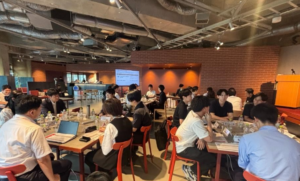
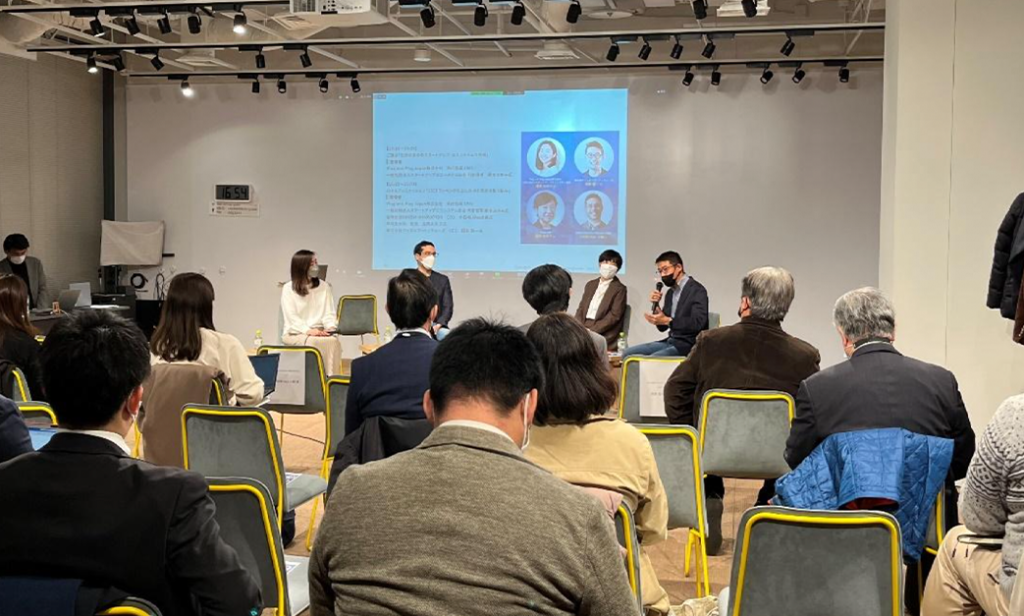
The Tokyo Consortium held an event on Tuesday, December 13, 2022, titled "Tokyo's Startup Ecosystem from a Global Perspective: Exploring the Future Potential of Tokyo's Ecosystem with Leading Experts." The event discussed the state of the startup ecosystem in the Tokyo metropolitan area. We invited experts who participated as committee members in the August Overall Promotion Working Group (Indicator Review) to join a panel discussion.
2. Event Implementation Overview
(1) Current State of Tokyo's Ecosystem Based on GSER Analysis Results
Startup Genome annually publishes its Global Startup Ecosystem Rankings (GSER) for cities worldwide. In the 2022 rankings, Tokyo placed 12th among global cities.
The GSER evaluates the maturity of six ecosystem factors (Performance, Funding, Talent & Experience, Market Reach, Community & Infrastructure, and Knowledge) across global cities. Analysis of the breakdown shows Tokyo scored highly in resource-related factors like "Funding," "Talent & Experience," and "Knowledge," but scored low in the "Community & Infrastructure" factor, which relates to network formation.The Tokyo Consortium must strive to establish Tokyo as a global hub city for startup ecosystems by providing venues for entrepreneur networking and enhancing information dissemination overseas.
(2) Mr. Fujimoto's Lecture: "Characteristics of Startup Ecosystems in Cities Around the World"
A startup ecosystem is formed when people and organizations in a given location interact as a system to generate new startup companies. Currently, various cities around the world are advancing the formation of hubs, providing opportunities for players to gather, and building platforms in collaboration with countries, cities, universities, and other entities. This is driving the formation of new types of ecosystems that go beyond the traditional Silicon Valley model.
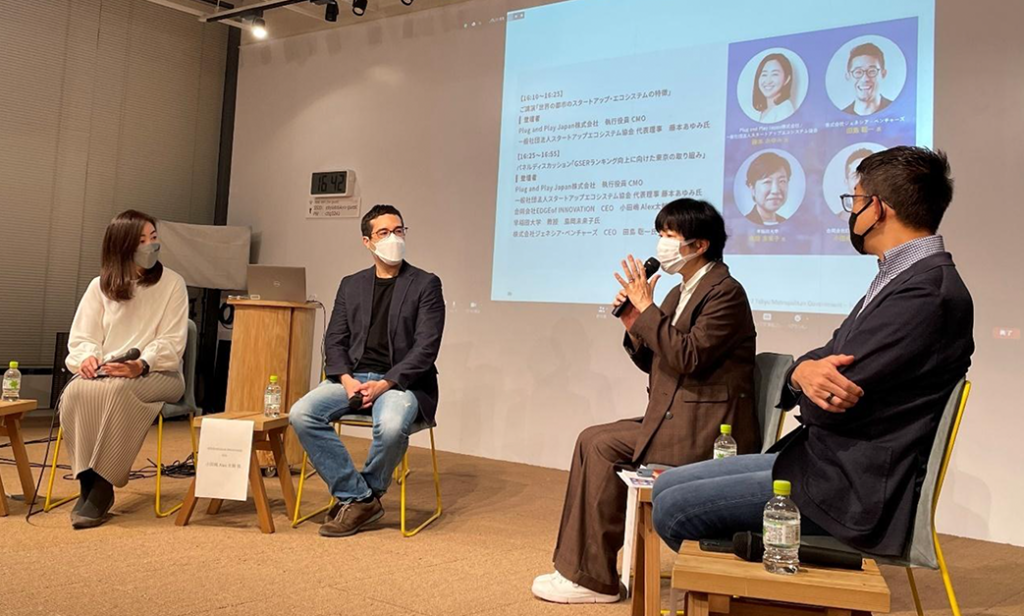
(3) Panel Discussion: "Tokyo's Initiatives to Improve Its GSER Ranking"
Mr. Fujimoto moderated a discussion on Tokyo's initiatives to improve its GSER ranking, featuring Mr. Tajima representing investors, Mr. Shimaoka representing academia, and Mr. Odashima representing startup support.
・ GSERランキングの必要性について
A common view was expressed that the GSER ranking is not an end in itself, but merely a means to an end. Furthermore, it was suggested that the GSER ranking could be utilized as a shared vision for entrepreneurs and serve as one indicator for understanding Tokyo's position globally in terms of startup ecosystem maturity.
・ 今後東京圏がスタートアップ・エコシステムの形成に向けて着手していくべきこと
We have received your opinions on what steps the Tokyo metropolitan area should take going forward to foster the formation of a startup ecosystem.
GSER analysis results indicate that the scarcity of startup funding and large-scale exits is a challenge for the Tokyo metropolitan area. Contributing factors include limited overseas funding and a lack of M&A activity due to restricted matching opportunities with large corporations. The scarcity of overseas funding stems from the Tokyo ecosystem and Japanese startups' initiatives not being sufficiently communicated internationally.Japanese startups are not widely recognized by overseas investors, making it difficult to secure funding from abroad. Therefore, Japanese startups need to broaden their perspective with the goal of competing globally. Furthermore, from an information dissemination standpoint, significant disadvantages in language and environment make it difficult for overseas startups to enter the Tokyo metropolitan area.As the Tokyo Consortium, we must actively promote the appeal of the Tokyo metropolitan ecosystem in English and proactively attract overseas startups.Regarding collaboration with large corporations, there is a recent trend where companies establish corporate venture capital (CVC) as part of their strategic direction to acquire startups. However, in many cases, the CVC itself has become the primary objective. Therefore, rather than treating CVC as an end in itself, it is crucial for management to take the lead in actively pursuing collaborations with startups as a means to bridge the gap between the company's desired direction and its current reality.
Furthermore, it is essential for the startup ecosystem to increase the pool of high-quality startups. To cultivate more outstanding entrepreneurs, discussions involving not only universities but also large corporations and startups are necessary.Universities are expanding entrepreneurship education aimed at cultivating startup talent. They are collaborating with private companies to co-develop and co-deliver entrepreneurship courses, and are focusing on creating touchpoints between students and entrepreneurs, such as providing opportunities to pitch to overseas entrepreneurs. These opportunities can positively influence fellow students and professors, changing their mindset, and are expected to broaden the base of startups.Furthermore, fostering entrepreneurship also requires changes within the structures of large corporations. Companies need to reform their employee development systems, which often involve training employees from scratch, and shift the management's reluctance toward failure. It is hoped that the structures and corporate cultures of large corporations will evolve accordingly.
Event Overview
| Date and Time | Tuesday, December 13, 4:00 PM to 6:00 PM |
|---|---|
| Location | City Lab Tokyo |
| Speaker | Plug and Play Japan Inc. Executive Officer, CMO Startup Ecosystem Association Representative Director Ayumi Fujimoto EDGEof INNOVATION LLC CEO Alex Taisuke Odashima Waseda University Professor Mikiko Shimaoka Genesia Ventures Inc. CEO Soichi Tajima |
Share the article