Implementation Overview
As part of this initiative, we held a “Municipal Collaboration Reverse Pitch” event with the aim of fostering collaboration between local governments in Tokyo and private-sector companies.
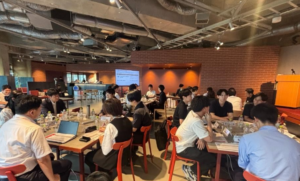
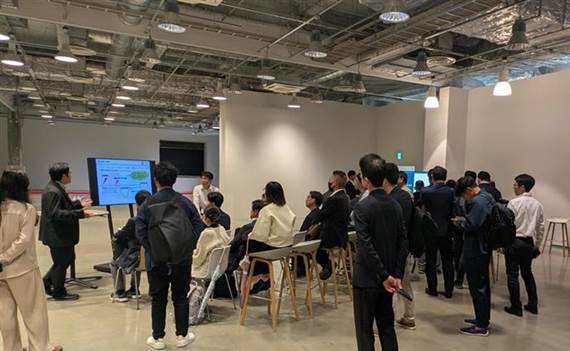
For this event, we set up individual booths for each municipality, allowing them to directly communicate their challenges and needs to attendees while engaging in one-on-one discussions. By designing the event so that attendees could visit specific booths based on their areas of interest to engage in detailed consultations and exchange ideas, we created a space that facilitated relationship-building and explored opportunities for future collaboration.
This initiative was not launched as a one-off event, but rather was developed based on discussions held during the Local Government Collaboration Working Group (WG) convened in the summer of 2025. During the WG meetings, participants exchanged views on how to create a sustainable framework for the Tokyo Consortium of Metropolitan Governments, focusing on opportunities to connect with promising startups—opportunities that can only arise through inter-municipal collaboration—and on the nature of platforms that foster collaborative partnerships.
As part of this effort, and as our first concrete step toward actually implementing the project—from theme design through to operation—we have formulated guidelines for a reverse-pitch format and have been making preparations while taking into account the feedback from participating municipalities.
Based on the results of preliminary surveys and interviews, the working group confirmed that while each municipality has different areas of focus and challenges, there is a need to establish themes that multiple municipalities can easily tackle together.Furthermore, after extensive discussions focused on creating themes that would allow more local governments and startups to participate—rather than highly specialized topics—and leverage the benefits of regional collaboration, we finalized the core themes for the pitch event and moved forward with its implementation. These preliminary discussions helped establish a clear direction for the content presented on the day of the event and provided local governments with an opportunity to organize their own challenges while communicating them to an external audience.
Program Schedule
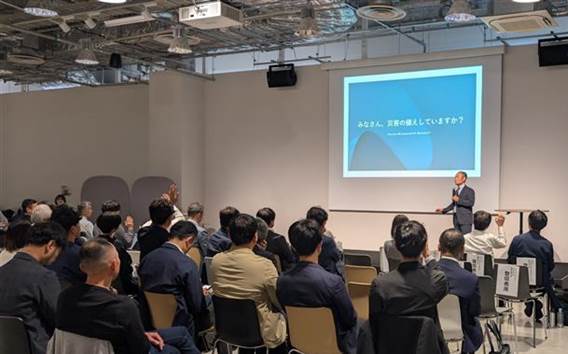
On the day of the event, the program proceeded as follows.
- Greetings and Introduction
- Local Government Reverse Pitch
- Ibaraki Prefecture: "Challenges Faced by Regional Governments"
- Utsunomiya City Water and Sewerage Bureau: "Optimizing Startup Technologies in Regional Cities: A Co-creation Demonstration Project Using Utsunomiya City as a Test Bed"
- Shibuya Ward: "Managing Emergency Supplies and Boosting Self-Reliance"
- Individual Q&A Sessions at Each Local Government Booth
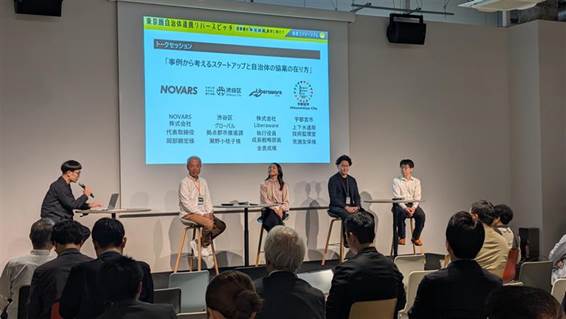
- Panel Discussion
- Topic: "How to Conduct Demonstration Projects in Local Governments"
- Photo Session and Networking
In particular, the one-on-one discussions at the local government booths served as a venue where attendees could hear specific details tailored to their areas of interest, leading to deeper communication than could be achieved during the plenary sessions alone. For the local governments, this format allowed them to provide explanations while directly gauging participants’ reactions, making it an opportunity to clearly see the impact of their efforts in raising awareness of their challenges.
Achievements
This Reverse Pitch event not only helped foster connections between local governments and participants but also yielded results that will lead to concrete next steps.
- ・Among the participants who exchanged business cards at the event, established relationships leading to ongoing communication with two or three companies
- ・Even for local governments participating in this type of collaborative event for the first time, it provided an opportunity to build networks and gain expertise
- ・By directly sharing the challenges faced by local governments, we were able to gauge the potential for concrete partnerships and collaborative efforts
Furthermore, one of the key achievements of this initiative was that, by designing the event based on discussions within the working group, it was positioned not merely as a platform for disseminating information, but as a practical opportunity to test the mechanisms for inter-municipal collaboration in action. For participating municipalities, the themes and approaches adopted by other municipalities served as valuable references, facilitating the sharing of insights that will inform future developments.
What went well
- ・The booth format allowed for one-on-one conversations tailored to participants' interests
- ・We were able to experiment with ways to present this as a regional collaboration while taking into account the different challenges and themes faced by each local government
- ・Through networking, we were able to establish connections that will lead to the development of lasting relationships
- ・For the local government as well, it served as an opportunity to identify challenges and needs and communicate them to external stakeholders
Looking Ahead
At the same time, to ensure these efforts yield even greater results in the future, it is essential to further strengthen the organization of information during the preparatory phase and the design of post-event follow-up processes. The working group has also identified key issues such as identifying challenges within local governments, engaging relevant departments, and designing outcomes for pilot projects and collaborations; these points are expected to remain critical considerations for the continued implementation of these initiatives moving forward.
Through this initiative, we have confirmed that reverse pitching—a collaborative effort between local governments—is an effective method for creating new points of contact between local governments and startups, thereby expanding opportunities for collaboration. Moving forward, we aim to accelerate co-creation across the entire Tokyo metropolitan area by continuing to share insights among local governments and developing a sustainable framework for these initiatives.
Share the article