1. Overview
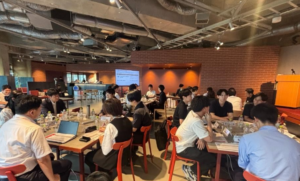
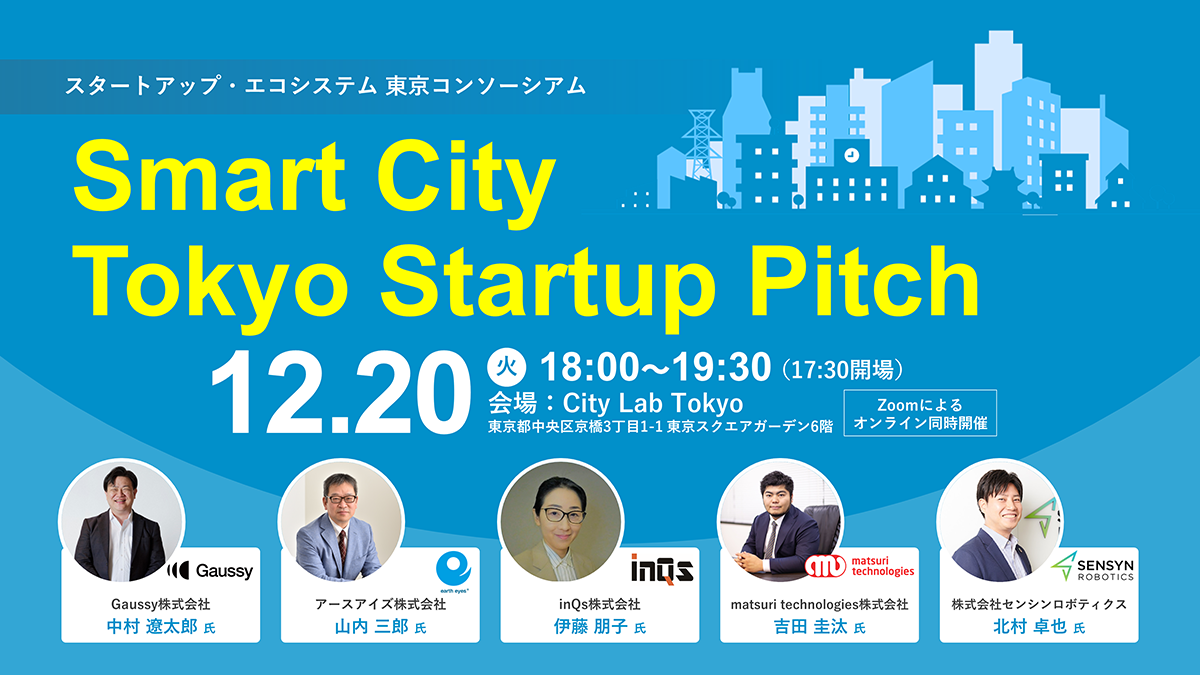
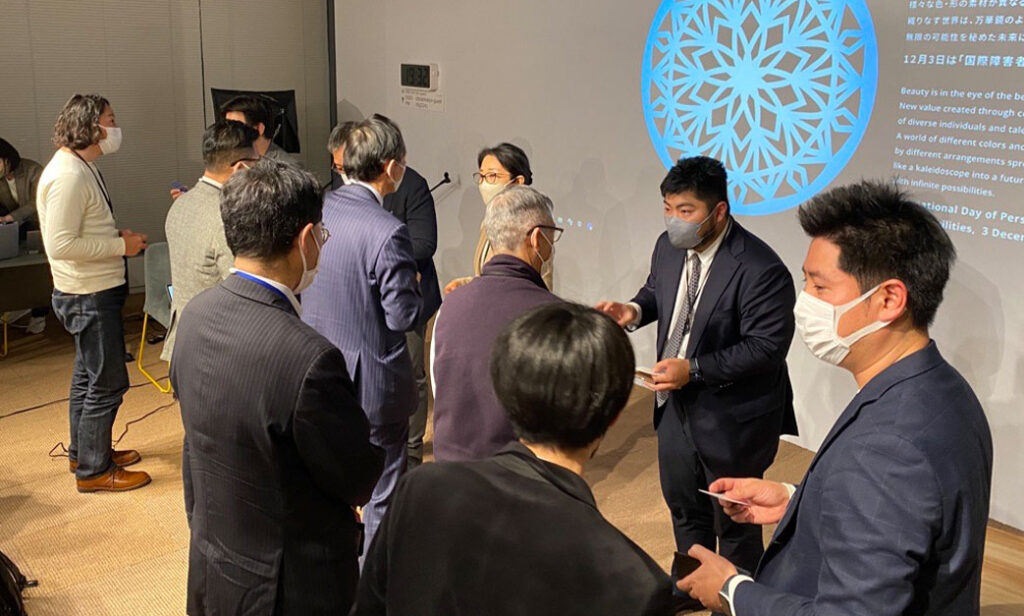
The Tokyo Consortium hosted the "Smart City Tokyo Startup Pitch" on December 20, 2022, for startups and various supporting players (corporations, VCs, universities, local governments, etc.).On the day, executives from five startups based and active in Tokyo took the stage to present on the challenges facing cities and society, along with their unique, concrete solutions. Through lively Q&A sessions with both in-person and online attendees, the event fostered ideas for realizing "Smart Tokyo."
2. Event Implementation Overview
Positioning of the "Smart City Tokyo Startup Pitch" within the Tokyo Consortium
The Tokyo Consortium's goal is to "establish Tokyo as a global hub city for the startup ecosystem." Tokyo boasts a concentration of top-tier domestic universities (30% of Japan's total) and Fortune Global 500 companies (ranking second globally), possessing abundant resources to nurture startups and high potential.
The Tokyo Consortium is developing and promoting two ecosystems to more effectively integrate these resources: ① a deep ecosystem combining "points" and "depth," and ② a broad ecosystem covering "areas." The first fosters innovation by connecting leading players with deep expertise in their respective fields (such as startups, universities, and large corporations).
The Tokyo Consortium has selected and supports five startups expected to grow into unicorn-level companies with an eye toward overseas expansion as part of its "Deep Ecosystem" support program.At the "Smart City Tokyo Startup Pitch," startups playing a key role in the global ecosystem presented their insights on challenges and proposed concrete solutions. Furthermore, as part of the "network" ecosystem, we support interaction among Tokyo Consortium members (414 companies as of the end of September 2022), including large corporations and startups, and foster mutual collaboration with national and metropolitan Tokyo area cities, universities, and others, establishing a broad platform.
What is a "Smart City"?
The Japanese government's Smart City initiative aims to "solve urban challenges and create new value in an economically sustainable manner through new technologies like AI and IoT, as well as data integration." These efforts seek to realize Society 5.0, ultimately achieving the well-being (living happily) of individuals and people worldwide.Society 5.0 is a concept proposed by the Japanese government, envisioning "a society where the physical and virtual spaces are integrated, enabling the resolution of various social issues and economic development." In practice, information from the physical space is aggregated into the virtual space via sensors and IoT devices. This big data is then analyzed using AI and similar technologies, and the insights are fed back into the physical space.
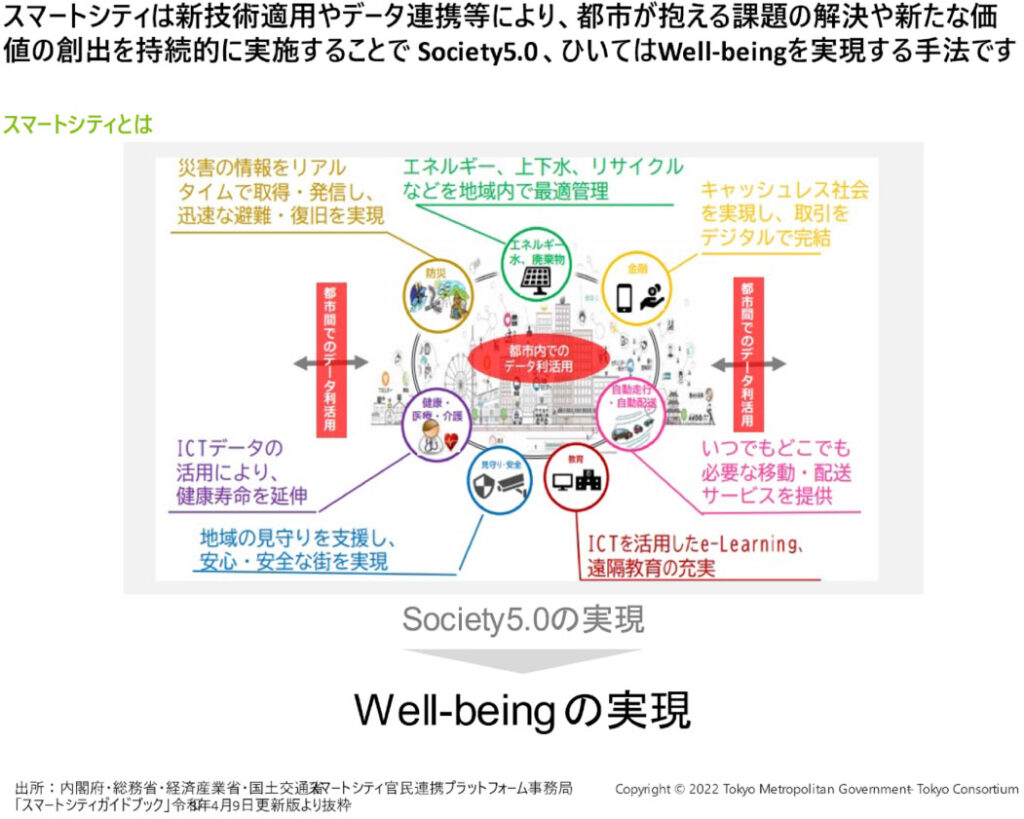
Tokyo's "Smart Tokyo" initiative aims to enhance service quality and residents' quality of life through digital technology. Key initiatives include "Connected Tokyo," "Urban DX," and "Administrative DX." This involves creating a "digital highway" that connects the entire city via the internet, promoting the digitization of public facilities and resident services, and advancing cutting-edge projects such as the social implementation of disaster prevention, healthcare, education, and autonomous driving.
The functions of a smart city can be organized into seven categories. Specifically, these are: ① Education and Research ② Business Creation ③ Transportation and Mobility ④ Health and Medical Care ⑤ Safety and Security ⑥ Structural Change ⑦ Resource Circulation and Biodiversity.
These functions share common ground between the EU and Japan, albeit with different approaches. The five companies that took the stage each handle businesses related to logistics (③), tourism (②), disaster prevention and crime prevention (⑤), decarbonization and energy conservation (⑥), and housing and construction (⑥), aiming to solve social issues with their unique perspectives and technologies.
Introducing Five Startups Supporting Smart Cities
Gaussy
Gaussy (Minato-ku, Tokyo) aims for flexible logistics by offering the warehouse robot subscription service "RoboWare" and the warehouse sharing service "WareX." Logistics experiences significant seasonal fluctuations, and Gaussy uses IT to socially optimize the fixed assets and resources owned by individual companies.
アースアイズ
Earth Eyes (Minato-ku, Tokyo) offers services such as "store management," "shoplifting prevention," and "care monitoring" using its "AI cameras" and proprietary "3D spatial awareness technology." This surveillance solution enables information processing akin to human perception through camera data and spatial awareness technology, detecting and identifying dangerous events while proactively issuing alerts and notifications.
inQs
inQs (Minato-ku, Tokyo) is a startup developing "transparent power-generating glass" and "low-light power-generating devices" using environmentally friendly special power-generating materials.With a transparency rate exceeding 70%, the transparent power-generating glass can be installed as interior windows in existing buildings, supplying electricity for common areas and providing emergency power during disasters. Furthermore, the low-light power generation device can generate electricity even under fluorescent lighting, eliminating the need for battery replacement and wiring hassles. It can power supermarket price displays and explosion-proof IoT devices (sensors and communication equipment).
matsuri technologies
Matsuri Technologies (Shinjuku-ku, Tokyo) is developing a technology-driven new real estate model that provides customers with vacant homes as short-term rentals, residences, and lodging facilities, all managed online. "StayX" is software enabling the rental of general residential properties (short-term leases of about two years) for lodging, temporary housing, and similar purposes.Amid the pandemic, as demand for short-term inbound stays like vacation rentals disappeared, the company shifted focus to meeting monthly rental needs (business trips, training, temporary returns, temporary housing). This pivot has driven annual growth of 70%.
センシンロボティクス
SENSIN Robotics (Shinagawa-ku, Tokyo) addresses societal challenges such as a shrinking workforce due to declining birthrates and an aging population, along with aging infrastructure. By skillfully utilizing cutting-edge technologies like aerial and underwater drones, small robots, and smart sensors, the company provides services that efficiently, safely, and swiftly inspect vast infrastructure such as solar power facilities, power grids, and oil tanks.Their core lies in a software platform that masterfully utilizes the aforementioned hardware. This platform modularizes functionalities such as data management, AI analysis, 3D modeling, and real-time video streaming, enabling one-click operation of these features through application development.
If you are interested, we would appreciate it if you could view the details on each company's website.
Event Overview
| Date and Time | Tuesday, December 20, 6:00 PM to 7:30 PM |
|---|---|
| Location | City Lab Tokyo |
| Speaker | Gaussy Inc. CEO Ryotaro Nakamura Earth Eyes Inc. Representative Director Saburo Yamauchi inQs Inc. President and CEO Tomoko Ito matsuri technologies Inc. Representative Director Keita Yoshida SENSIN Robotics Inc. President and CEO Takuya Kitamura |
Share the article