
1. Overview
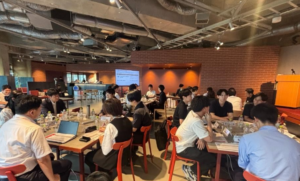
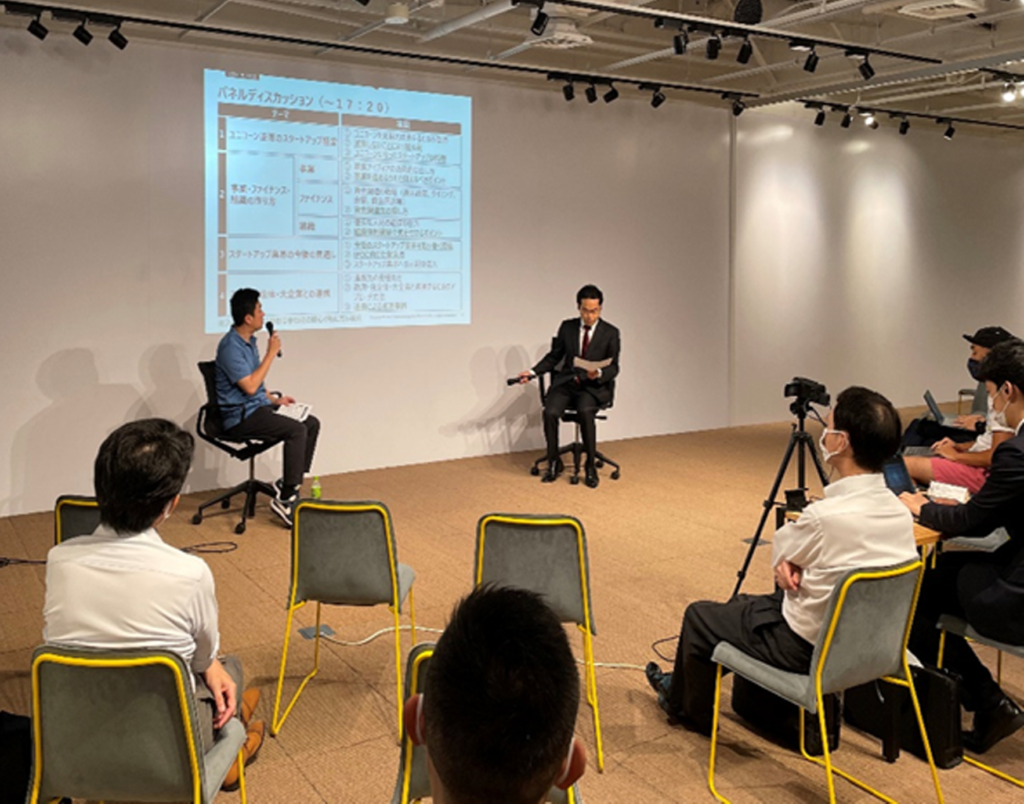
The Tokyo Consortium held its first event of the fiscal year on July 4, 2022. Titled "Momentum Building Event for Creating Unicorn-Level Companies," it targeted startups and various players supporting them (corporations, VCs, universities, local governments, etc.) to deepen understanding of the essential elements, approaches, and support needed for startups to become unicorns.We hosted a panel discussion featuring Mr. Yo Nagami, Director and CFO of Raksul Inc. A total of 135 participants joined us both online and offline, and we received overwhelmingly positive feedback.
2. Event Implementation Overview
(1) Methods for Aiming for Unicorn Status and Achieving Growth
When aiming for unicorn status, having a vision is paramount. Japan has many outstanding small and medium-sized enterprises and regional companies, so I don't believe unicorns are the only right answer. However, if you truly aim for unicorn status, having a grand vision is essential.
(2) Key Business Points for Aiming to Become a Unicorn
Learning business models from the past and other companies is crucial. Especially when it comes to monetization, there are trends and much to learn from history.While your vision and business model itself should be quite unique—and originality is indeed best—there are established patterns for monetization. After thoroughly studying the business models pioneered by predecessors, you can combine several typical monetization patterns. Building your business by properly following these established methods to receive payment from customers is fundamental.
(3) Capital Policy for Advancing Business Operations
Regarding capital strategy, I believe it's crucial to seek advice from executives who have gone public. Those who have recently gone public or are post-IPO possess the most accumulated expertise on structuring capital strategy—such as determining the pace of dilution per round, approaches to valuation, how to engage with VCs, negotiation tactics, and key points to watch for in contract terms.The startup world has a strong culture where successful individuals actively give back. From the startup perspective, we have always valued leveraging the insights of those who came before us.
(4) Hiring personnel to advance the business
When startups hire new talent, I believe they need a message that balances a vision that's bright and exciting with a sense of urgency—a plea for immediate help. Also, while it depends on the phase, I think the notion that startups inherently offer low salaries is outdated. It's crucial to demonstrate economically that taking the leap into a startup—embracing this new challenge—can lead to happiness, including the upside potential of stock options.
Additionally, it's essential to demonstrate that the role can drive personal growth alongside fulfilling aspirations and financial considerations. It's crucial that both the individual's career and the company's growth are propelled forward together. At Rakusuru, we also provided explanations such as "We want you to take on this kind of work" or "This role will lead to this kind of career path."
(5) Future Outlook for the Startup Industry
Japan has the former Mothers Market, now the Growth Market, which offers a market where companies can list more easily compared to overseas markets in terms of scale. On the other hand, this also acts as a factor hindering companies from growing significantly while remaining unlisted. For startups to expand their market capitalization alongside their performance, investment from institutional investors is crucial.Institutional investors must be able to sell at any time, requiring a certain market capitalization and liquidity for trading. If a company fails to reach a certain market cap, it risks falling into a vicious cycle where subsequent institutional investors won't enter, preventing scaling. To avoid this, startups must expand their performance and enhance corporate value while unlisted, raising the scale of funding intended for the Growth Market listing during the pre-IPO phase.Historically, Japanese startups often concluded their pre-IPO funding at the early-to-mid stages (Series A, B, C). Now, some companies even reach Series F or G. The current environment allows for multiple rounds of persistent fundraising, and startups should be fully aware of this possibility.
(6) Collaboration with the government, local authorities, and large corporations
Both leveraging services and relaxing regulations are crucial for collaboration with government agencies.
First and foremost, we want people to use startup services. We want them to actively use these services, understand their benefits as users, and provide feedback on areas for improvement—essentially, to engage with a variety of services.
Next is deregulation. While some bills must naturally be passed, it is crucial that we work together to start changing regulations and tax systems that startups perceive as bottlenecks, beginning with what is feasible.
3. Event Information
| Date and Time | Monday, July 4th, 4:30 PM to 6:00 PM |
|---|---|
| Speaker | Raksul Inc. Director and CFO Mr. Yo Nagami Deloitte Tohmatsu Venture Support Co., Ltd. Representative Director Mr. Yuma Saito |
●Contact for inquiries regarding this matter:
Tokyo Consortium Management Office tokyo_consortium@tohmatsu.co.jp
Operations Manager: Deloitte Touche Tohmatsu LLC
Reception/Response Hours: 10:00 AM to 5:00 PM (excluding Saturdays, Sundays, and national holidays)
Share the article