1. Overview
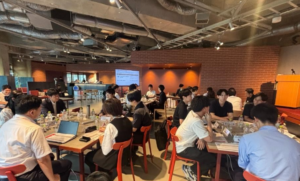
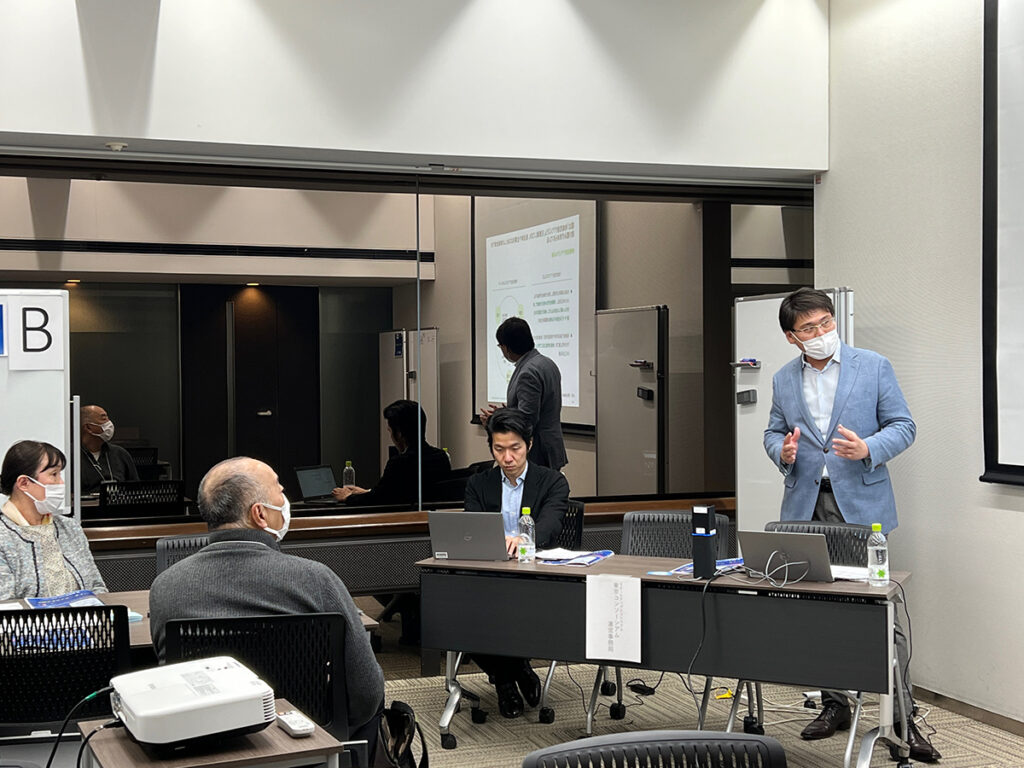
The Startup Ecosystem Tokyo Consortium held its Bio-Wellness Working Group meeting at the Nihonbashi Life Science Building on Wednesday, March 29, 2023. During the first half of the meeting, the secretariat introduced trends in the healthcare industry and examples of the latest initiatives. Building on this content, the second half featured a discussion among participants aimed at creating new business opportunities.
2. Event Implementation Overview
(1) Trends in the Healthcare Business
First, the secretariat explained the landscape of the healthcare business.
In Japan, the elderly population is increasing, and social security costs are rising year by year. Consequently, efforts to address social security challenges are being advanced through public-private partnerships. Lifestyle-related diseases account for over one-third of total medical expenses, making it particularly important to focus on prevention as a countermeasure.
When considering healthcare business, we explained an approach that focuses on solutions and divides them into phases such as prevention, hospitals, and prognosis. Across all phases, the movement to introduce digital technology into traditional services is intensifying.
Innovations in hospital operations have garnered particular attention during the COVID-19 pandemic. As the prolonged crisis has led to a wave of healthcare workers leaving hospitals, creating staffing shortages, the challenge now is how to sustain hospital operations with fewer personnel.
Furthermore, digitally connecting prevention to prognosis seamlessly is closely related to smart cities, attracting significant attention from local governments and developers.Regarding health and prevention solutions, notable examples include municipalities partnering with companies offering health and prevention services to reduce local healthcare costs, and companies collaborating with retailers to provide nutrition management services for local residents. For post-treatment and care solutions, challenges include not only caregiving itself but also providing effective, data-backed support. Various AI-powered services are being developed as concrete examples.
Additionally, regenerative medicine has emerged as one of the technologies gaining significant attention in recent years. Amidst a growing market, collaboration between regenerative medicine and regional healthcare services is increasingly drawing interest as a key area for future focus.
(2) Workshop
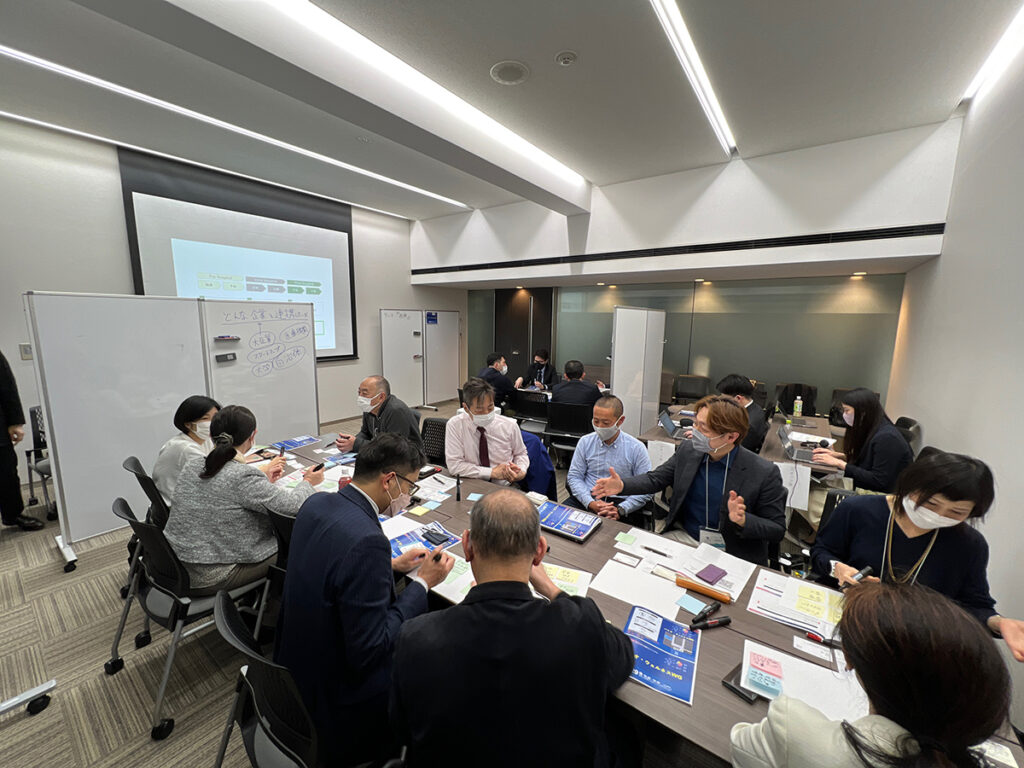
Based on the explanation from the secretariat, participants divided into groups and held discussions aimed at business collaboration in the bio-wellness field.
In the health prevention segment, discussions on necessary collaborations for our company's growth and development yielded insights such as the need for partnerships with municipalities willing to cooperate in pilot projects, the necessity of matching with large corporations, and the potential for collaboration among startups possessing highly compatible domains.Additionally, many participants expressed strong enthusiasm for leveraging the Tokyo Consortium's activities to foster ongoing dialogue with companies and organizations, create matching opportunities, and form projects addressing social and regional challenges.
Additionally, we received feedback that to strengthen industry-academia collaboration, it is necessary to create regular opportunities for the four parties—universities, large corporations, startups, and local governments—to meet face-to-face.
Regarding the matching with various stakeholders discussed during the working session, we discussed that the secretariat will continue to provide support while also considering activities for the next fiscal year and beyond.
Event Overview
| Date and Time | Wednesday, March 29, 6:30 PM to 7:30 PM |
|---|---|
| Location | Nihonbashi Life Science Building |
Share the article