1. Overview
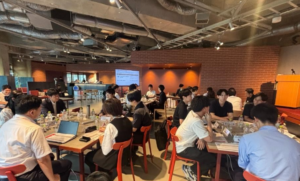
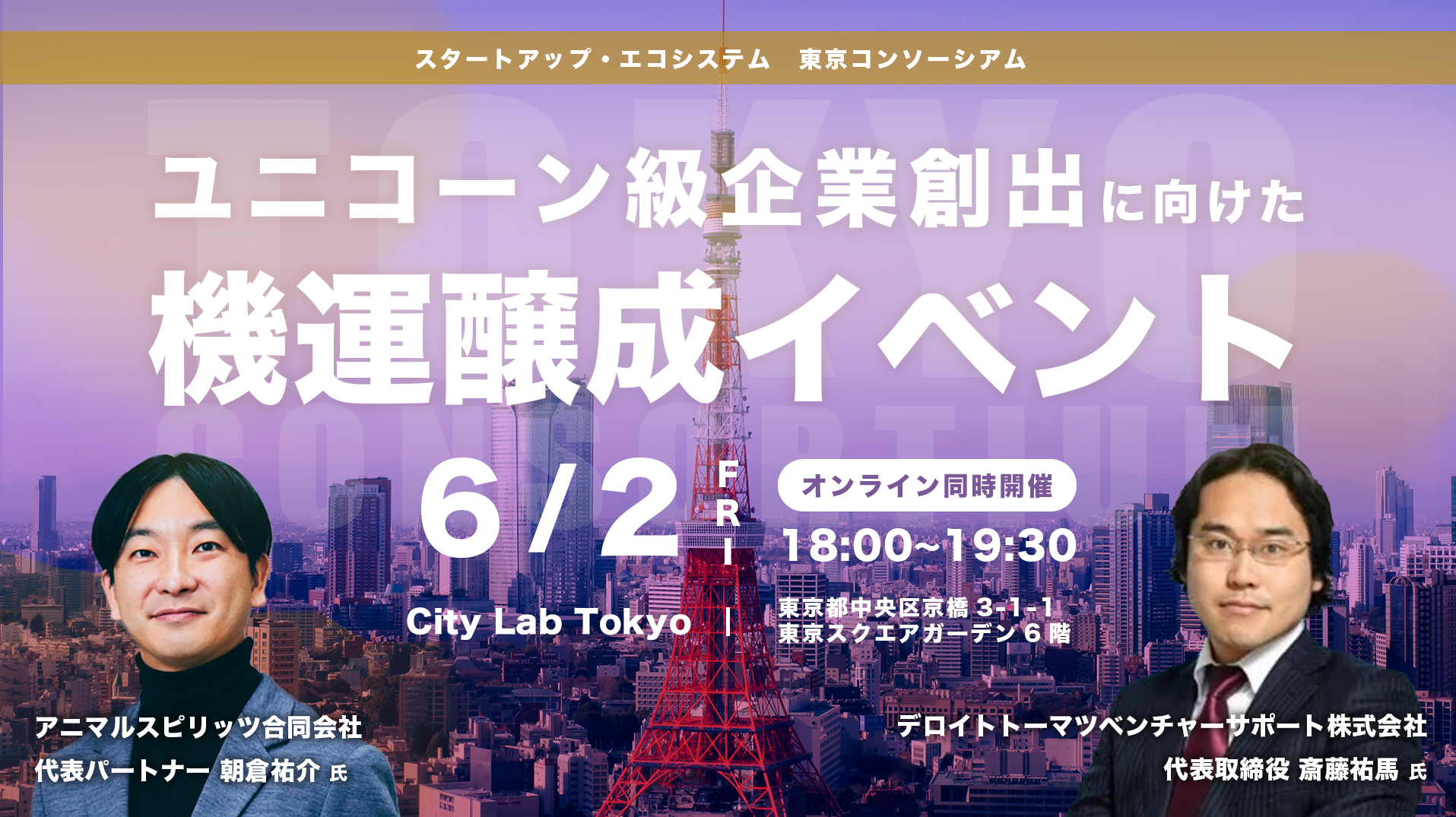
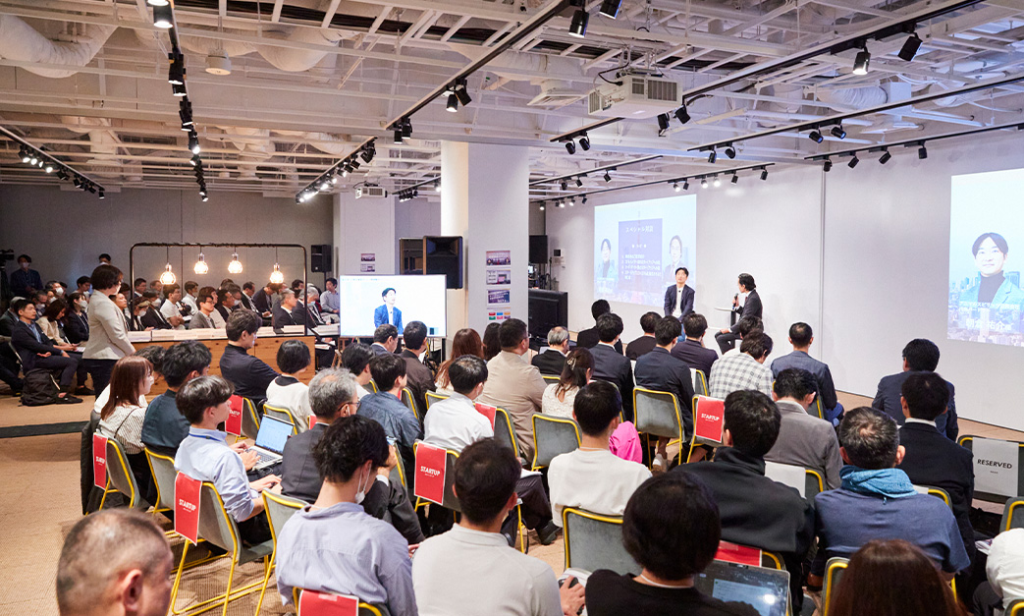
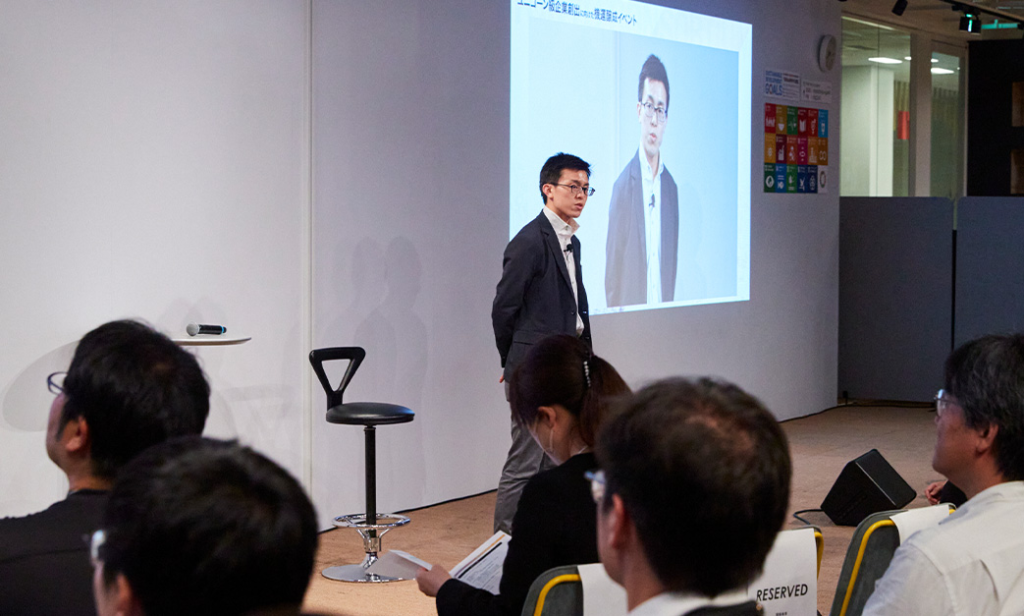
The Startup Ecosystem Tokyo Consortium held an event titled "Fostering Momentum for Creating Unicorn-Level Companies" at Tokyo Square Garden on Friday, June 2, 2023.On the day, Yusuke Asakura, Managing Partner of Animal Spirits LLC, took the stage and held a special discussion with Yuma Saito, Representative Director of Deloitte Tohmatsu Venture Support Co., Ltd. This was followed by a Q&A session with both speakers, concluding with a networking reception for participants.
2. Event Implementation Overview
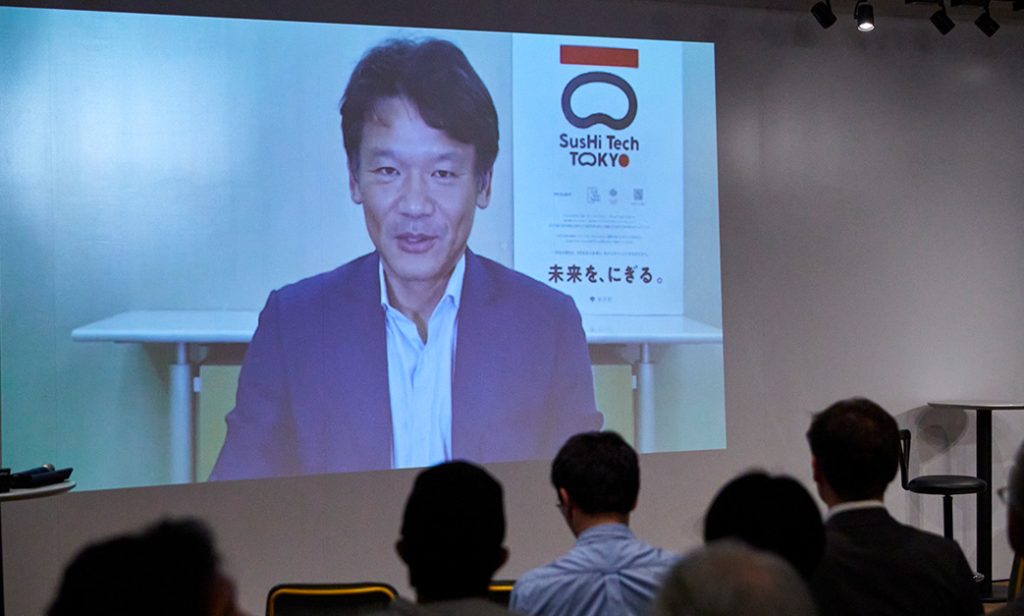
(1) Greetings from Manabu Miyasaka, Vice Governor of Tokyo
At the opening, Tokyo Consortium Chairman Manabu Miyasaka, Vice Governor of Tokyo, delivered a video message to participants gathered at the venue and those watching the live stream. He shared his vision for startup support, emphasizing that startups are key players in creating future employment and that specialized teams will assist them in building strategies for globalization, fundraising, and other areas to help them grow into unicorn-level companies.
(2) Greetings from Keiichi Yoshimura, Director of the Tokyo Startup and International Financial City Strategy Office
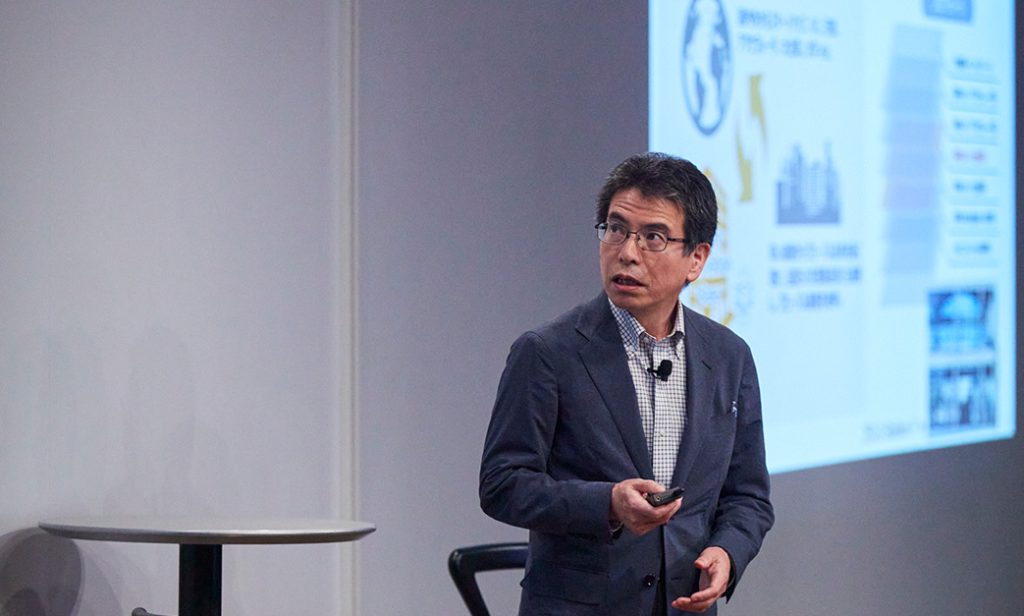
Next, Keiichi Yoshimura, Director of the Tokyo Metropolitan Government's Startup and International Financial City Strategy Office, explained Tokyo's startup strategy.
The Tokyo Metropolitan Government has set a vision to increase the number of Tokyo-based unicorns expanding globally, the number of startups in Tokyo, and the number of collaborative initiatives in Tokyo tenfold within five years.To achieve this, it is undertaking various initiatives centered around "four pillars": ① Making Tokyo the world's most startup-friendly city ② Creating an environment where anyone can spread their wings toward their dreams ③ Providing powerful support as a "One Team" involving all stakeholders ④ Strategically communicating with a global perspective.
We introduced some of our startup support initiatives, starting with the "Tokyo Innovation Base" concept—a major hub bringing together various domestic and international organizations involved in startups to provide focused support—along with establishing funding frameworks for early-stage startups and creating new mechanisms to encourage their entry into global markets.
(3) Deep Ecosystem Information
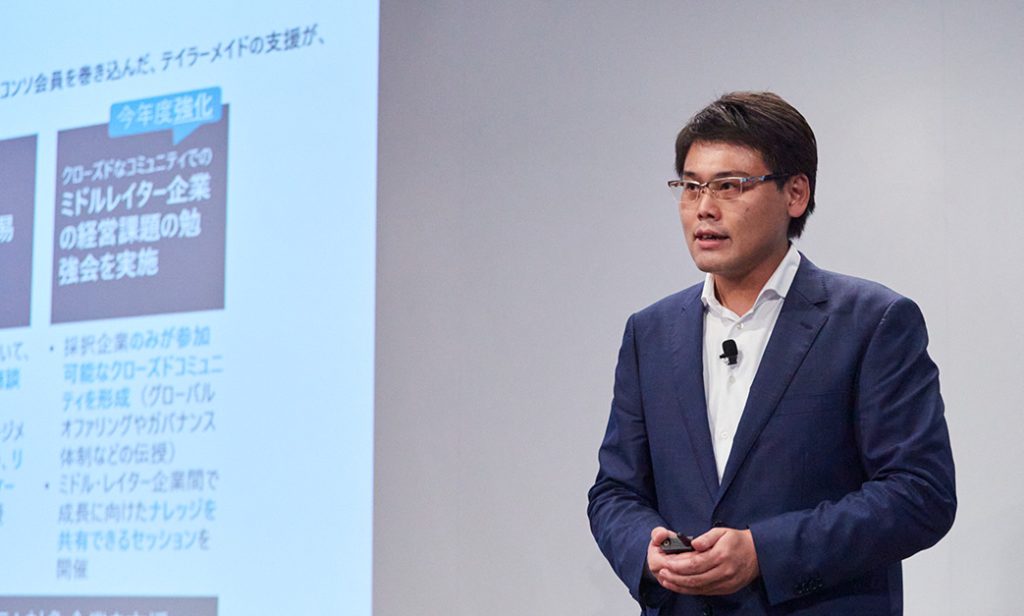
Yosuke Morimoto from the Tokyo Consortium Secretariat provided an overview of the Deep Ecosystem.
(4) Special Interview: Yusuke Asakura × Yuma Saito
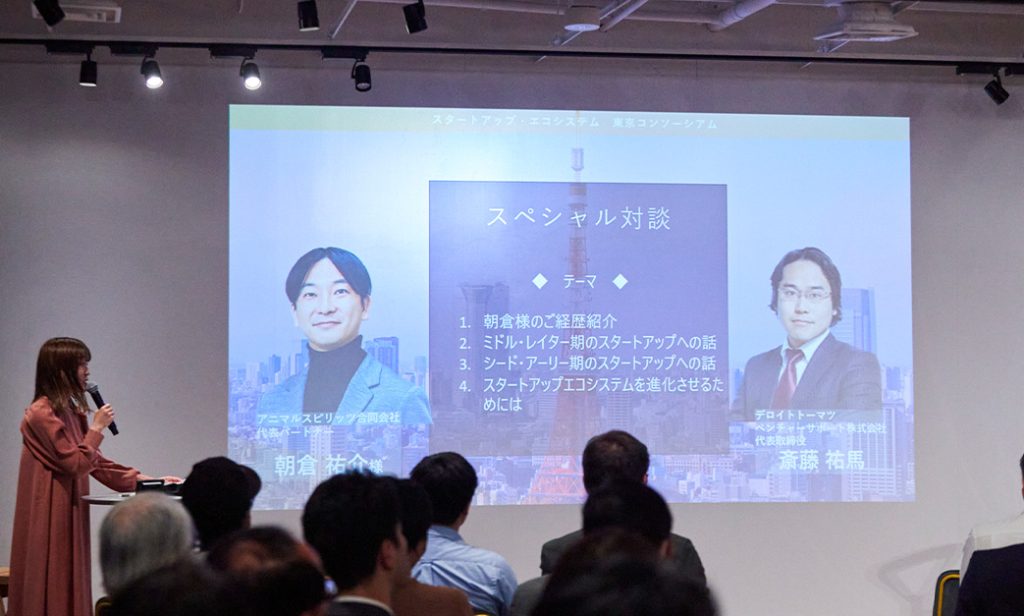
Special guest Mr. Asakura joined us for a discussion with moderator Saito. First, Mr. Asakura briefly introduced himself and reflected on his journey to the present, leveraging his experience managing startups and listed companies to invest in startups. Next, they delved into the main topic: startups. Below is an excerpt and summary of their conversation.
On Middle-Late Stage Startups
Saito: What's your take on the current environment surrounding mid-to-late stage startups, Asakura?
Asakura (hereafter referred to without honorifics): Until 2021, investment in startups was active, and overseas we saw cases where SaaS sector companies achieved multiples(※1) of up to 20x. However, since the U.S. began raising interest rates in 2022, the investment environment surrounding startups has become increasingly challenging.Even Userbase, a publicly listed company, saw its PSR(※2) remain around 1x during its MBO, symbolizing this challenging environment. While we cannot measure Japanese SaaS companies on the same level as global SaaS firms competing in the worldwide market, the reality is that Japanese companies are, in a sense, being scrutinized more harshly.
※1 One method for measuring corporate value. It calculates enterprise value by applying appropriate multiples (ratios) to management indicators such as assets, profits, and cash.
※2 Price-to-sales ratio. Calculated by dividing market capitalization by annual sales.
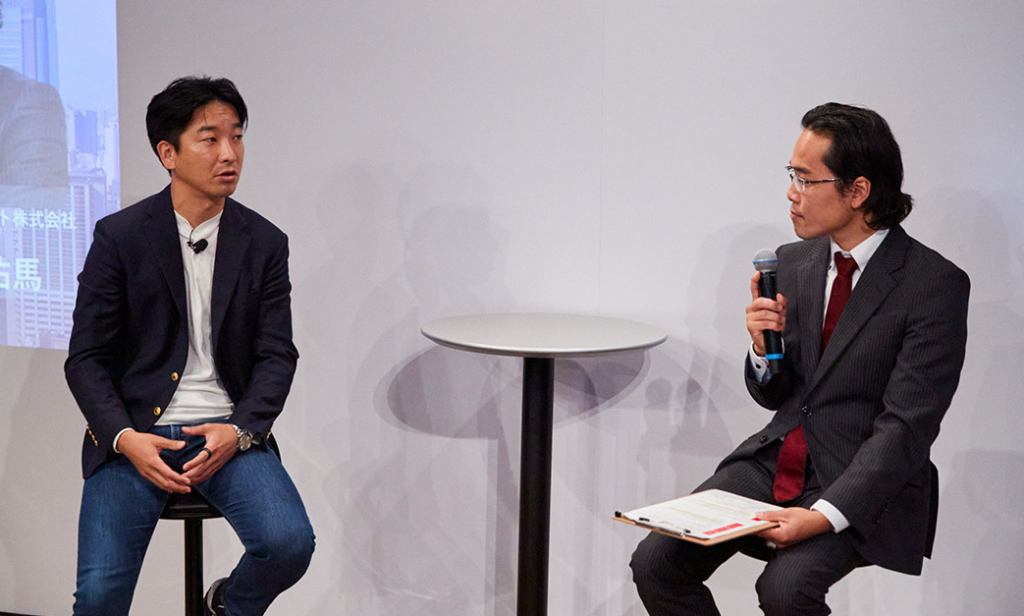
Saito: What do you prioritize when investing in the mid-to-late stage?
Asakura: From an investor's perspective, we prioritize whether the business has intrinsic value and can generate solid cash flow. Additionally, for mid-to-late stage companies, we look beyond the qualities of the management team to examine accumulated assets like the balance sheet and side letters.
Saito: Mr. Asakura, you have experience as a business owner. From an owner's perspective, what kind of exit strategy do you think is best? For example, if going public, waiting until market conditions improve a bit, or being acquired by a large corporation?
Asakura: When considering an IPO as the primary focus, the timing isn't entirely within the company's control and depends on individual circumstances. However, as time passes since the initial funding round, pressure from existing investors to exit quickly tends to intensify. If swept along by this pressure, the company risks missing the optimal timing for listing based on its core business. Therefore, it becomes necessary to proactively lead the process by actively replacing shareholders. Whether the management team possesses this capability significantly influences the company's future growth potential.
For employees, an IPO represents a major milestone, and incentives like stock options are highly attractive. However, it is common for teams to lose motivation when the preparation period becomes excessively long, and we often see cases where management, unable to endure this, proceeds with the listing prematurely. Yet what truly matters is whether it is the right timing for the business itself; management must remain firmly grounded in this fundamental principle.
Saito: What distinguishes companies that become "IPO goals" from those that continue to grow afterward?
Asakura: Japan is characterized by its ease of going public even at a small scale, but institutional investors who take a medium-to-long-term view inevitably won't engage with such companies. Consequently, the primary shareholder base consists of individual investors. As a general trend, individual investors acquire shares targeting stock price volatility. Engaging with them often shifts the focus away from the perspective of growing the company over the medium to long term. As a result, I believe companies frequently fall into the trap of the "IPO goal."To avoid this, it's better to grow significantly from the pre-IPO stage and then go public large, thereby attracting investment from institutional investors with a medium-to-long-term perspective. However, Japan has few domestic funds investing in late-stage companies, forcing reliance on overseas "tourist money." The key challenge going forward is how to increase the number of funds that steadily invest in Japanese pre-IPO companies.
Saito: Many of you here today work for large corporations. What do you want to see from large corporations?
Asakura: This might upset you, but startups have three main demands of large corporations.Money, money, money. This includes funding for capital raising, becoming customers who use the service, or providing financial support for joint business development. A common issue is that while they intervene in the business, decision-making takes too long. They apply the same review standards as if launching a business within their own organization, causing delays and making us wait. For a startup, being made to wait a month is akin to a death sentence.
When large corporations partner with startups, I believe it's best to create a "sandbox" for software development. This refers to features that won't impact the main system even if problems arise. Within certain boundaries, it's also necessary to have the resolve to refrain from any involvement whatsoever and leave it entirely to the startup.
Startups in the Seed and Early Stages
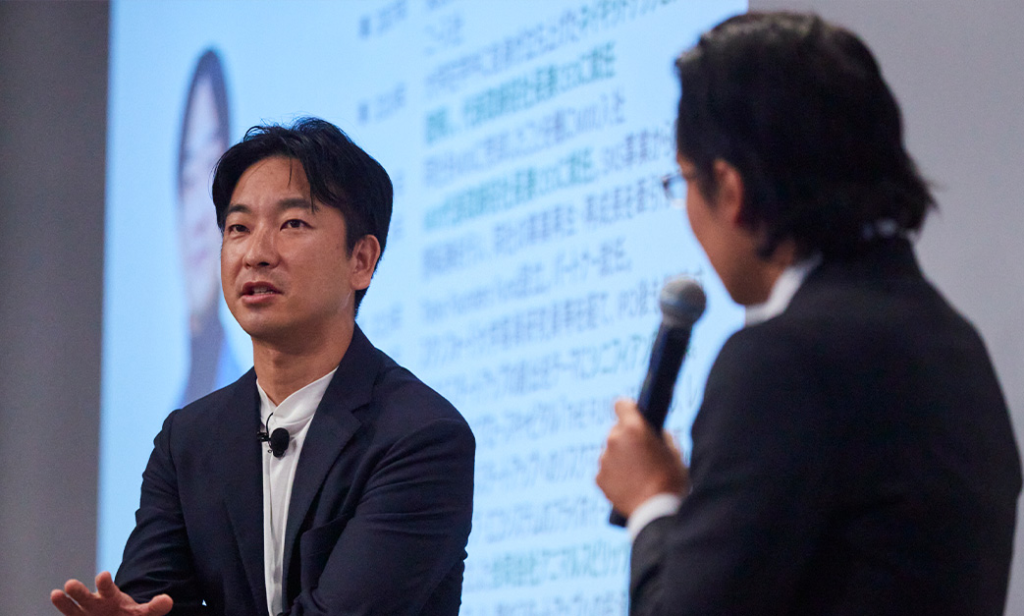
Saito: What points do you pay close attention to when investing in seed and early-stage startups?
Asakura: Currently, at Animal Spirits, we invest in seed and early-stage companies under the vision of "Realizing social transformation for future generations." Specifically, we focus on startups operating in the following three areas:
The first is "Protecting the Nation." Japan has now moved beyond an aging society and entered a "super-aged society." Sectors like DX (Digital Transformation) are crucial for making Japan sustainable. The second is "Preserving the Planet." This encompasses areas like decarbonization and the circular economy, including Climate Tech (※3). And the third is "Frontier." This involves new domains such as generative AI and space development.When meeting with startups, I also look to see which of these three themes they align with.
※3 Innovative technologies to solve climate change issues
Saito: What's the difference between companies that grow and those that don't in the seed and early stages?
Asakura: It's the management and the market. There's no greater source of competitiveness than the management team, and no matter how hard you try in the wrong market, it won't work out. I'm not concerned about the quality of the product.
Saito: What level of market size would you consider acceptable?
Asakura: We don't think in terms of sheer scale. Even if the SAM(※4) is small, if we can create a product that truly resonates there, we can scale it horizontally. We also look at whether they have a solid perspective on how the market they're competing in will change in three, five, or ten years.
※4 The maximum achievable market size for that business
To evolve the startup ecosystem
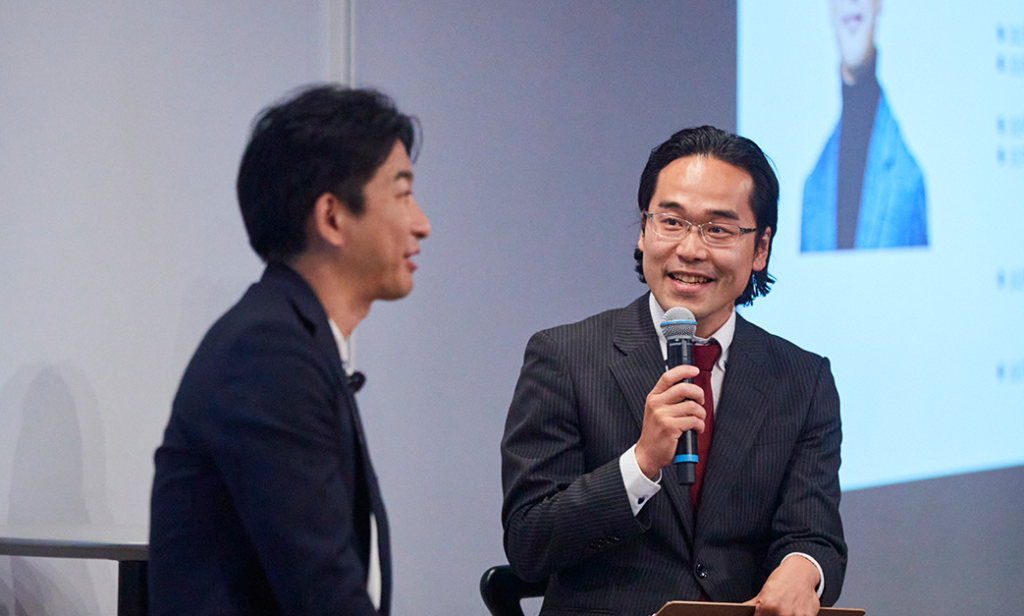
Saito: As Director Yoshimura mentioned at the outset, to successfully implement the five-year plan—which aims to increase the number of Tokyo-based unicorns expanding globally, the number of startups in Tokyo, and the number of collaborative initiatives in Tokyo by tenfold over five years—what do you think is necessary?
Asakura: After thinking through how to develop the startup ecosystem and translating that into action, I concluded that "animal spirits" are the most crucial factor.Animal spirits is a term coined by the economist Keynes, encompassing impulses, ambition, and drive. In short, the most important thing is the feeling of "What do I want to do?" and "What do I want to create?" It's about taking the initiative to act, not for commissioned work, but to realize something you feel you must accomplish, even when no one has asked you to. I believe that impulse and that desire are the most valuable things right now, in this very moment.
Saito: What's essential for cultivating animal spirits to develop an ecosystem?
Asakura: Education. Japanese education values conformity and fosters an atmosphere where failure is not tolerated. It demands how quickly one can arrive at the correct answer, but startups don't have a correct answer to begin with."Fully embrace being different," "actively encourage failure," "think for yourself"—these are what Japanese education needs. What I find most detrimental is the "fall in line" mentality forced upon students during the nine years of compulsory education. It's like being constantly told to do exactly what the person in front of you does. People who've been bombarded with that message for nine years can't suddenly become innovative adults overnight.
Saito: Finally, if you have any recommendations regarding government policy, please share them.
Asakura: While I'm not in a position to comment on specific policies, I believe that even with large budgets allocated to initiatives like the five-year startup plan designed to support startups, very few startups are directly benefiting. Of course, I think they are benefiting indirectly, and such policies are necessary. However, I believe it's essential that startups themselves can receive tangible benefits.
Saito: Finally, Asakura-san, please share a message for everyone here at the venue and those watching the live stream.
Asakura: Never before has there been an environment so thoroughly prepared for startups. Let's just get started without hesitation. People say Japan's tendency to make failure seem like a death sentence is problematic, but that's wrong. Having entrepreneurial experience is far more valuable, even if you fail. In truth, even without substance, persistence can create substance. So let's banish the phrase "failure means you can't recover" once and for all.
Taking risks as a business leader also means creating escape routes. Build systems in advance that allow you to bounce back even if you fail. Never cut off your retreat. Prepare multiple escape routes. I believe it's crucial to create escape routes and then swing with all your might.
(5) Greetings from the Tokyo Metropolitan Government
Finally, Shinya Asamitsu, Section Chief of Startup Strategy Promotion, Strategic Promotion Division, Startup and International Financial City Strategy Office, Tokyo Metropolitan Government, delivered closing remarks. He reiterated the call for participating startups to join the "Deep Ecosystem" initiative, aimed at fostering unicorn-level companies from within the Tokyo Consortium. The Tokyo Consortium is currently recruiting companies for the Deep Ecosystem support program. Applications can be submitted via the following website. We encourage all eligible startups to apply.
2023 "Deep Ecosystem" Support Program: Recruitment Now Open (tokyo.lg.jp)
(6) Social Gathering
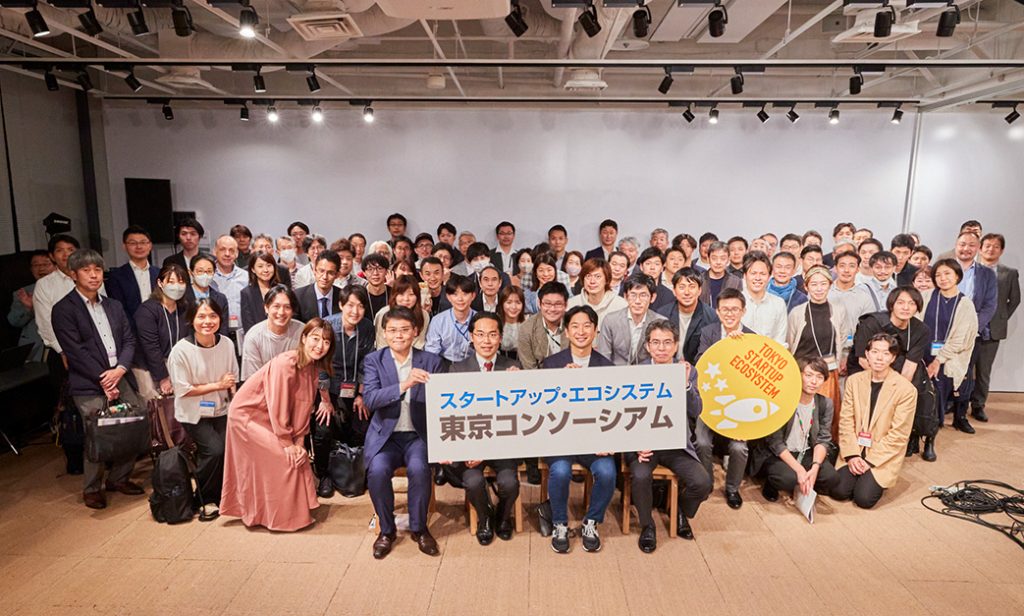
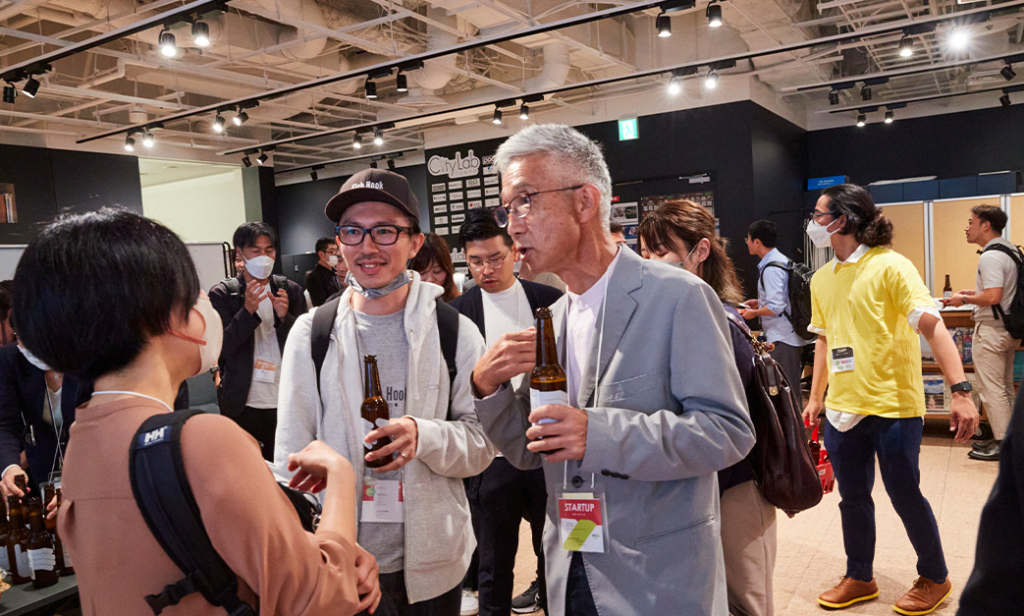
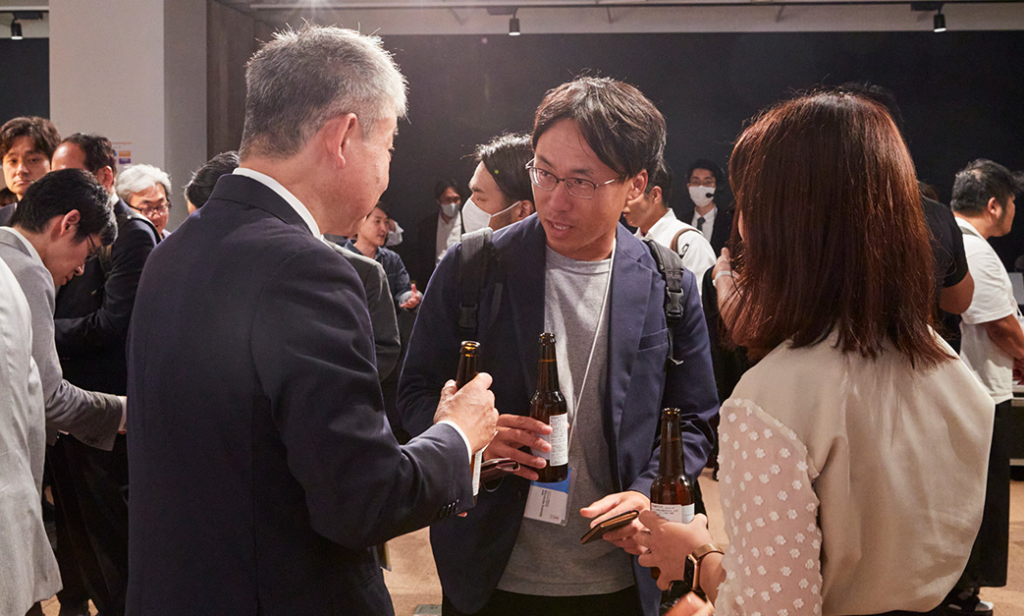
A networking reception was held for all attendees. At the venue, non-alcoholic craft beer produced by a startup was served free of charge.Additionally, various measures were implemented to encourage networking among attendees. These included designing dedicated lanyard holders with distinct patterns for each participant category—"Startup," "Established Company," "Investor/Financial Institution," "Government/University," and "Media"—making their affiliations immediately clear. Attendees also wrote "Who I Want to Meet Today" on panels displayed throughout the venue. Networking continued right up until the closing moments, resulting in a highly successful event.

(7) Participant Feedback
"When you're running a startup, money really is crucial. I totally agree with what Asakura-san said: 'What startups want from big corporations is money, money, money.' It's absolutely true. It would be great if big corporations became more cooperative."
"I really resonated with the idea of creating an escape route and then swinging with all your might. I myself cut off my retreat and jumped into a startup, but I realized I want to approach things with a more relaxed mindset."
"The advice on how to effectively create a sandbox was very helpful."
The enthusiasm of the venue conveyed a sense of unity, with everyone—including Tokyo—coming together to build excitement.
I felt the passion of the public and private sectors working together to energize startups.
"The pandemic made it difficult to have such interactions, but today I had new encounters and am glad I participated."
That's all.
Share the article