1. Overview
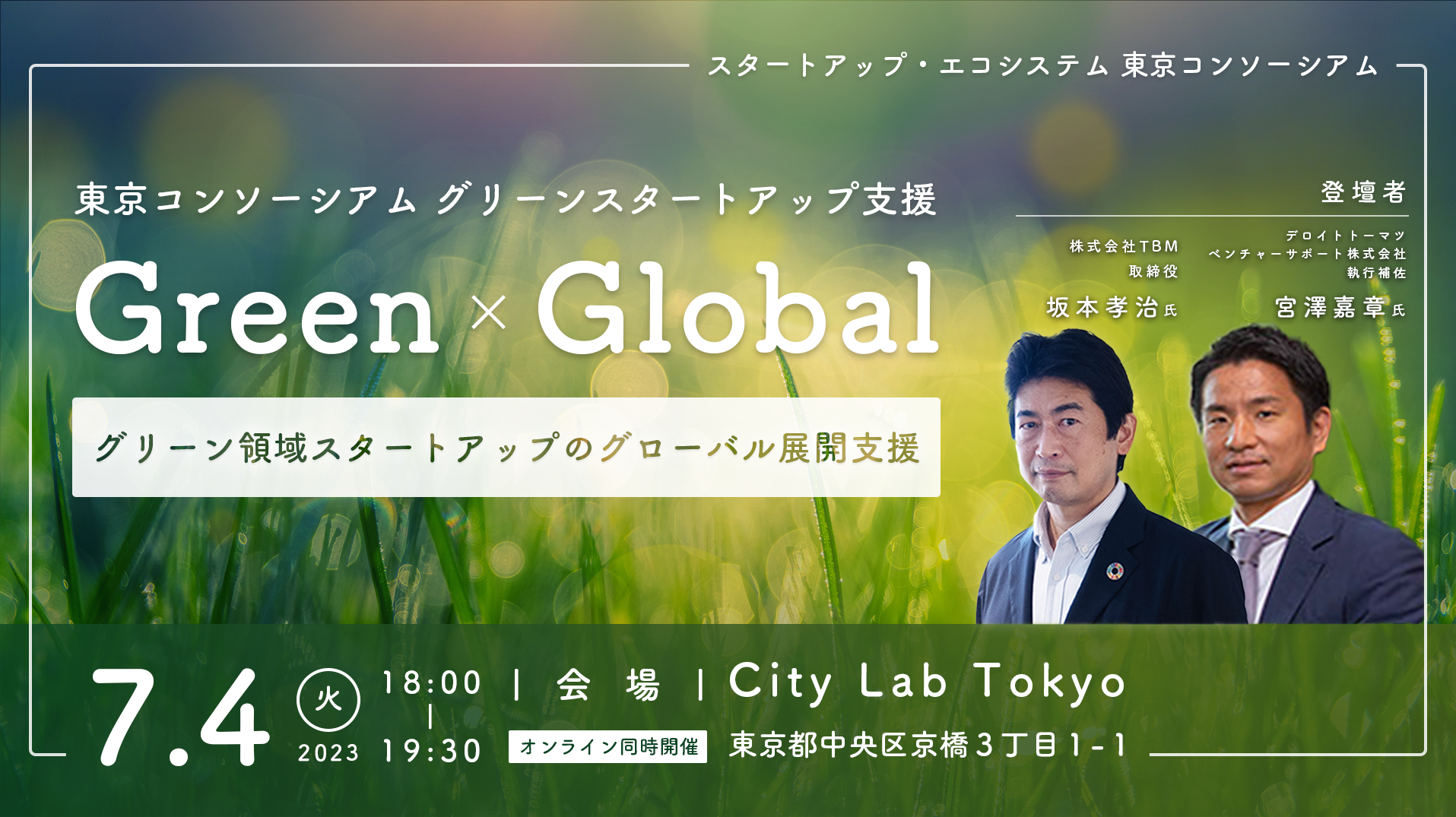
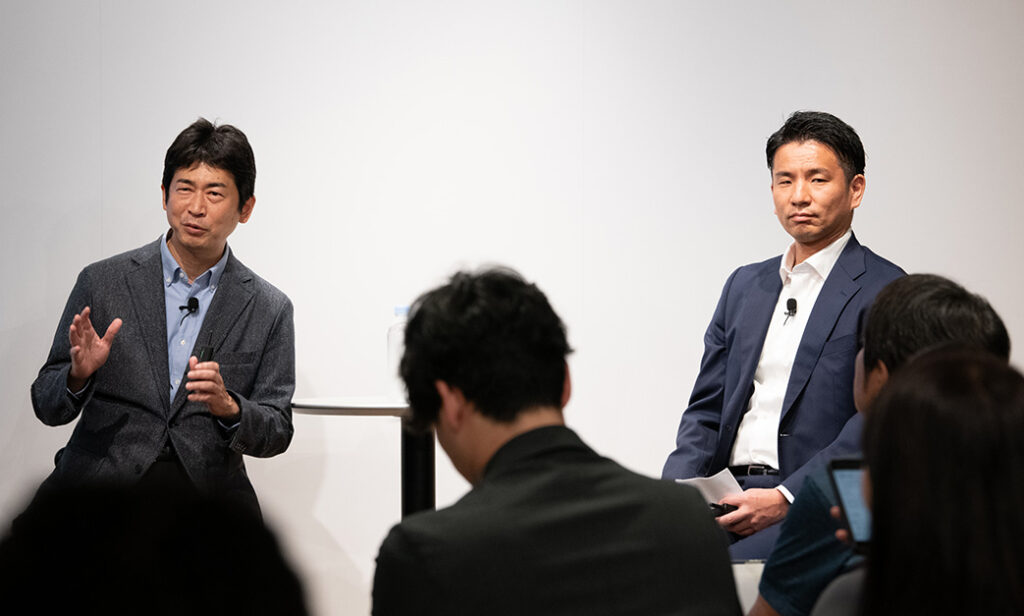
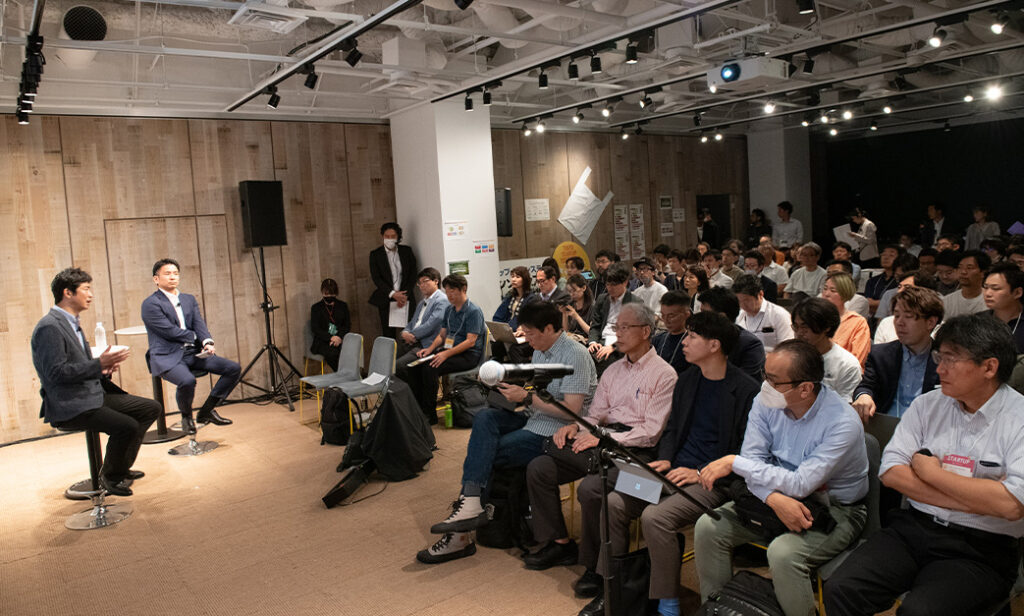
The Startup Ecosystem Tokyo Consortium held "Green×Global: Supporting the Global Expansion of Green Startups" at City Lab Tokyo on Tuesday, July 4, 2023.On the day, Koji Sakamoto, Director of TBM Co., Ltd., took the stage and held a special discussion with Yoshiaki Miyazawa, Executive Assistant at Deloitte Tohmatsu Venture Support Co., Ltd. This was followed by a Q&A session with both speakers, and finally, a networking reception for participants.
2. Event Implementation Overview
(1) Greetings from the Tokyo Metropolitan Government
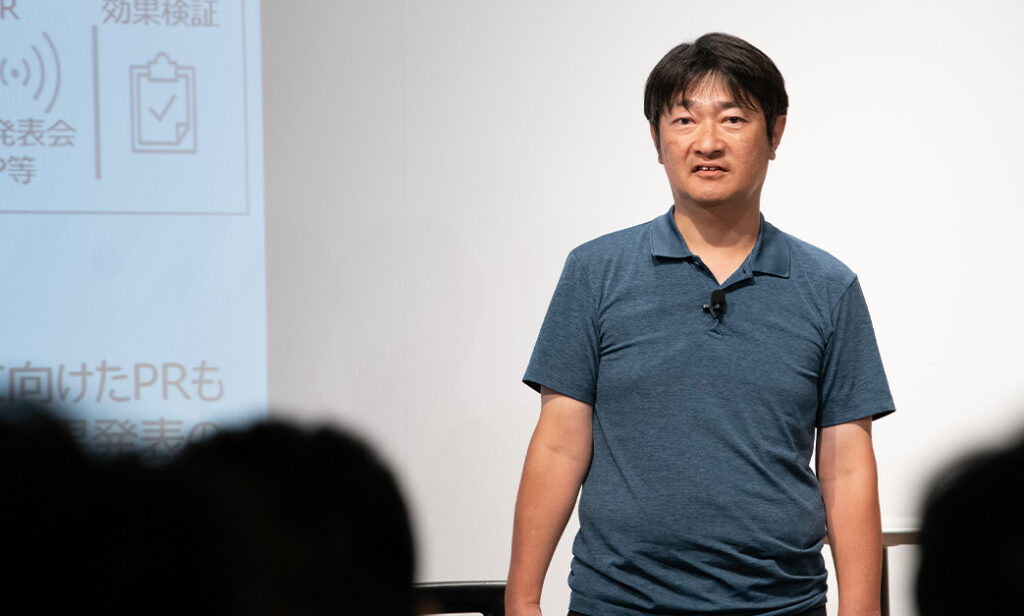
At the opening, Mr. Toru Shida, Manager of the Startup Promotion Division, Strategy Promotion Department, Startup and International Financial Center Strategy Office, Policy Planning Bureau, Tokyo Metropolitan Government, gave a greeting. He provided an overview of the Green Startup Support Project launched by the Tokyo Metropolitan Government last fiscal year.
(2) Special Interview: Koji Sakamoto × Yoshiaki Miyazawa
Special guest Mr. Sakamoto was welcomed, and a discussion took place with moderator Miyazawa. First, Mr. Sakamoto introduced himself, and then he spoke on the following three main themes:
① Global Trends in Climate Change and National Initiatives
② Circular Economy Trends and the Role of Startups
③ The Sustainability Revolution for Global Expansion
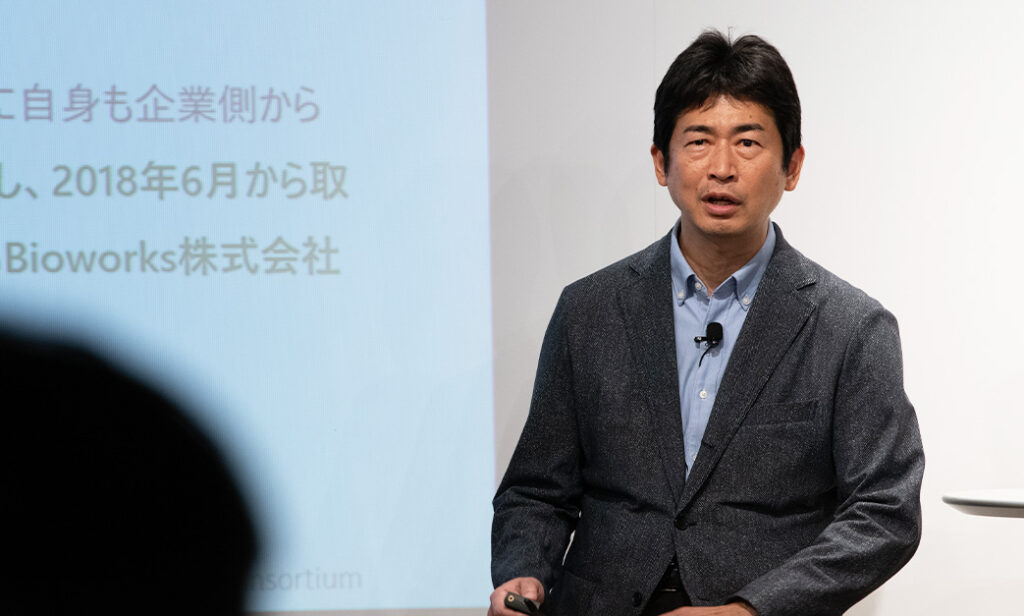
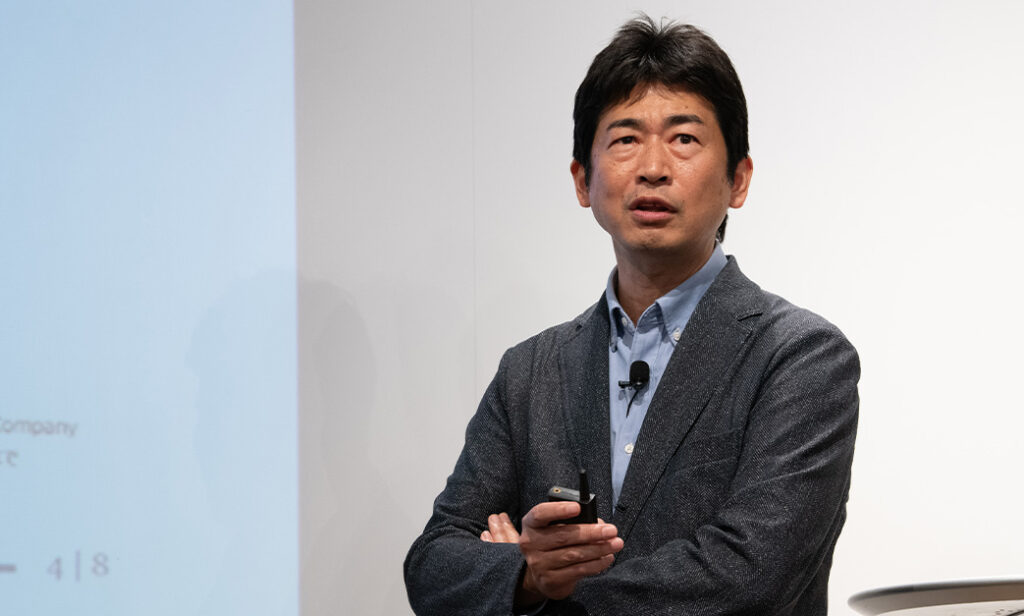
TBM Co., Ltd. Director Koji Sakamoto
Joined Itochu Corporation in 1990. Transferred to Excite Inc. in 2007. Involved in launching new businesses and the company's IPO, becoming Representative Director. Joined Yahoo Japan Corporation in 2012.In 2014, he established YJ America, Inc. and became its President. While based in Silicon Valley and engaged in developing and supporting startups, he himself desired to challenge the global market from the corporate side. Consequently, he joined TBM Corporation as an outside director in 2016. He has served as a Director since June 2018.
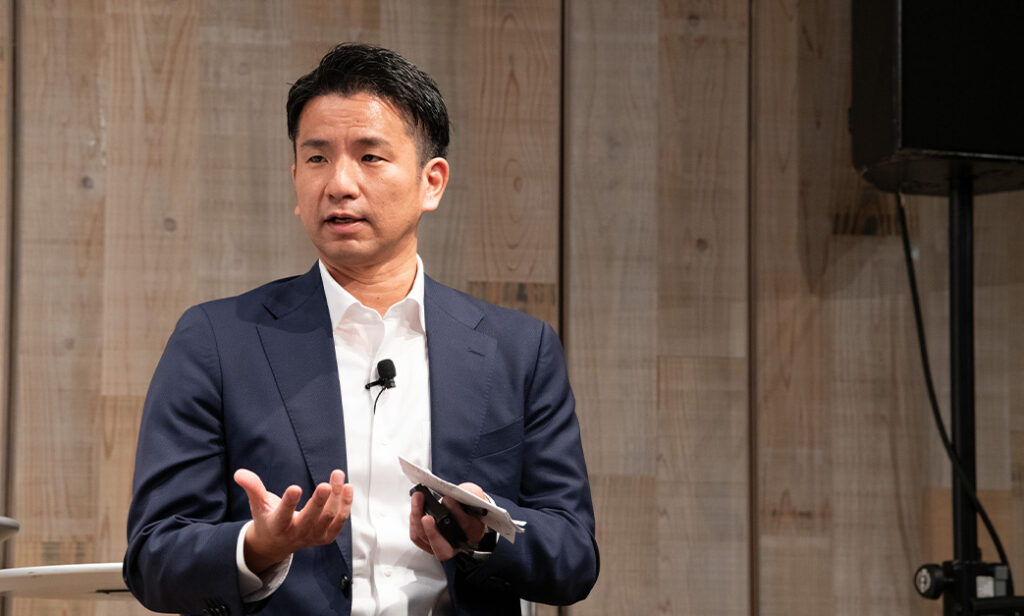
Executive Assistant, Deloitte Tohmatsu Venture Support Co., Ltd. Engaged in consulting projects spanning strategy formulation to execution support—including new business development, M&A, sales transformation, and mid-term management planning—across industries such as finance, high-tech/telecom, infrastructure, and consumer goods at a U.S.-based strategic consulting firm. Subsequently, engaged in new business development in overseas and environmental infrastructure domains at a general trading company.Stationed in Latin America, he pioneered relationships with major local corporations and influential partners, deepened existing ties, and drove the exploration and development of new business opportunities. Since joining Deloitte Tohmatsu Venture Support, based in Tokyo, he leads business initiatives in the climate change sector as an Executive Assistant. He supports major corporations in new business development and assists startups with growth strategies.
Below is an excerpt and summary of the dialogue.
Global Trends and National Initiatives in the Field of Climate Change
Miyazawa: Thank you for your time today. First, I'd like to briefly explain the global trends in the field of climate change.
The impacts of climate change are worsening year by year. Economic losses over the past 20 years have doubled compared to the previous 20 years, and this trend is accelerating daily.Therefore, achieving net-zero emissions by 2050 is essential. While renewable energy, energy efficiency, and electrification are crucial for reaching this goal, they alone can only cover about 60% of the required reduction. It is said that business models and technologies not yet realized will be necessary to achieve the remaining 40%. This is why increasing the number of startups and fostering innovation are so vital.
※1 A situation where the net amount of greenhouse gases released into the atmosphere minus the amount removed from the atmosphere equals zero.
On the other hand, innovation in the climate change field takes a long time to materialize and presents extremely high difficulty. It is said to contain numerous deep "valleys of death" (※2). Even scaling up faces many barriers, making it a challenging domain. To overcome this, we believe it is an area requiring collaboration between startups and stakeholders like the government, large corporations, investors, and indeed everyone gathered here today.
※2 A state between the early and middle stages where a startup's funds are about to run out. This period is said to see a high number of bankruptcies.
The United States has announced a $2 trillion investment plan. It has enacted the Inflation Reduction Act (IRA), which allocates $369 billion to various green sectors. This Inflation Reduction Act aims to reduce greenhouse gas emissions by 42% by 2030. With this government support, investment in climate change startups and innovation has been increasing year by year, doubling from fiscal year 2021 to fiscal year 2022.
Turning our attention to the global stage, we see these trends emerging. Now, Mr. Sakamoto, could you please focus your remarks on the circular economy?
サーキュラーエコノミーのトレンドとスタートアップの役割
Mr. Sakamoto (hereafter referred to without honorifics): The economic scale of the circular economy is projected to reach $4.5 trillion, or 600 trillion yen, by 2030. Regarding how much recycled materials global companies are beginning to use, Coca-Cola leads the way. According to 2019 data, approximately 9% of their materials are recycled.In fact, Coca-Cola declared in 2022 that 50% of all their plastic would be switched to recycled materials—or, as they put it, sustainable materials. While not yet officially announced, they've likely reached close to 50% by now and have pledged to switch to 100% by 2030. Furthermore, other companies are following suit.
Moreover, among the various environmental businesses, the circular economy—specifically waste management and resource utilization—is said to have an overwhelmingly larger economic scale than businesses focused solely on countering global warming or protecting natural environments.
In Japan, over 8 million tons of plastic are discarded annually. Of this, thermal recycling (incineration for power generation) and simple incineration account for 70%, while only 25% is recycled. I believe everyone is diligently sorting their waste, yet most is still incinerated without being recycled. Against this backdrop, Japan enacted the Plastic Resource Circulation Promotion Act last year.While it doesn't yet impose strong penalties, what sets this law apart from previous ones is its framework. Unlike the Container and Packaging Recycling Law, which focused on specific packaging, this law applies to all products using plastic. It mandates resource circulation not only for manufacturers but also for retailers distributing the products, for us as consumers who actually use them, and for local governments.
Miyazawa: Given that you are actively engaged in circular economy initiatives within Japan, how do you view the current domestic situation?
Sakamoto: Japan has the Plastic Recycling Promotion Act, and the government must push forward with it, but I feel large corporations are moving rather slowly.California has an interesting law. When you sell a gasoline-powered car, you have to pay a tax. A portion of that pooled tax revenue is then distributed to companies based on the number of electric vehicles they sell. Essentially, they tax vehicles that emit exhaust gases, and the money collected is paid to companies manufacturing electric vehicles that don't emit exhaust gases.
Ultimately, Tesla emerged as the sole winner. While Tesla recorded its first profit in 2020 (approximately ¥78 billion), this profitability was actually achieved not through car sales, but by receiving tax credits (approximately ¥170 billion) paid by gasoline vehicle manufacturers in California.With representatives from the national government and Tokyo Metropolitan Government present today, I believe that if we implement a system where funds are taken from those not committed to national policy and paid to those who are committed, this could significantly accelerate progress within Japan as well.
Miyazawa: I see, thank you. Since we have so many people gathered here today, I hope we can have a lively exchange of opinions. Next, could you please tell us about TBM's specific business overview?
Sakamoto: First, the company name TBM (Time Bridge Management) was chosen by our founder, Atsuyoshi Yamazaki, embodying his vision to build a business that will endure for centuries and become a top player in the sustainability field.
We are now in our 13th year since founding, and with three factories currently in operation, our total workforce has surpassed 300 employees. To date, we have received investments and support for our business from various large corporations.
The original idea for our product LIMEX(※3) began with importing stone paper made from limestone from a Taiwanese company. Due to the poor quality of that stone paper, we developed LIMEX using our own proprietary technology with support from various companies and countries.
※3 LIMEX is a composite material with an inorganic filler dispersion system containing over 50% inorganic substances such as calcium carbonate. Developed in Japan, LIMEX uses limestone as its primary raw material to form products that replace plastic and paper, and is also recyclable.
We originally started with the LIMEX business, but the resource recycling business I'll explain later has also been operational since last year.
Using LIMEX instead of paper helps conserve water and forests, while using it instead of plastic helps conserve petroleum resources, the primary raw material for plastic. Since petroleum-based plastics are one of the major causes of global warming, reducing the amount of petroleum plastic can cut greenhouse gas emissions. Furthermore, crucially for resource circulation, LIMEX can be recycled repeatedly when properly collected.
Not only large corporations but also small and medium-sized molding factories are collaborating with us, expanding the applications of LIMEX. Since LIMEX was developed with the principle of enabling manufacturing and processing using existing equipment, we have been able to move forward by forming partnerships rather than competing with various companies.
We collaborate with various partners in areas that contribute to resource circulation. For example, at Adventure World, a theme park in Wakayama Prefecture, they use LIMEX for in-store maps and beverage cups. Instead of discarding used items, they are collected and stored. We then take possession of them and recycle them into trays used in the theme park's restaurants and cafeterias. Another example involves the J.League club Vegalta Sendai. We collect LIMEX cups used at their stadium, mix them with wood, and donate the resulting material as reborn benches. While not strictly horizontal recycling, this is one example of thorough collection and transformation into new applications.
Furthermore, as a major highlight of our resource circulation efforts, we completed construction of the Yokosuka Plant—one of Japan's largest recycling facilities—on November 11th last year.It began full-scale operations this April, marking the first time we ourselves have established a recycling plant. Why did a venture company go to the trouble of building a new recycling plant? As explained earlier, approximately 70% of plastic waste in Japan is incinerated, and most companies claiming to be recyclers in Japan only handle processes for incineration.We are challenging ourselves at this plant to recycle the 40,000 tons of plastic we collect annually back into new plastic. Furthermore, this plant is not only for plastic; we are preparing to collect and recycle LIMEX as well, should its adoption expand. Moving forward, we aim to establish multiple plants of similar scale domestically and expand resource-circulating plants and systems overseas.
Miyazawa: I understand that you are a top runner and leader in the field of green startups in Japan. I imagine that in expanding LIMEX and resource recycling businesses, you have been able to collaborate well with large corporations, financial institutions, and investors. How have you approached this?
Sakamoto: From the early days to the present, while the nature and progress of our collaborations have varied, we've received investment from many companies and their support in advancing our research, development, and business operations.One thing is clear: startups often rush to launch products and services with sheer momentum, frequently leading to failure. Large corporations, on the other hand, possess extensive accumulated knowledge and the know-how to proceed cautiously. Establishing rigorous vetting processes that meet the standards of such large corporations can reduce failures. This approach also makes the technology more likely to be adopted by other companies as well.
Miyazawa: You mentioned receiving investments from many large corporations. You made it sound simple, but I imagine that was the most challenging part. Were there any key points in securing those investments?
Sakamoto: We've received investments from dozens of companies so far, but I'd say we approached about ten times that number. I never gave up. I persistently, persistently went to meet people at various companies, thinking, "Even within the same company, this department might not work, but this other department could be a good fit." I made the rounds over and over.
Once you find someone willing to support you, they'll run around the company trying to help you get backing. That's why it's crucial not to give up until that point. What I want to tell startups is this: even if one department at Company A turns you down, don't assume it's over. If you absolutely want to get into that company, you should persistently approach different departments, go higher up to the managers, and finally meet with the president. You really need to be persistent.
Miyazawa: Mr. Sakamoto, during your time in the United States, you observed numerous startups. What kind of startups appear attractive even from the perspective of large corporations? Or what kind of communication makes them more receptive to startups?
Sakamoto: To put it simply, there are various factors like whether you can differentiate yourself through technology. Ultimately, large companies receive a huge number of offers from startups, so those who gave up easily left. The ones who hung on tenaciously and kept making repeated proposals were the ones who won in the end. However, it's not just about persistence; passion and a determination to see things through are crucial.
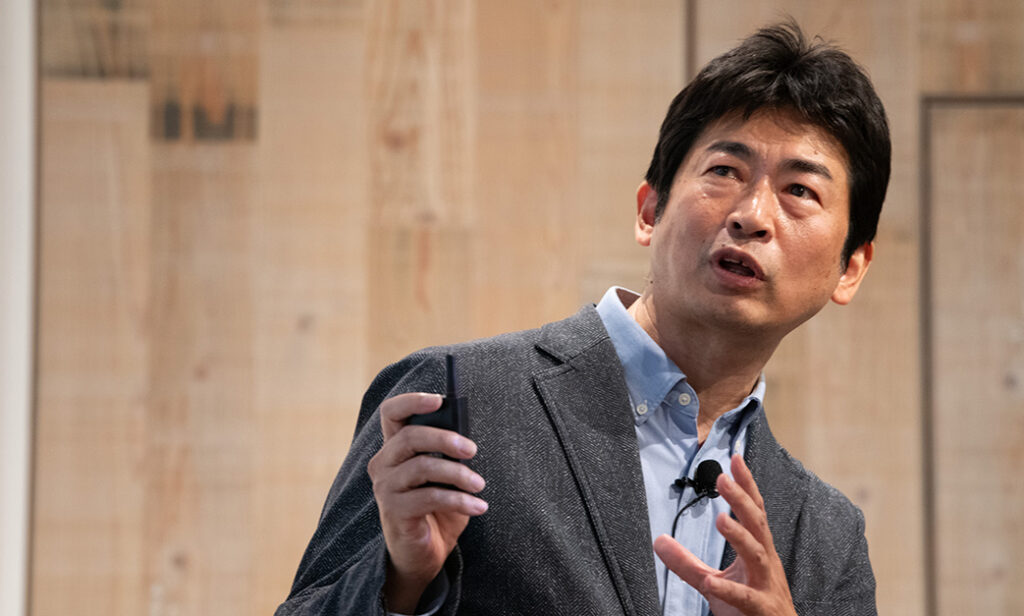
グローバル展開に向けたサステナビリティ革命
Miyazawa: While technology and business models are important, what's truly vital is that unyielding spirit, that tenacity, and that passion. Within that context, I imagine you have ambitions not just domestically but also for global expansion. Could you tell us more about that?
Sakamoto: At TBM, we identify the following three factors as key drivers.
First is intellectual property strategy. Global patents are now much easier to obtain, making it crucial to secure at least the fundamental patents. LIMEX has secured over 150 patents in more than 40 countries worldwide and has commenced global operations.In the 2022 Intellectual Property Merit Awards presented by the Japan Patent Office (JPO), LIMEX received the "Minister of Economy, Trade and Industry Award." The Ministry of Economy, Trade and Industry also offers subsidies for patent acquisition, so I encourage startups to take advantage of these programs.
The second is the fabless model (※4). The model where you cannot produce the final product without owning your own factory is extremely time-consuming and costly. In the case of LIMEX, once the material is produced, it can be molded in existing factories, enabling rapid global expansion. The raw materials—limestone and resin—are available worldwide, so with just the recipe, it can be manufactured anywhere.
※4 A model for conducting manufacturing activities without owning a factory
Third is collaboration with global partners. As environmental regulations rapidly change worldwide, it is difficult for Japanese venture companies like ours to advance our business while learning each country's rules. Therefore, we need to partner with companies in each country.We have agreed on a 13.5 billion yen capital and business alliance with the South Korean conglomerate SK Group. We are advancing our LIMEX business by integrating it into their global strategy. We expect to jointly develop products they wish to sell and leverage their global network to market them.
We are also working with distributors and industry associations in other countries to adapt to each nation's rules and culture. For example, in China, where local governments hold significant power, we partner with them. In Vietnam, we established a local subsidiary, and in Thailand, we contracted with a local distributor—tailoring our approach to each country and region.
Also, when it comes to international conferences and communities (exhibitions, summits, etc.), green startups tend to be well-received, so you should definitely challenge yourself to participate. Events held in Japan attract a wide variety of visitors from overseas, so be proactive in attending. Support from the Ministry of the Environment and the Ministry of Economy, Trade and Industry is readily available, and the Tokyo Metropolitan Government also hosts global conferences. Green startups are currently in demand, so I think it's a good idea to take full advantage of these opportunities.
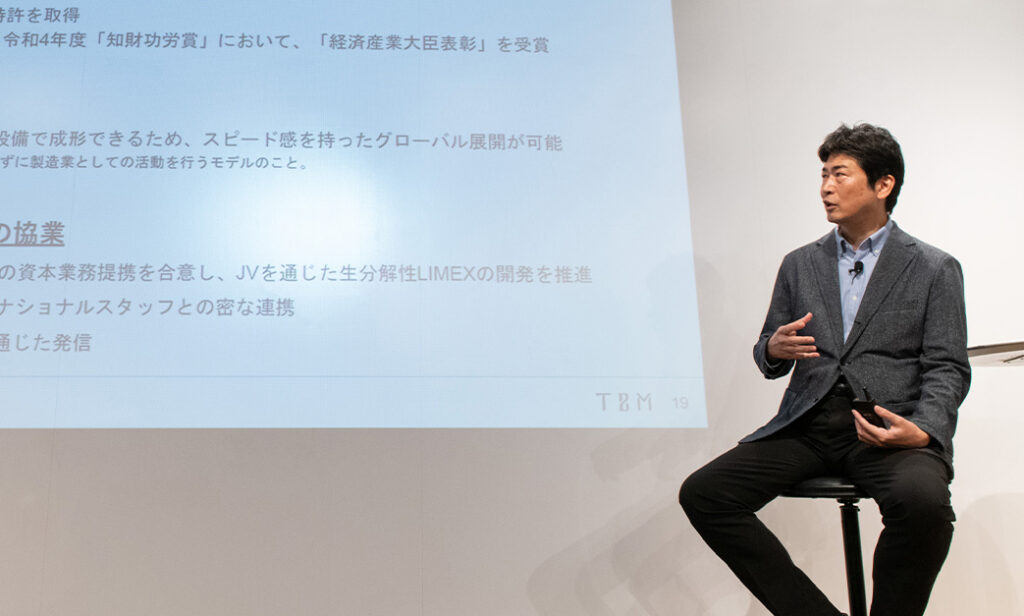
We have set globally applicable goals. One is "Go Carbon Negative"—a target to make all our operations carbon negative by 2030. The other is "Go Circular"—a goal to circulate 1 million tons of LIMEX and plastic across 50 countries by 2030. We are advancing our business with these ambitious targets in mind.
Miyazawa: Thank you for explaining. In the green sector, where it's already difficult just to run a business domestically, when did TBM start considering global expansion?
Sakamoto: From the very beginning, our founder, Yamasaki, envisioned a business capable of global expansion.
Miyazawa: When did you make your first move?
Sakamoto: To start from the very beginning, in 2015, the first LIMEX factory began operations in Shiroishi Zao, Miyagi Prefecture. Products made there were adopted for posters at the Milan Expo. It was a very small step, but I believe that was the first step in our global expansion.
Miyazawa: How did you secure the Milan Expo poster project?
Sakamoto: The Milan Expo is a valuable opportunity to showcase Japan's technology to the world. To secure our participation, the Ministry of Economy, Trade and Industry and many others worked tirelessly.
Miyazawa: Earlier, you mentioned partnering with South Korea's SK Group to advance global expansion. Japan also has numerous large corporations engaged in global operations. Is collaboration with Japanese companies difficult?
Sakamoto: As a Japanese startup, we naturally want to expand overseas with Japanese companies if possible. However, it just so happened that SK Group in South Korea was very dynamic and approached us about expanding overseas together. Actually, when we attend international events, we receive partnership offers from overseas companies just as often as from Japanese ones. So I think it's better to keep the option of partnering with overseas companies open from the start.
Miyazawa: Depending on the nature of the business, is it possible to partner with different companies domestically and internationally?
Sakamoto: Actually, Japanese incinerators emit the least toxic gases in the world and also have excellent power generation efficiency. Several major companies are already selling incinerators in Europe. I think there's potential for a business model where we bundle our recycling technology with Japanese incinerators and sell them overseas in partnership with large Japanese corporations.
Miyazawa: I think the goal of expanding into 50 countries worldwide is truly ambitious. For example, how do you envision entering the European market?
Sakamoto: Europe is truly highly environmentally conscious, and we want to enter the market sooner, but the rules are very strict, making the barriers high. For example, there are regulations on exporting raw materials, and laws are constantly being enacted that favor resource recycling within the EU. It's difficult for us to do this alone; we need to partner with companies already operating in Europe or with companies capable of conducting robust lobbying activities in Europe.
Miyazawa: Thank you. Finally, could we ask Mr. Sakamoto to share a few words with everyone here today?
Sakamoto: Japan is seeing the emergence of many startups with excellent technology and systems. I hope we can work together to create effective synergies between Japanese corporations and startups, and then, if necessary, involve major overseas corporations and startups as well. I look forward to your continued support.
(3) Introduction to the Tokyo Consortium Initiative
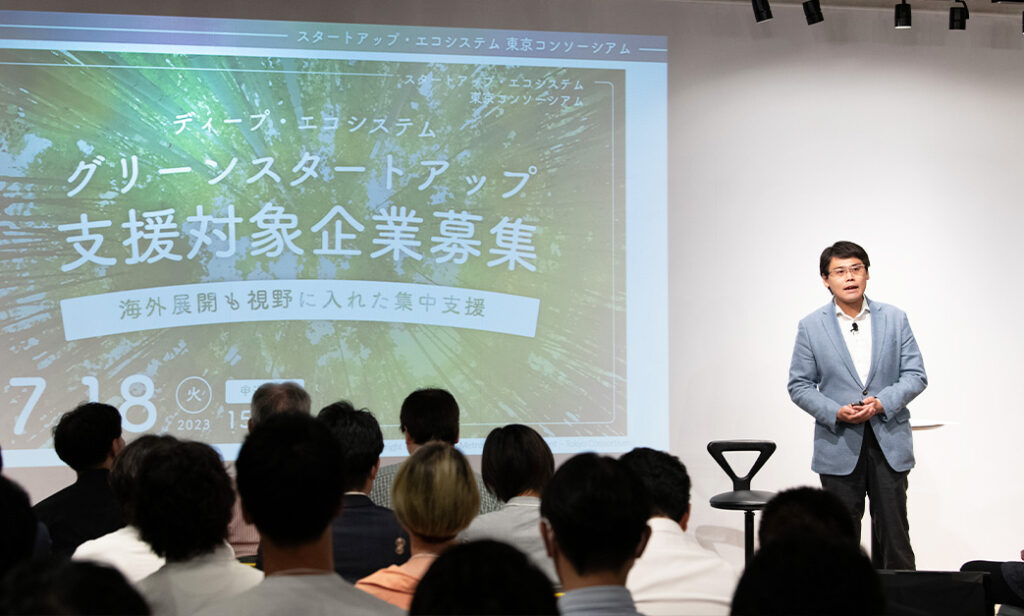
Yosuke Morimoto from the Tokyo Consortium Secretariat introduced the Tokyo Consortium's Green Startup Support Program. The Tokyo Consortium is currently accepting applications for companies to receive Green Startup support in fiscal year 2023.
Call for Applications: 2023 Green Startup Support Program (tokyo.lg.jp)
(4) Introduction of Tokyo Consortium Members (Tokyo Tatemono / NEDO)
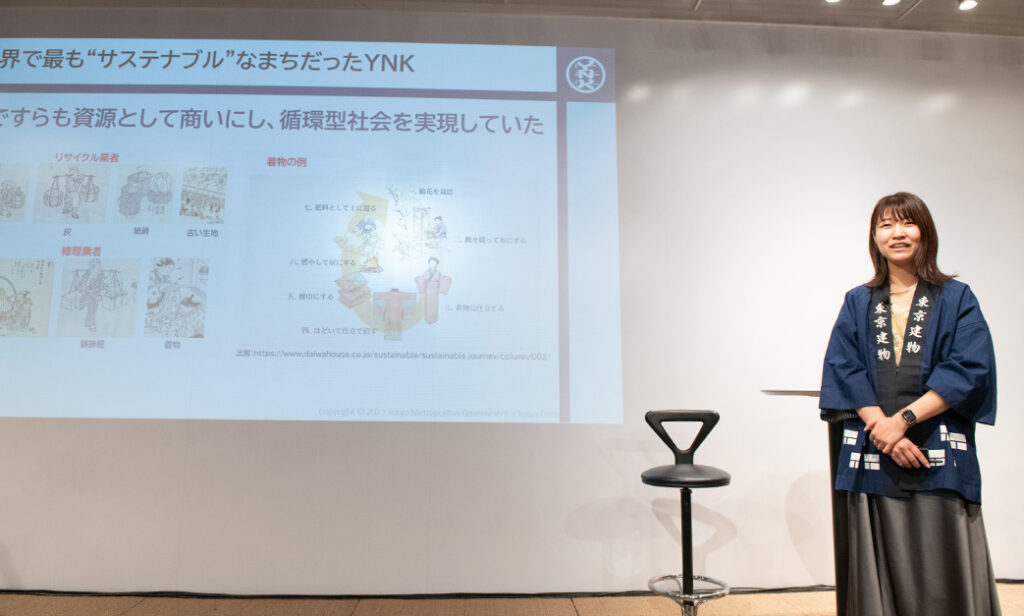
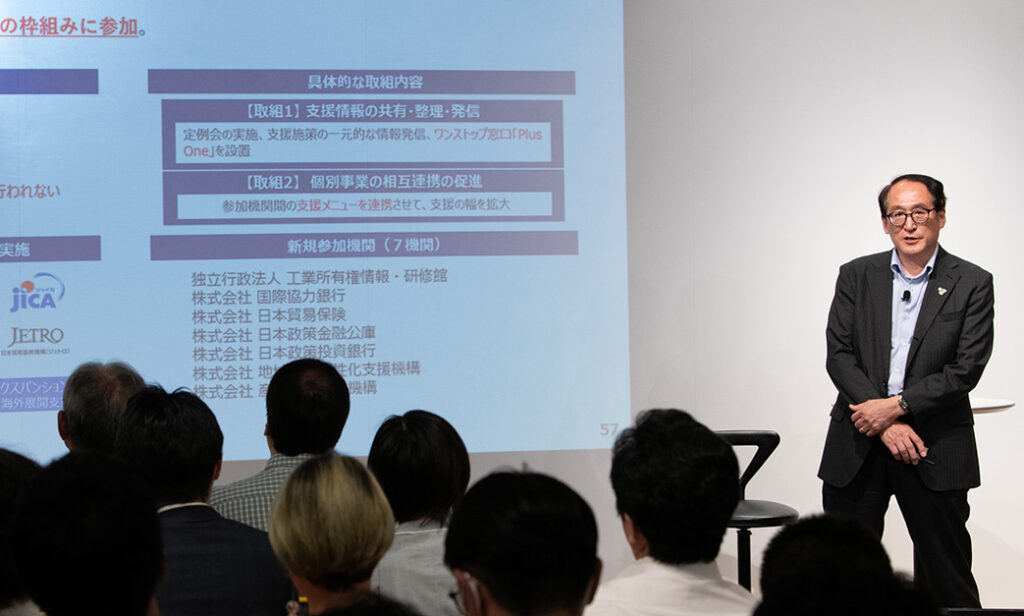
Tokyo Tatemono, a member of the Tokyo Consortium, introduced its sustainability initiatives. Next, NEDO (New Energy and Industrial Technology Development Organization), which is expanding its budget for green initiatives, introduced its support programs for startups.
(5) Social Gathering
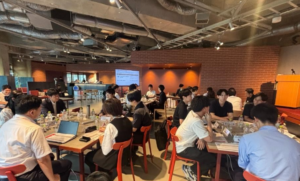
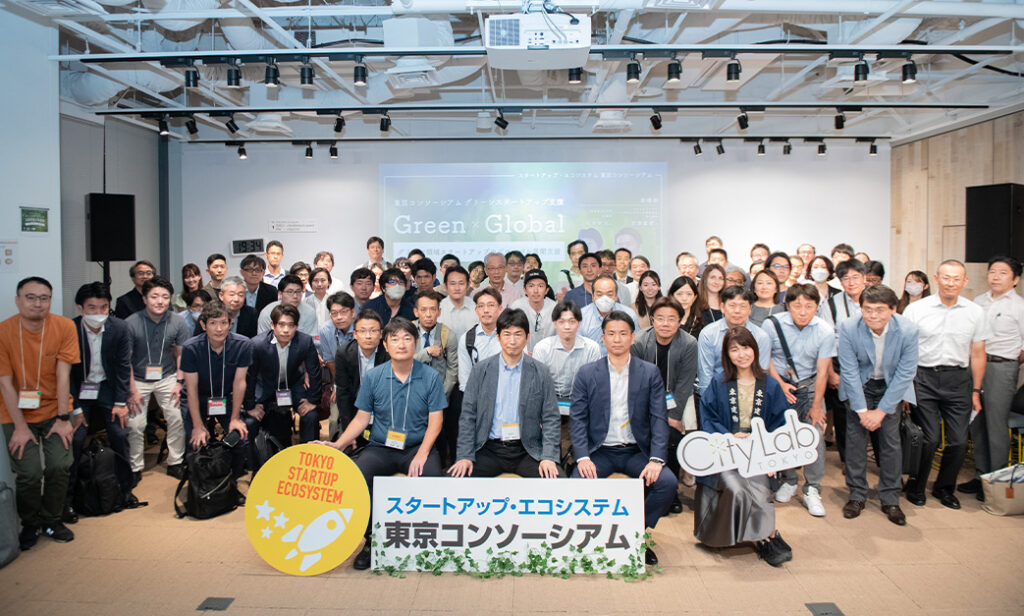
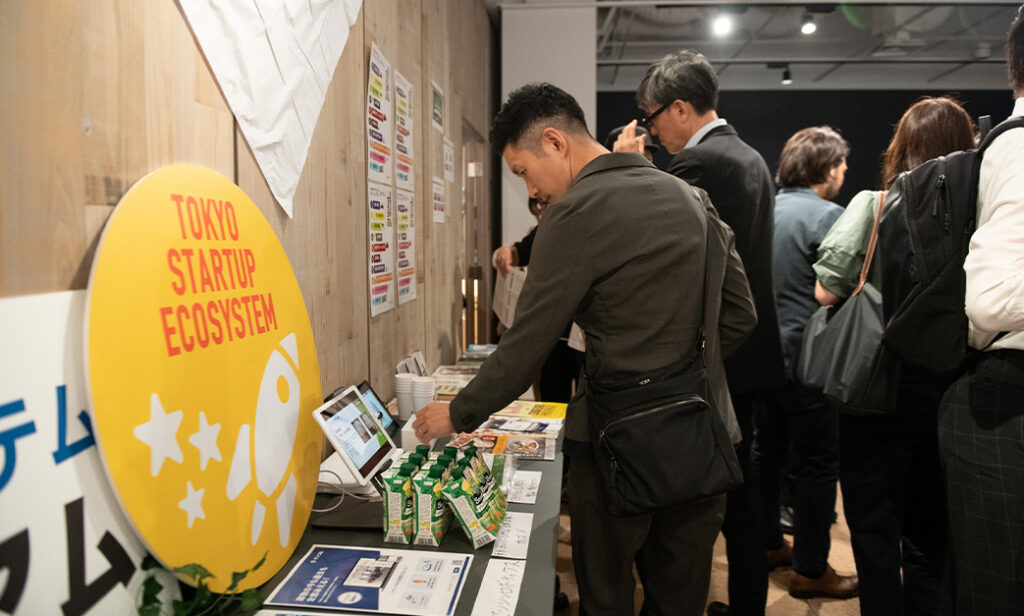
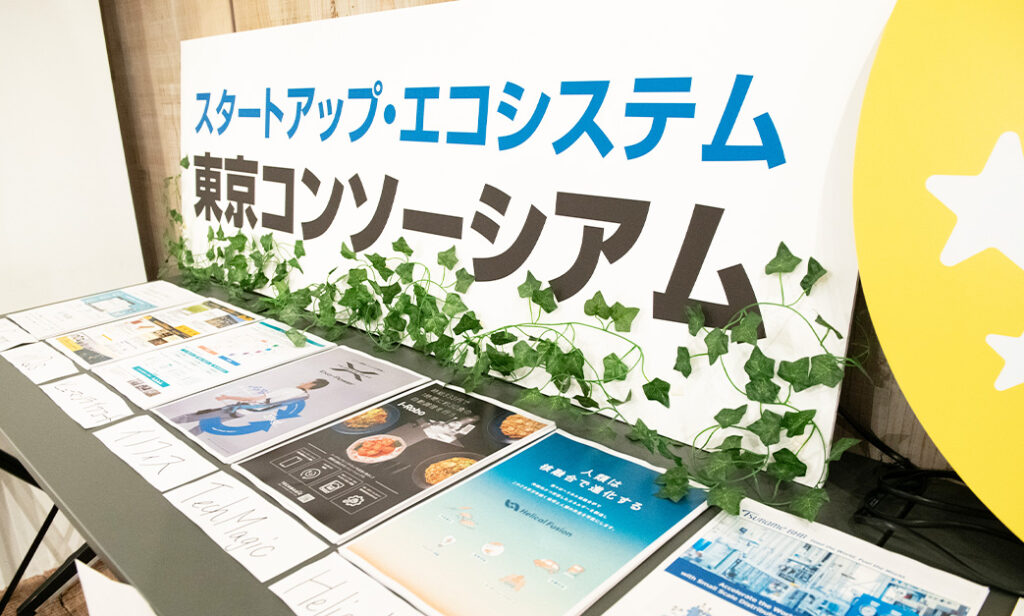
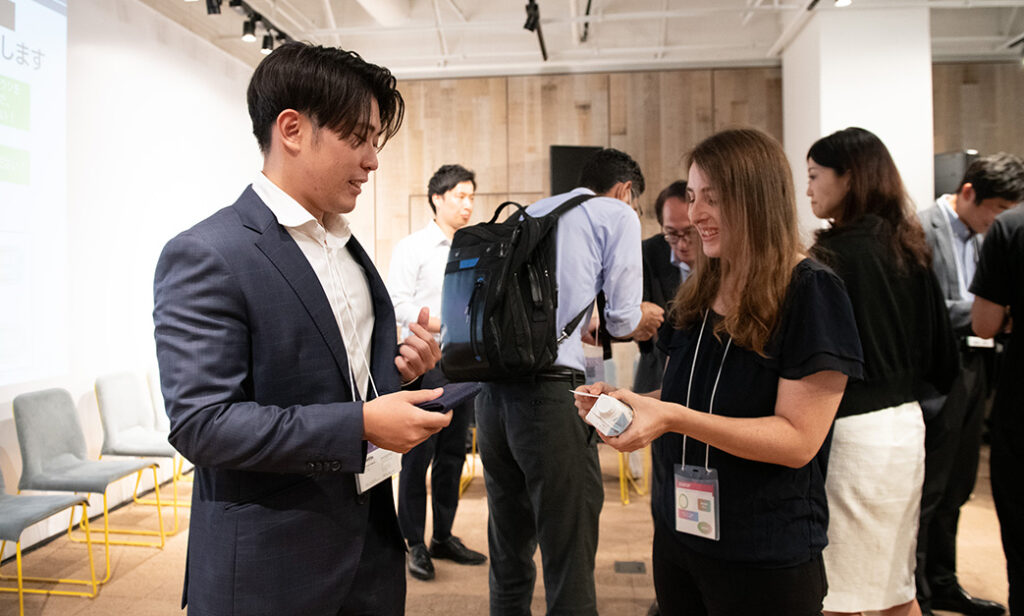
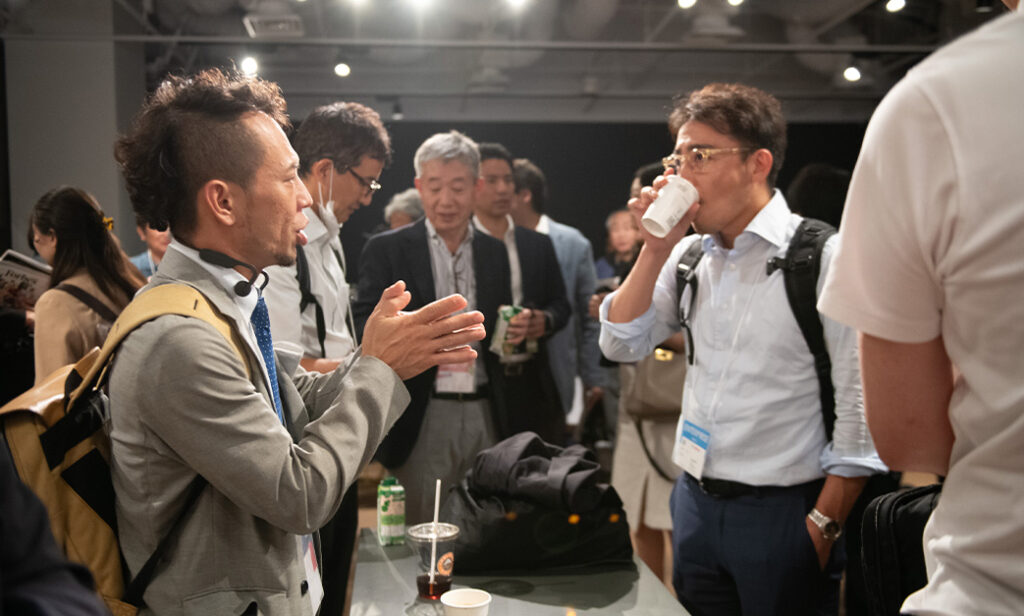
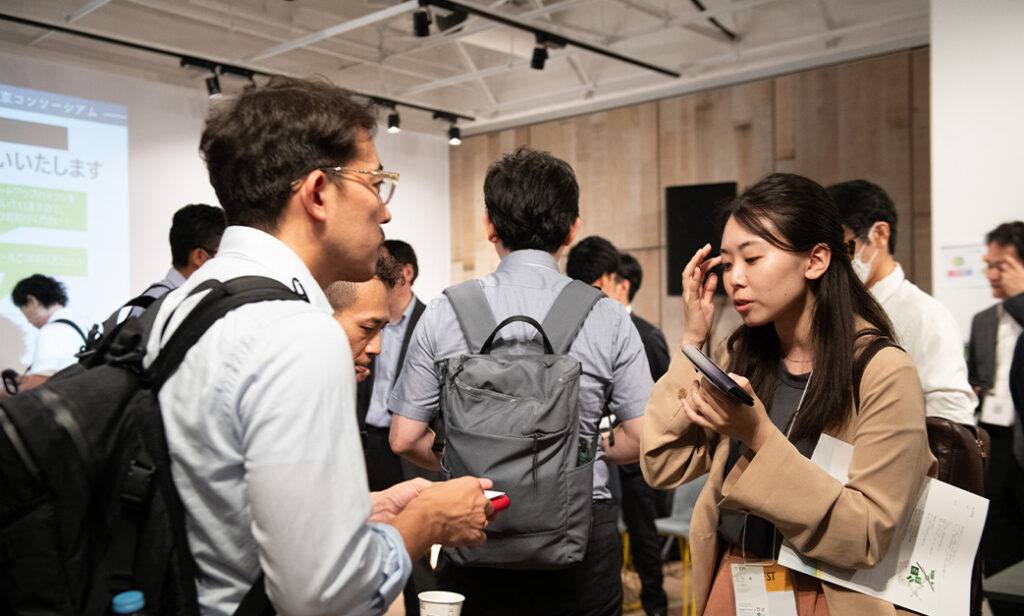
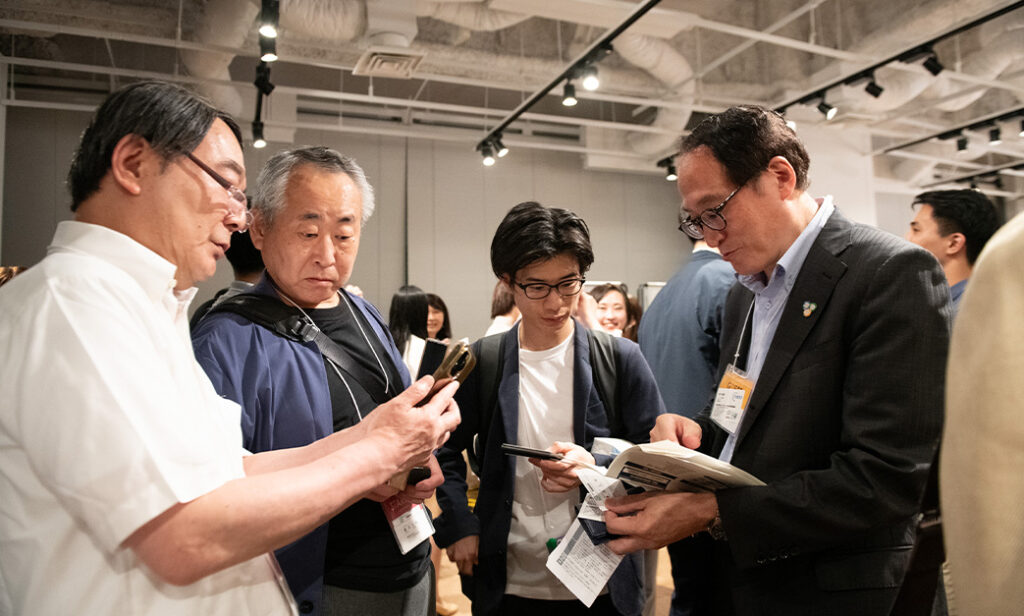
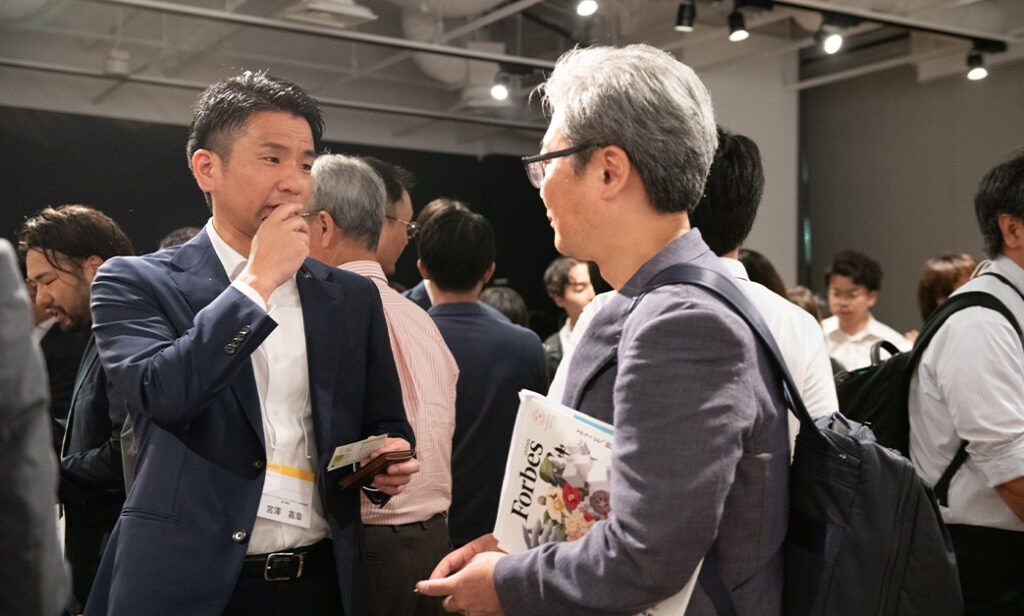
A networking reception was held for all attendees. Kagome, a Tokyo Consortium member, provided complimentary juice at the venue. To help participants quickly identify each other's affiliations, the design of the dedicated lanyard holders was categorized into "Startups," "Business Companies," "Investors/Financial Institutions," "Government Agencies/Universities," and "Media." This design greatly facilitated smooth networking among attendees.The venue was filled with an energetic atmosphere, and lively information exchange continued until the closing.
(6) Participant Feedback
"Few Japanese startups actively expand overseas like TBM, so hearing Mr. Sakamoto speak in person felt like a truly valuable opportunity, and I learned a great deal."
"The keyword 'persistence' that Mr. Sakamoto mentioned really stuck with me. Since green sector businesses don't yield immediate results, I felt it's important to keep challenging yourself with passion and hold onto your strong convictions without giving up."
"I'm a venture capitalist, and networking events like this where I can meet startups, VCs, and CVCs interested in the same themes are incredibly valuable. Achieving carbon neutrality and building a circular economy can't be done by one company alone, so personally, I'm thrilled to connect with people from various corporations."
"The ESG landscape varies significantly by country, and new rules and regulations are constantly emerging. Hearing Mr. Sakamoto speak really drove home how crucial it is to partner with overseas counterparts when expanding internationally."
I found Mr. Sakamoto's firsthand account very compelling. If I get another chance to hear him speak, I'd like to hear more about his failures—stories that would be especially useful for startups looking to expand overseas.
As Mr. Sakamoto said, various countries are starting to establish their own regulations in the environmental sector. If you enter the market without knowing anything, you'll end up failing and wasting time. That's why I thought information exchange on these matters should be done before going overseas.
That's all.
Share the article