A groundbreaking service enabling general users to perform annotations
Date: First, could you please introduce APTO's business activities?
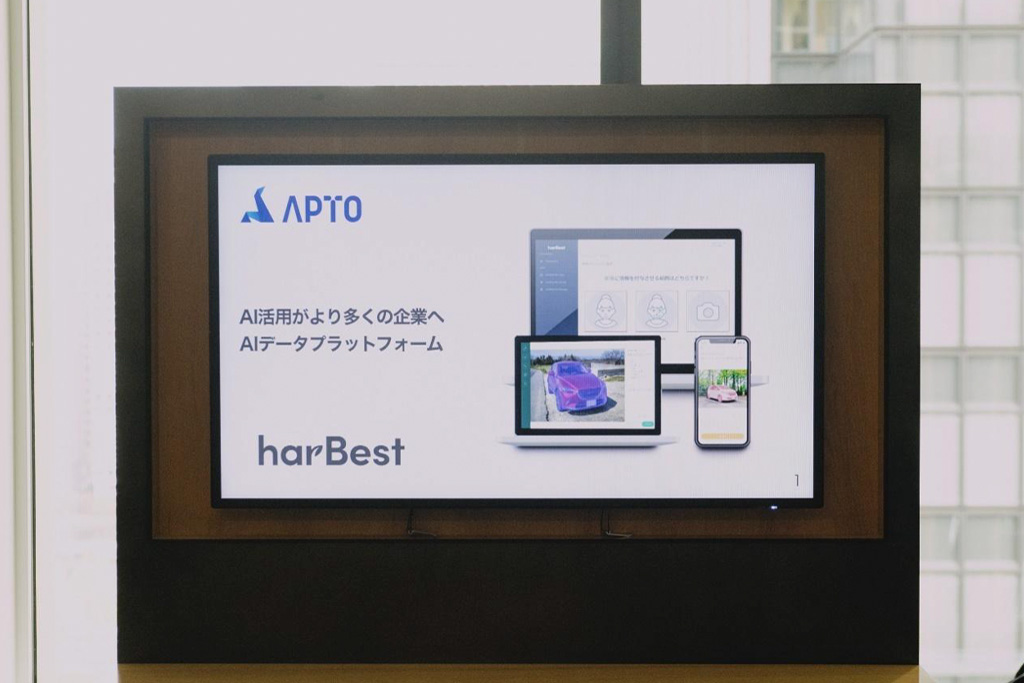
Takashina: Our company provides 'harBest', a web-based ordering platform for AI data. 'harBest' is a service that enables general users to collect and create data required for AI. Companies developing AI can directly request data creation from our users via the web. Compared to competitors, we offer costs less than half and speeds over twice as fast, while our proprietary patented technology ensures high-quality data collection. Our mission is to realize the world's fastest data collection and creation platform.
Date: Why did you decide to start such a service?
Takashina: I started out as an engineer and had previously considered creating an automated flaming detection service for social media. My initial experience highlighted the fundamental challenge of collecting the data necessary for AI. Since data collection was a bottleneck not just for me but also for many other clients, I thought creating data for AI could become a viable business.
Data is critically important for AI. Recently, news has reported on overseas workers mass-producing data for ChatGPT and AI annotation work being done in impoverished regions of China. Annotation is the process of labeling data with correct answers.The AI workflow consists of four processes: ① Data collection/creation (including annotation), ② AI development, ③ Deployment, and ④ Evaluation. Based on this evaluation, data collection/creation is often repeated. Among these steps, data collection/creation is the most time-consuming, reportedly accounting for nearly 80% of the total effort. While the work itself is straightforward, it is indispensable for AI development.
Date: 'harBest' is a service where general users perform annotations, right? Specifically, what kind of work do they do?
Takashina: For example, when building AI to recognize guardrails, we first need to teach the AI what a guardrail is.While humans can understand guardrails intuitively, AI cannot grasp them without initial training. For instance, we perform annotations like drawing a rectangle around areas labeled "guardrail present." This service allows users to earn rewards for continuing such tasks, with the data then utilized for AI training. It employs a mechanism similar to smartphone-based reward apps, designed to make participation easy for contributors.
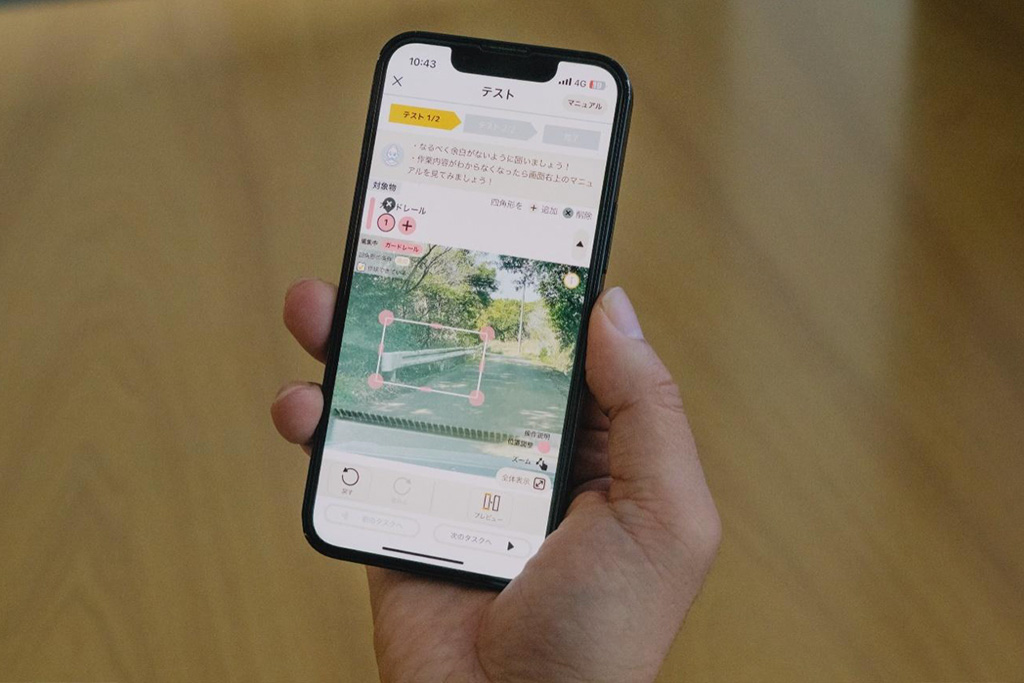
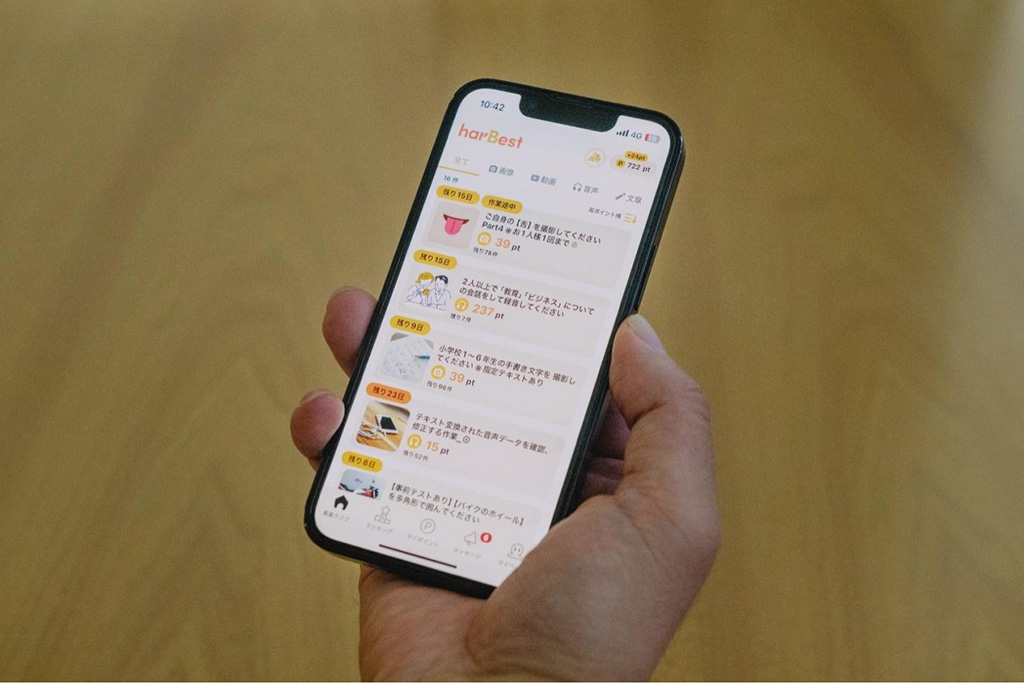
Many companies utilizing AI face three primary challenges. First, they possess data but struggle to organize it. Second, they want to advance their work but lack sufficient personnel. Third, they encounter insufficient data. Surprisingly, highly paid AI engineers sometimes engage in simple tasks like "enclosing guardrails with squares." To address this, we offer our service, harBest.
Date: I feel that 'harBest's' strength as a service lies in its simplicity and ease of use, allowing even general users to work without stress.
Takashina: That's correct. However, while this is feasible for data with low confidentiality, such data often cannot be publicly disclosed. This is especially true for manufacturing clients, who frequently cannot release data externally. Therefore, we also offer a model where we manage both the data and the personnel internally without disclosing client data externally, ultimately delivering the final product.
Date: How do you ensure data quality? When general users perform tasks, how do you maintain high quality?
Takashina: Our system incorporates a feature where if multiple workers participate in processing a single piece of data—for example, if the worker on the far right is performing a different task—that data is flagged as unreliable. Furthermore, cloud workers are evaluated by Smart Checker AI, and the points they can earn vary depending on the task content. This creates an incentive for workers to perform their tasks accurately.
Additionally, some of the data we handle requires particularly high security. Therefore, we refer to users who submit identity verification documents and non-disclosure agreements (NDAs) via our smartphone app as Pro users. For the data provided by these users, we have fully internalized the processing as a BPO service and ensure its security.
Date: For users, it's great that it feels like a game and lets you earn pocket money during spare moments.
Takashina: Last month, many users were earning around ¥100,000 per month. We want to help them increase that further, but even now, I believe it's one of the more lucrative points-earning apps available.
Expanding into Africa with IT-related outsourcing services
Date: Thank you. Now, could you tell us about your business, Mr. Davic?
Noro: Our company operates IT education and IT-related outsourcing businesses. In our education division, we run the programming school "DPro," conducting operations in Japan and approximately 10 countries across Africa. We provide working adults seeking career changes with the opportunity to learn programming and build careers as IT engineers.
Our corporate philosophy is to provide pathways for success regardless of background. When we asked ourselves, "Where are the people facing the greatest challenges?" we concluded it was in Africa, where economic development lags. While many Africans lack employment opportunities, there is a wealth of talent with computer science skills. Therefore, we began supporting them primarily through IT education, then expanded into services that provide outsourcing opportunities to top talent.
Date: What percentage of your outsourcing business is conducted in Africa?
Noro: It accounts for about 10% of our total business. While Japan remains the core of our operations, Africa is a market we intend to actively expand into going forward. It represents a new challenge for us and is a new business area we consider highly important.
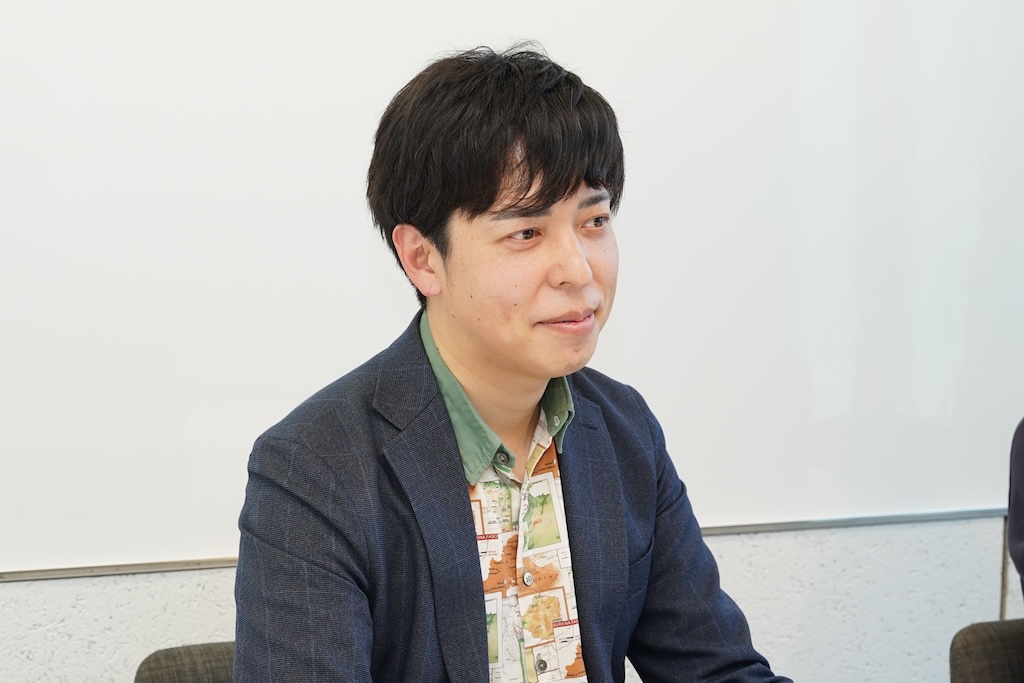
Reaching a business partnership through the Tokyo Consortium
Date: At Tokyo Consortium, when we host events, we don't just offer one-way lectures or seminars. We also create opportunities for participants to interact, like networking sessions and workshops. Our goal is to foster connections with large corporations and other startups. The meeting between APTO and Divic actually came about through a Tokyo Consortium event held last year. So, why did you decide to participate in Tokyo Consortium in the first place?
Noro: I've always been interested in business networking with companies. Specifically, Japanese companies looking to expand into English-speaking markets are the ones with potential connections to the African IT talent I mentioned earlier. I joined the Tokyo Consortium hoping to find companies there whose challenges we could help solve by partnering with them.
Takashina: While advancing our annotation business, we often faced situations where we lacked sufficient outsourcing partners. During our search for such partners, we met Mr. Noro, who operates in Africa, through the Tokyo Consortium. Companies undertaking annotation projects typically source partners mainly from Southeast Asian regions like Vietnam. Meeting Mr. Noro led us to consider Africa as a potential outsourcing destination as well.
Date: APTO and Divic later developed a business partnership. Did you have the impression from the start that it might lead to business?
Noro: To be honest, when I first met Mr. Takahashi, I hadn't even considered that annotation might relate to my own business.My focus was on our core education business and software development, and I was somewhat fixated on those areas. However, after hearing about annotation directly from Mr. Takahashina and the APTO staff and researching it further, my perspective shifted. I began to think, "This could be the perfect match—creating new job opportunities locally while offering Japanese companies a low-cost outsourcing solution."APTO's strong desire to take on new challenges really came through, and I felt that APTO might resonate with our goal of "providing employment opportunities in Africa" and be willing to work together on it.
Takashina: I often get approached by startups doing business in Africa asking, "Can we do annotation work in Africa?" But not once did that lead to actual business progress. Mr. Noro, however, approached it with a different level of commitment. I believe our business partnership materialized because he tackled it with a clear vision for the future. His ability to follow through—to see things through to the end—is, I think, a testament to his strength as a leader.
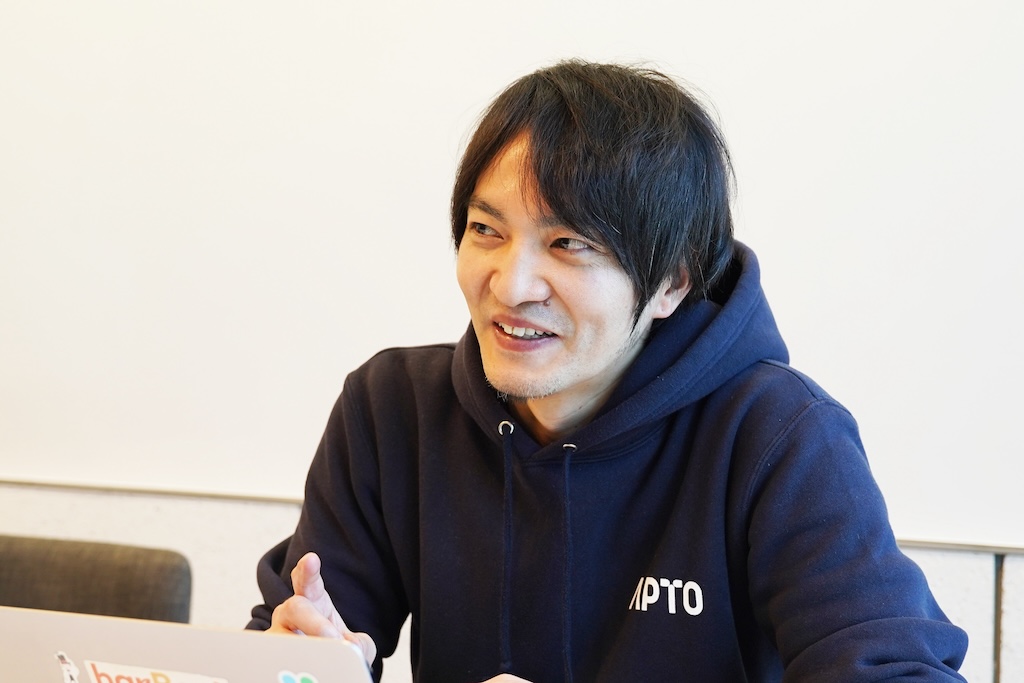
Date: Despite there being no precedent for APTO, did you hesitate at all about outsourcing annotation work to people in Africa?
Takashina: Quality is extremely important in annotation, and initially, I was concerned about whether we could reliably ensure it. However, just as in Africa, in Japan too, quality is guaranteed when you have a well-organized team. Admittedly, we did struggle a bit in the early stages, but as we gained experience, accuracy improved and quality became assured. Now, communication has also become smoother, and I feel we can proceed efficiently.
Date: In terms of quality assurance, I imagine Mr. Daibic also went through a lot of trial and error since this was his first time tackling such an initiative.
Noro: That's right.Working with APTO was our first step into the annotation business, which was a major milestone for us. It's probably one of the few cases where an annotation project was outsourced from a Japanese company to Africa. Since it was our first attempt, we started without a clear management process in place, which caused some initial inconvenience. However, as we gained experience, we improved areas that could be standardized and refined the process, leading to greater stability.
A noteworthy point is that the annotation work is being done by highly capable young people who graduated from top-tier local universities and have studied machine learning, enabling them to develop models. This is a situation rarely seen in Japan; likely, in Japan, such talent wouldn't accept the work unless offered a high hourly wage. However, for them, being able to participate in an IT-based project, especially one involving machine learning, is a valuable opportunity, and all the local members are delighted.
Date: Specifically, which African countries were involved in this project?
Noro: Sierra Leone, Ghana, and Rwanda—three countries.
Date: Do characteristics differ by country?
Noro: It might just be a coincidence, but among our members, I get the impression that the Sierra Leoneans work at a faster pace, while the Ghanaians and Rwandans take things calmly and work step by step.
Fostering interaction among participants and serving as a bridge between people
Date: You've both participated in several Tokyo Consortium events. What were your impressions?
Takashina: I get the impression that the Tokyo Consortium really focuses on offline events. I attended a startup-related event held in June 2023 ( https://ecosystem.metro.tokyo.lg.jp/events/2023june-report/ ), and I felt they actively created opportunities for us to promote ourselves—for example, by providing a space to display startup flyers and incorporating features designed to encourage networking among participants.
Also, at this event, Yusuke Asakura from Animal Spirits LLC said, “What startups want from big companies is money, money, money,” and I thought that was absolutely spot on…Money is truly crucial for startups. While this isn’t limited to the Tokyo Consortium, I hope to see a greater acceleration of mechanisms that ensure startup support budgets from the national government and the Tokyo Metropolitan Government ultimately reach the startups themselves. If direct financial support is structurally difficult, I’d be happy to see mechanisms that give more back to startups—such as increasing the prize money for business awards hosted by the national government or the Tokyo Metropolitan Government to 10 million yen.
Noro: It leaves a strong impression of connecting people. At events like this, the networking function is incredibly important, and I feel meaningful connections often form more frequently compared to other events. I think Mr. Date consciously works with a sense of "this person and that person would get along well," and that becomes the added value of the Tokyo Consortium, doesn't it?
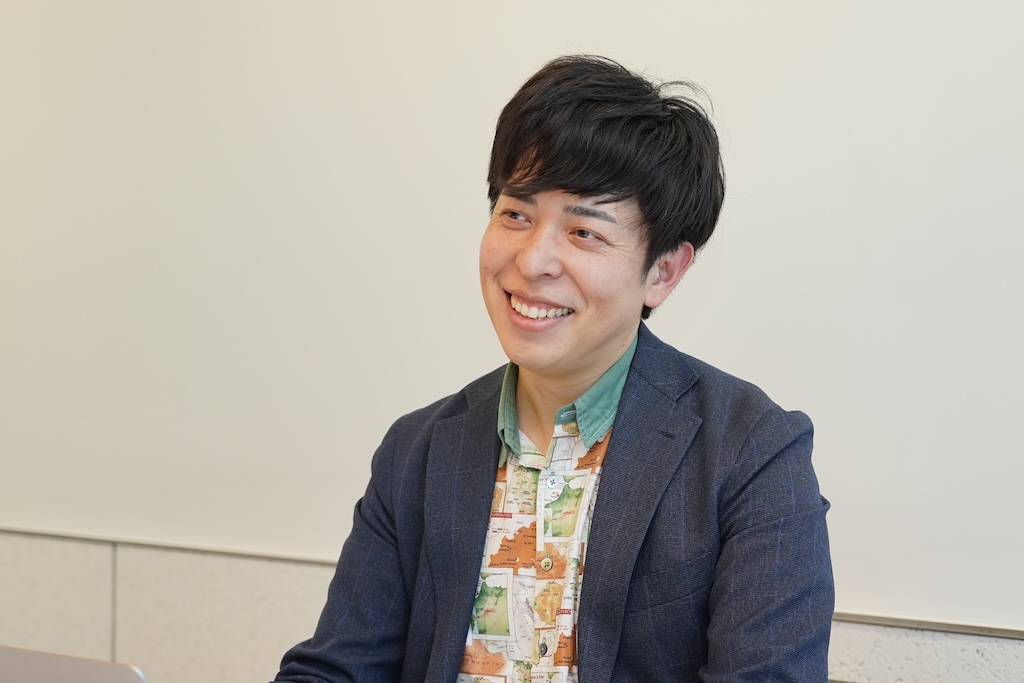
Date: That's right. If we just say, "Alright, networking time. Go ahead," and leave it up to the participants, it rarely works out well. That's where we believe we can add value.
Expectations for matchmaking that leads to sales
Date: The Tokyo Consortium is a platform designed to create an ecosystem that connects all startups, from seed to later stages, providing comprehensive support. Within that framework, what are your expectations for the Tokyo Consortium?
Takashina: Acquiring customers is crucial for startups. Without customers, people may question whether there's genuine demand for the service.Through the various forms of support we received from the Tokyo Consortium, I strongly felt that the crucial factor was how well they could introduce companies likely to be a good match for us. While it might be difficult for every introduction to succeed, even if only one out of ten introductions leads to tangible results, that single success can become an extremely important case study for a startup. I believe the means—whether events, personal networks, or other avenues—are varied, but broadly introducing companies is of paramount importance.
Date: I also feel daily that we're expected to deliver matchmaking that translates into sales. While Mr. Takahashi mentioned "broadly," I believe the Tokyo Consortium's value lies in effectively sourcing and introducing companies interested in the relevant startups, specifically the right people. Providing networking opportunities that encourage active participation from these key individuals will continue to be essential.
Noro: I would like to see more initiatives connecting to overseas markets, especially from a startup perspective.In the community I belong to, EO—Entrepreneurs' Organization, there are many executives interested in overseas markets but struggling to break into them. While executives sometimes travel abroad together for retreats, those are often the only opportunities to connect with local companies. I know there are foreign entrepreneurs starting businesses in Japan and startups coming to Japan from overseas, but opportunities to meet them are virtually nonexistent.
Date: So you want to increase connections with inbound visitors.
Noro: That's right. It would be interesting to meet people coming inbound and then connect with their home countries from there. Another thing I recently learned is that there's a community called TokyoDev (Tokyo Developer Community) for foreign software developers living in Japan who come from developed countries. I think connecting with people like that could help promote trends like startups establishing development organizations overseas.
Date: I see. Connecting with communities like TokyoDev could indeed help us connect with their home countries as well.
Noro: One more thing I feel when looking at the bigger picture is that the IT field is already facing a shortage of talent, even just among Japanese people. Many mega-ventures are already hiring foreign engineers. I think many companies are hesitant to take the plunge, but if, for example, foreign engineers living in Japan had more contact with Japanese startups, I feel startups would realize that "once you try it, you might be surprised how well overseas engineers can handle things."
Date: While the consortium is already making efforts to invite overseas guests to speak at events in Japan, we haven't yet achieved the desired matching. We would very much like to explore this further.
Messages from both of you
Date: Finally, could you both share a message for those considering joining the Tokyo Consortium?
Noro: You never know where unexpected connections might arise. This connection with APTO wouldn't have happened if I hadn't joined the Tokyo Consortium. Finding good connections isn't easy, but having a place to showcase what you're doing, or to hear what others are doing, and explore potential collaborations—I think that offers real business benefits.It's not just a typical business networking event. When people with a shared sense of purpose gather around a specific theme, you can feel the potential for connections to form, even if the topics aren't directly related. If you're considering joining the Tokyo Consortium, why not attend an event and see for yourself?
Takashina: I think it offers the chance to meet people you wouldn't normally encounter. Take the event with Yusuke Asakura we discussed earlier—if I hadn't joined the Tokyo Consortium, I wouldn't even have known such events existed. Being part of this group reveals opportunities you wouldn't otherwise see. To avoid missing out on valuable events like these, joining might be worth considering.
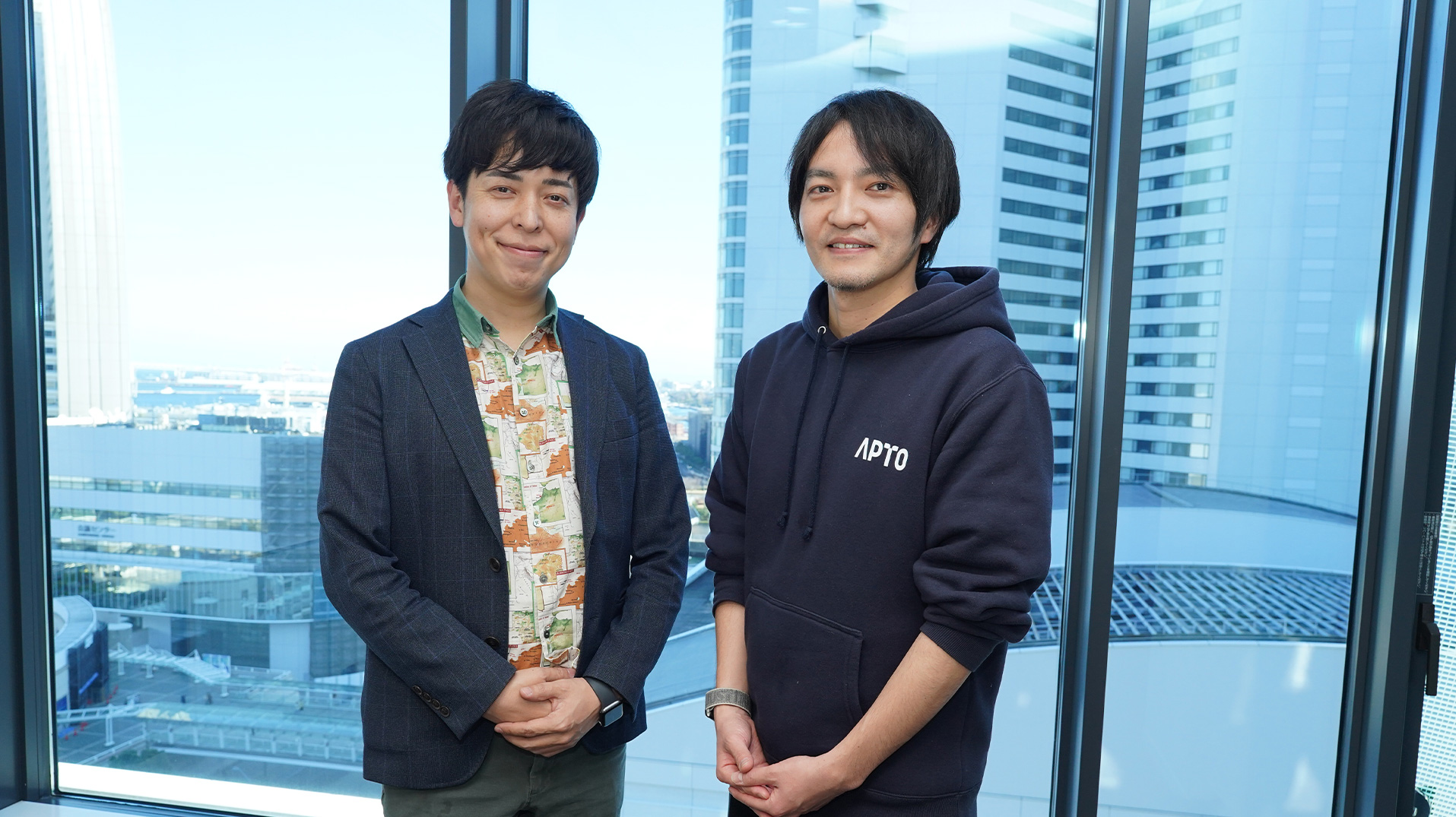
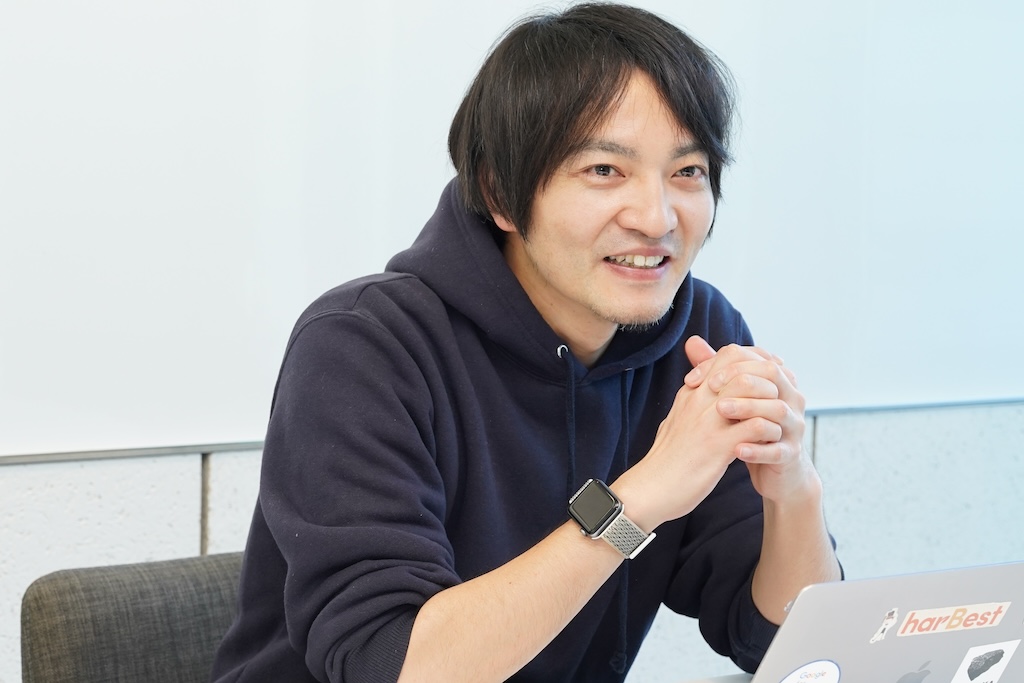
![Takashina Ryo [Photo right] (APTO Co., Ltd.) and Noro Hiroyoshi [Photo left] (Daivic Co., Ltd.)](https://ecosystem.metro.tokyo.lg.jp/wp-content/uploads/2024/04/TYZ05618-2.jpg)
Hiroyoshi Noro
President, D-Bic Inc.
Born on International Cooperation Day and raised in Yokohama City. After working in sales and corporate sales, he successfully completed Works Applications' problem-solving skills discovery program at age 29, despite having no prior development experience as a non-engineer. Subsequently, to address the shortage of IT engineers he observed during his own independent entrepreneurial journey, he founded the programming school "DPro" in 2015.Aims to deliver IT education and employment opportunities to every country in the world. Began IT engineer training in Rwanda, Africa, in August 2017. Produces graduates who thrive as IT engineers. Received the 16th "Globis Alumni Award" in the Innovation category in 2020.
, Representative Director, APTO Inc.
After majoring in Management Engineering at university, worked as a systems engineer building infrastructure and developing backends for major core systems. Became independent in 2017 with a VR business, developing entertainment VR content. Co-founded APTO in January 2020, recognizing challenges in AI data creation.
Share the article