1. Overview
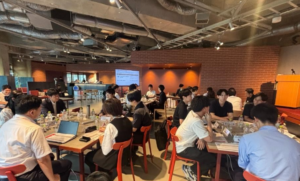
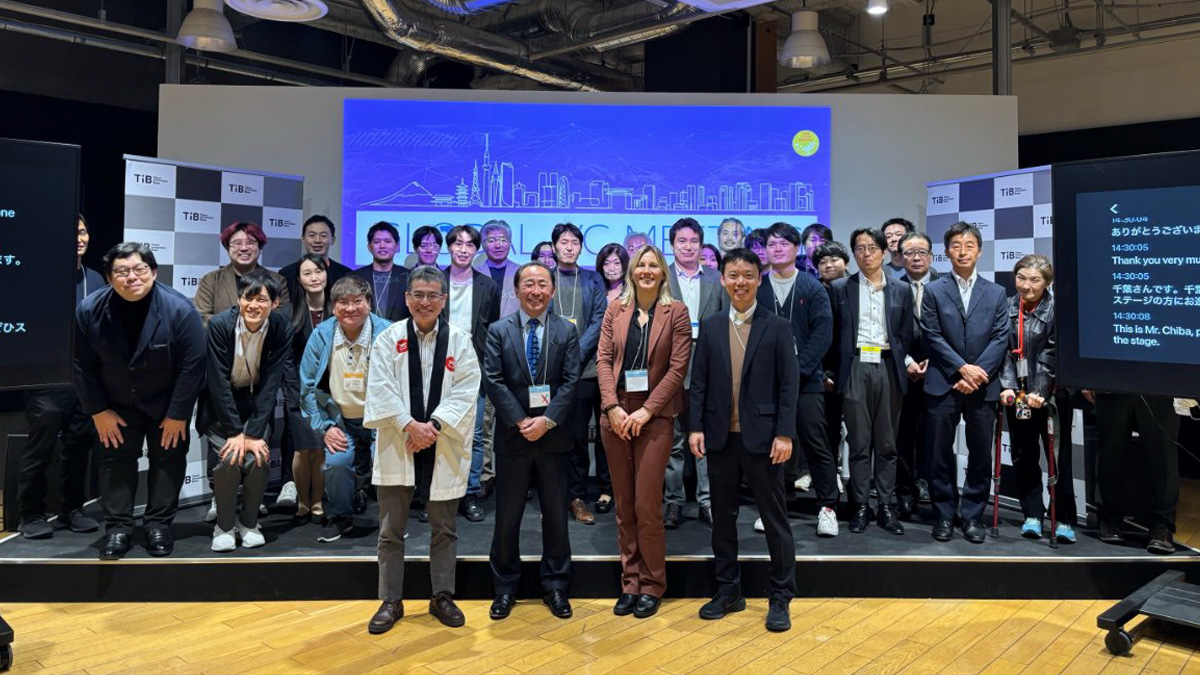
This event, held as the kickoff for next year's SusHi Tech Tokyo, consisted of three parts: "Explaining the Appeal of the Tokyo Market," "Overseas VC Talk Session," and "Networking Session." Mr. Nishiguchi, President and CEO of Startup Genome Japan, moderated the first two sessions.In the "Tokyo Market Appeal Presentation," Mr. Yoshimura, Director of the Tokyo Metropolitan Government, and Mr. Saito of Sozo Ventures discussed the potential of the Tokyo metropolitan area and the appeal of the Japanese market from the perspective of overseas startups. During the "Overseas VC Talk Session," Mr. Nishiguchi first provided an overview of the global startup ecosystem and Tokyo's position within it.Next, Alexandra from QAI Ventures explained the appeal of the Japanese market from the perspective of a world-leading VC investing in quantum/I computing, along with the benefits Japanese companies can gain from partnering with them. She stated they are actively considering entering the Japanese market and collaborating with Japanese companies.
2. Opening Remarks
At the opening, Mr. Morimoto from the Tokyo Consortium Secretariat delivered the opening remarks and introduced the Tokyo Consortium.
3. Explaining the Appeal of the Tokyo Market
Mr. Keiichi Yoshimura, Director of the Tokyo Startup and International Financial Center Strategy Office
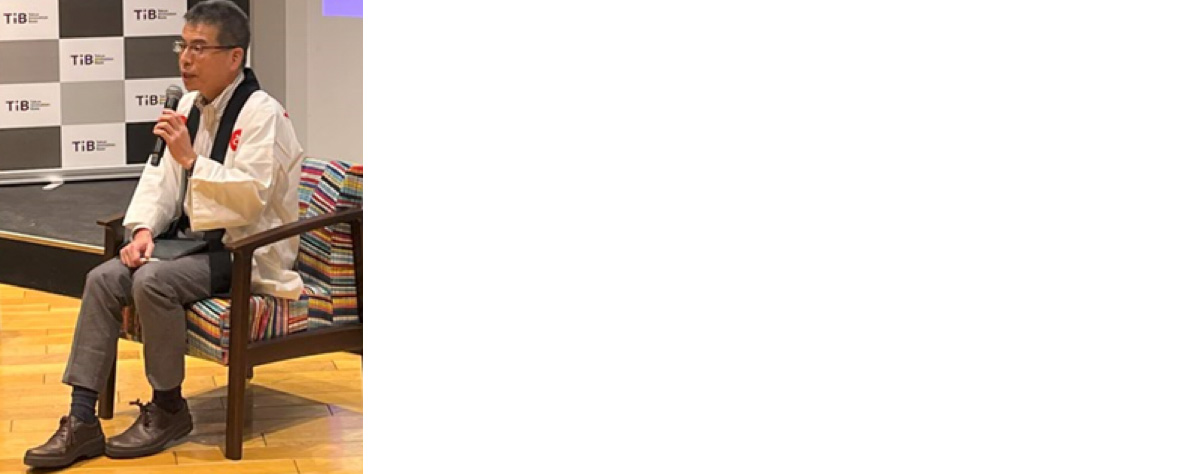
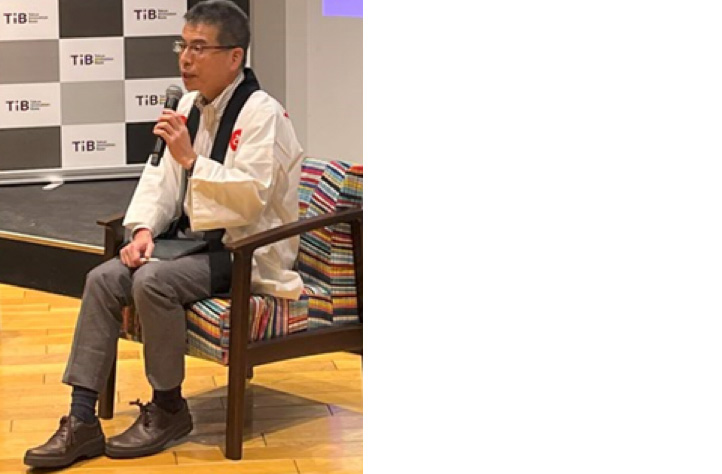
Yoshimura: The appeal of the Tokyo metropolitan area lies in its massive market of 30 million people, its concentration of major corporations and universities, and the legacy of "cleanliness, safety, and precision" passed down from previous generations.
Two years ago, Tokyo Metropolitan Government formulated a startup strategy with the goal of increasing the number of unicorns tenfold in the future. To achieve this, we need to attract investment from overseas. Therefore, we are advancing initiatives aimed at fostering SU cities that are chosen by the world and grow globally.
Going forward, we aim to strengthen ties between Japanese corporations and overseas startups. Even when participating in overseas exhibitions, we received numerous requests from local startups seeking collaboration with Japanese companies regarding their open innovation initiatives.
Furthermore, connecting overseas investors with Japanese investors and VCs is crucial for attracting foreign investment into Japan.We plan to invite overseas investors to the SusHi Tech event in May 2025, and this event serves as the kickoff for that initiative.
Sozo Ventures Senior Director and Director of the Fintech Association of Japan, Kenichi Saito
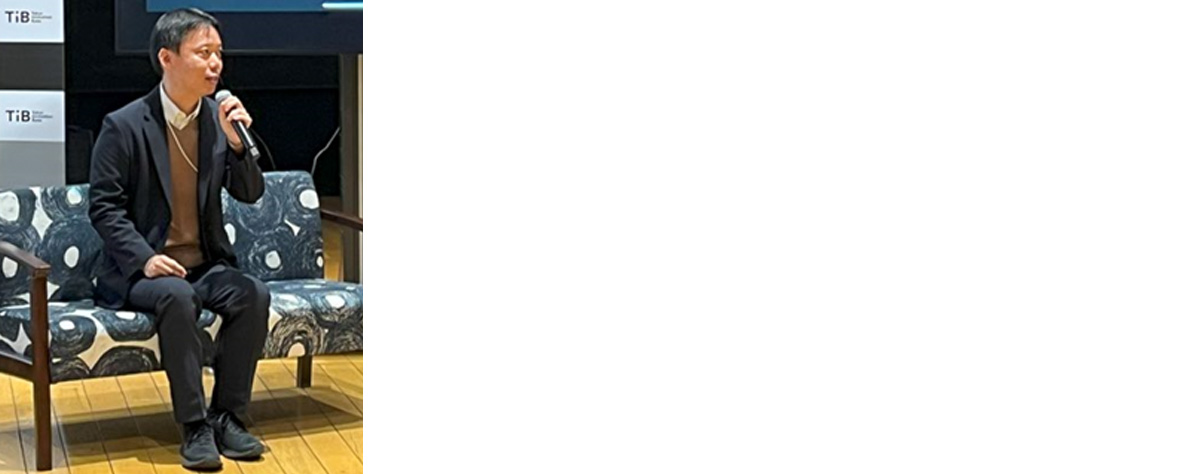
Saito: During my five-year assignment in Silicon Valley starting in 2015, I personally felt that Tokyo's priority for international expansion is by no means low for overseas startups. Furthermore, I believe its importance has grown even more in recent years from a geopolitical perspective.
Sozo Ventures is a Silicon Valley-based VC primarily investing in overseas startups, mainly in the US. Our Tokyo office has supported startups from various industries in entering the Japanese market, acting as a business development facilitator. Since top-tier startups tend to choose top-tier VCs, building a mutually beneficial, trusting relationship is crucial. When startups pursue expansion in Japan, we advise them on forming partnerships with Japanese companies from every angle.
Specifically, it goes without saying that identifying truly successful partners is vital. It's not as simple as assuming a fintech company should partner with a bank. Sometimes the most effective partner might come from an industry not immediately obvious as a partner—for example, even for fintech, a convenience store chain could be the most valuable partner. Similarly, for one SaaS company, a life insurance company became their initial driver in Japan.
To identify the right partnerships, ongoing, careful communication and networking with potential alliance candidates are essential. Even within the same new business division of a company, the individual in charge can have different perspectives and levels of enthusiasm toward startups. I feel that whether they can truly make the business their own is what determines success.
Another key point: when overseas startups establish offices in Japan, the presence of a Country Manager for the Japanese subsidiary is crucial. The Country Manager must not only be deeply knowledgeable about the Japanese market and skilled in sales, but also possess strong communication skills to accurately convey this information back to headquarters. For this reason, we also place great value on networking with experienced Country Managers.
As Japanese startups increasingly expand overseas, I believe similar challenges will arise. Therefore, it's essential to build teams with an eye on international expansion from the very early stages of startup formation. Being overly fixated on the step-by-step approach of "first conquer the Japanese market, then go global" can slow down the pace of overseas expansion and potentially raise the barriers to entry. We plan to strengthen our support from this perspective moving forward.
4. Overseas VC Talk Session
Startup Genome Japan President and CEO Mr. Naohiro Nishiguchi
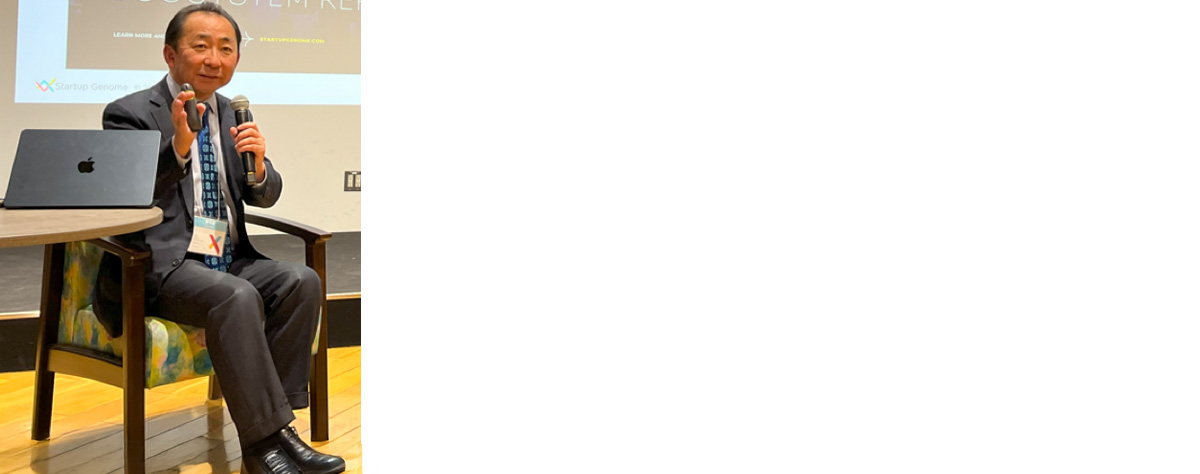
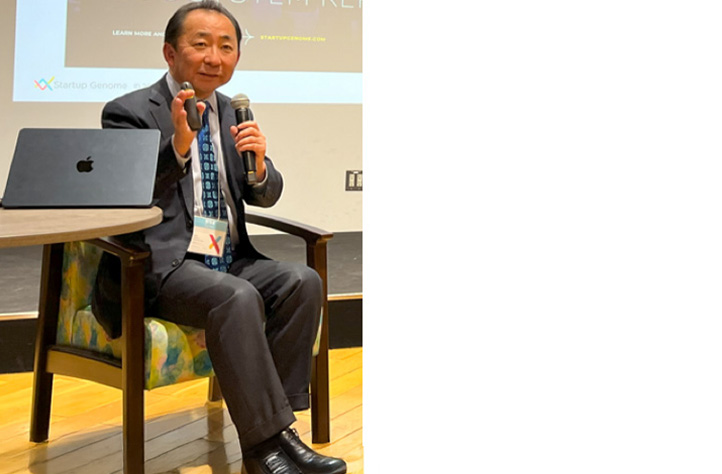
Nishiguchi: While there are 300 startup ecosystems worldwide, London, New York, and Silicon Valley hold the unshakable top three positions. Tokyo currently ranks 10th, but there is room to climb higher if large corporations become more involved in building the ecosystem.
Additionally, a key feature of the U.S. is that startup ecosystems exist nationwide. Not only Silicon Valley, but a total of 18 cities rank within the top 40.Within the EU, while individual countries may not have many cities ranked, the region as a whole boasts numerous cities in the top tiers.
Startup ecosystems are no longer confined to a single country or region; they represent an international trend. Globalization is also one of the top priorities for the Tokyo metropolitan ecosystem. Moving forward, we believe it is crucial for Tokyo to enhance its competitiveness by involving investors from other countries and deepening the collaboration between Japanese corporations and the global ecosystem.
Alexandra Beckstein, CEO and Founder of QAI Ventures

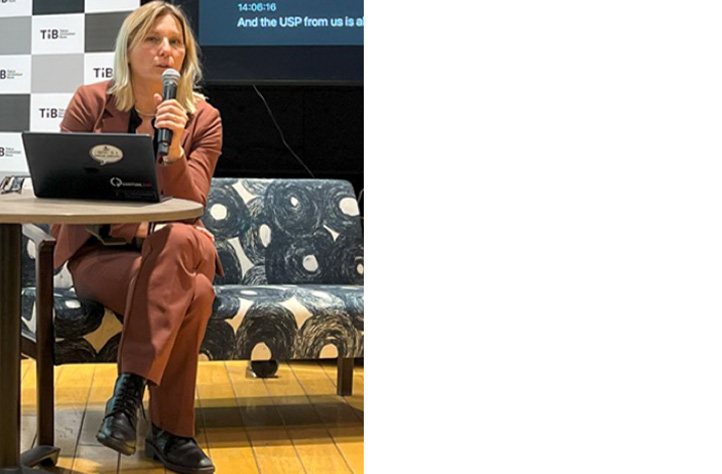
Alexandra: QAI Ventures is the world's second-largest VC firm investing in the quantum field. We focus on solving mathematical challenges through quantum computers, such as optimization in banking and logistics, and simulations in agriculture and chemistry. Our investments primarily target the quantum/AI computing domain.Our focus on specific domains allows us to support quantum technology development across the entire supply chain, beyond just proof-of-concept experiments. This also provides the advantage of easier access for investment institutions to startups' hardware.
While our Swiss headquarters covers the European market and our Calgary office handles North America, we plan to intensify our efforts to expand into the Asian market.By entering the Asian region, known for its high technical capabilities and university standards, we expect to expand our ecosystem and infrastructure partnerships while also gaining access to solutions that address our own challenges.
After researching innovation indices, university-spinoff startup activity, and government support for innovation within Asia's SU ecosystem, we decided to enter the Japanese market.The decisive factor for entering Japan was the established ecosystem where the government purchases computers with national funds and allows members to use them free of charge at national facilities, enabling large domestic companies to utilize SU for introducing new technologies into their industries.
By investing in our LP, Japanese companies gain access not only to our portfolio startups but also to all startups vetted by QAI Ventures and a database that categorizes and indexes the technologies these companies possess.We are currently building a digital platform to strengthen this ecosystem. Our goal is to create a business model that makes it easy for our partners to access us and to enable viewing of all our proprietary knowledge through our AP.
Japanese companies can learn about our screening process from an investor's perspective. We invite you to our headquarters, where mentors (screeners) we have assembled for each technology/business domain will communicate the screening results.The screening is conducted to identify business risks in the target company; it does not mean we cannot invest immediately because there are issues. Even if a company does not pass, we may encourage them to join our program or request they undergo re-screening after several months.
We would like to collaborate with major Japanese corporations within the quantum computing ecosystem. We look forward to discussing this further with you and exploring various forms of cooperation.
Share the article