![[Interview] Making Primary Industries "Happier" with Carbon Credits: Pioneers of Green Startups](https://ecosystem.metro.tokyo.lg.jp/wp-content/uploads/2025/01/greencarbon-top.jpg)
The food truck business that began by creating a cycle of gratitude has evolved into "food loss reduction" and "carbon credits."
Adachi: Could you first tell us about the background of the company's founding?
Ohkita: Originally, at my previous job, I sold advertising for taxi signage. It was a small company with good performance, but taxi signage is difficult to measure for effectiveness. So, I rarely experienced hearing "thank you" from clients or seeing tangible results. For example, even if I generated 100 million or 200 million yen in sales, internally I'd get praise like "Good job," but from clients, the response was often something like, "Yeah, it was okay, I guess.But I never really understood the actual impact." That kind of reaction was pretty tough mentally... That's exactly why I felt the importance of being told "thank you." This experience made me strongly want to create a system where we get that "thank you," also to boost employee motivation. That's when I thought of a certain foreign-owned cafe chain. You know how they say "thank you" whenever you buy something there? I wanted to create that kind of culture.
So, first, I started the "Kitchen Car Business."As an employee benefit, I started operating a food truck that provided free meals to staff.Initially, we operated without seeking profit. However, we partnered with a company to process leftover food before it went bad—for example, turning it into curry to sell. This caught the interest of a chef from a major hotel chain, who said, "We want to try this too." So, we opened a one-day food loss restaurant. A representative from a major convenience store chain came to see it and expressed interest in rolling it out nationwide.I presented this idea to their executives, but it was ultimately rejected... The reason given was that bent or misshapen ingredients are difficult to handle on mass production lines. When I asked why they had shown interest initially, they explained, "There's a 5 trillion yen market around food loss. We want to solve this!" They also mentioned "ESG investing," and I thought, "Ah, so that's the background."
That's when I launched an ESG division and began consulting for listed companies.But while consulting, I often heard unrealistic proposals like, "To solve the 2050 problem, we'll start by collecting PET bottles." The goals felt too distant and unrealistic. I questioned, "Is this really benefiting society?" Amidst this, I researched "wanting to tackle something with more impact" and arrived at "carbon credits."Carbon credits are relevant to every industry and can help reduce environmental impact. That's when I decided to fully commit to this business.
It was then that I met Atsunobu Hagiwara, co-founder of Green Carbon Inc. He's an expert in genome editing and plant research, possessing technology that uses AI to shorten 10-year research projects to just 2-3 years. He also serves as a strategic advisor to the Cabinet Office.During our discussions, he said, "We can double the growth rate of plants. That would double CO₂ absorption and increase the amount of carbon credits. Couldn't this be a unique approach for a country like Japan with limited land area?" I thought, "This might be interesting," and we founded Green Carbon Inc.
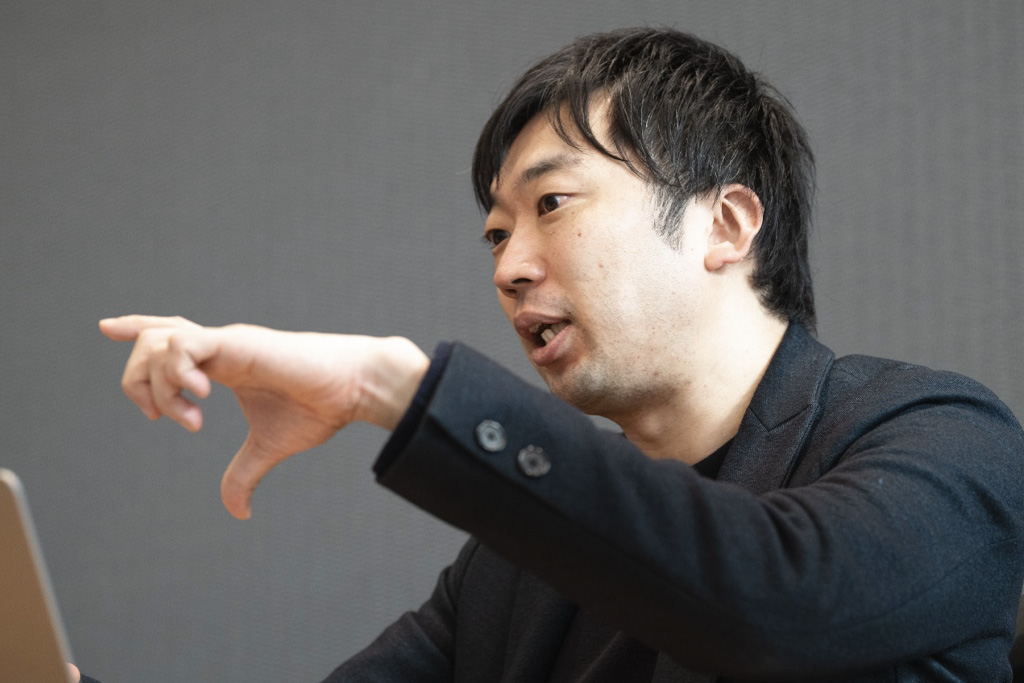
Transforming Vast Farmlands Domestically and Abroad with Mid-Season Drying Credits
Adachi: Did you start with domestic operations initially?
Ohkita: We first established the company in Japan, but the reality is that the country is simply too small. When we asked ourselves, "Where is the largest available space?" countries like the US came up as candidates, but the US proved too challenging due to intense competition. That's when we set our sights on Australia. Australia still offered significant room for entry, so we launched the company there simultaneously with Japan.
In Australia, we decided to establish a framework for advancing research and development, starting with collaborative research with local universities. We are working on building the mechanisms for genome editing and establishing the foundation for R&D.However, Australia is also a developed nation, so various "carbon farming" methods were already well-established, and in some areas, they were more advanced than Japan. Furthermore, R&D doesn't yield immediate results, so it wasn't an environment where outcomes came easily. In this situation, while thinking, "We need to not only establish the research framework but also generate funding," a new carbon credit scheme called "mid-season drying" emerged in Japan.
※1 Mid-season drying credits refer to carbon credits obtained by suppressing methane gas emissions through mid-season drying—the practice of draining water from rice paddies during the mid-stage of rice cultivation.
Adachi: Did you see potential in the "mid-season drying"?
Ohkita: Yes. A little while ago, when I thought about "What does it take to truly win in the Japanese and Asian markets?", I realized it was rice.Mid-season drying credits were established in March 2023, but back when we founded the company in 2022, mid-season drying credits didn't exist yet. So, we initially focused on AWD (※2), a methodology already established for overseas voluntary credits. While advancing using the AWD methodology and discussing it in Japan, we were told, "The methodology for mid-season drying will be finalized soon." That's how our company began working on "mid-season drying" as well.
※2 AWD (Alternate Wetting and Drying) is an irrigation technique that involves draining paddy fields periodically to create alternating wet and dry conditions. This reduces water usage and suppresses methane gas emissions, thereby contributing to climate change mitigation and efficient water resource utilization.
Adachi: I see. So it wasn't J Credit (※3) at first.
※3 J-Credit is a system that certifies and trades greenhouse gas reductions and absorption within Japan as "credits." These credits are generated through renewable energy use, energy conservation, and CO₂ absorption by forests, and are utilized for carbon offsetting by companies and local governments.
Ohkita: That's right. We were actively pursuing AWD, so when that methodology was developed, we were surprised—"Wait, it can be done this easily?" From there, we rapidly expanded our sales efforts and began securing more and more farmland across Japan.
Strengths: Comprehensive solutions to natural challenges across Asian countries and regions
Adachi: Could you please briefly outline your company's business overview and strengths?
Ohkita: Our business is broadly divided into three main areas: ESG consulting, carbon credit creation and trading, and biological research and development.
Our ESG consulting business leverages my prior experience as an ESG consultant. Selling carbon credits is quite challenging; the reality is you can't sell them without ESG knowledge. The systems themselves are also complex, with various schemes in place. That's precisely why we use ESG consulting as an OJT (On-the-Job Training) platform. We first deepen our sales representatives' knowledge in this field, then transition them to the carbon credit sales team once they are sufficiently experienced.
Our strength lies in our broad coverage of natural ecosystems. While many competitors specialize in specific areas like "paddy fields only" or "biochar exclusively," we can address diverse natural domains including paddy fields, biochar, cattle, forests, and mangroves. Companies capable of such comprehensive initiatives are extremely rare, not just in Japan but across all of Asia.
One key benefit of our diverse coverage is the ability to present a holistic proposal to municipalities and national governments: "We can achieve decarbonization by utilizing the entire natural ecosystem." This approach increases invitations to events and opportunities for collaboration with local governments, making it easier to build cooperative frameworks.
It also offers advantages for credit purchasers. Many buyers often have undefined needs, such as simply stating, "We want rice paddy credits."Our company monitors overall market price fluctuations and supply volumes. By supporting optimal choices based on this information, we have earned high praise both domestically and internationally.
Adachi: In your research and development initiatives, what specific efforts are you undertaking?
Ohkita: Our company is currently focusing on methane gas suppression and advancing the development of "methane gas suppression bacteria."In rice cultivation, bacteria known as "methane-producing bacteria" are the cause of methane gas generation. We are conducting joint research with institutions such as Niigata University and Kyushu University to identify microorganisms that suppress the activity of these bacteria. Applying these microorganisms to rice-growing soil has been confirmed to reduce methane gas emissions by 20-30%. This effect is achievable even without implementing mid-season drying. Furthermore, when mid-season drying is implemented, an additional reduction of approximately 15% can be expected.
A particularly important point is that even farmers not practicing mid-season drying can use the "methane-suppressing bacteria." Globally, only about 20-30% of regions are suitable for AWD (alternate wetting and drying), and water management is difficult in many areas. This microbial strain can be effective even in such regions, holding significant potential to contribute to decarbonization.
The specific method involves soaking rice seeds in a solution containing the microorganisms, coating their surfaces. Planting these coated seeds establishes the microorganisms in the soil, creating a natural mechanism that suppresses methane gas emissions.
Adachi: That's wonderful. Your commitment to research and development while aiming to create credit is what sets you apart from other companies.
Ohkita: That's correct. While many competitors operate solely based on logic, we address the fundamental aspects of the business. We believe this is a major point of differentiation.
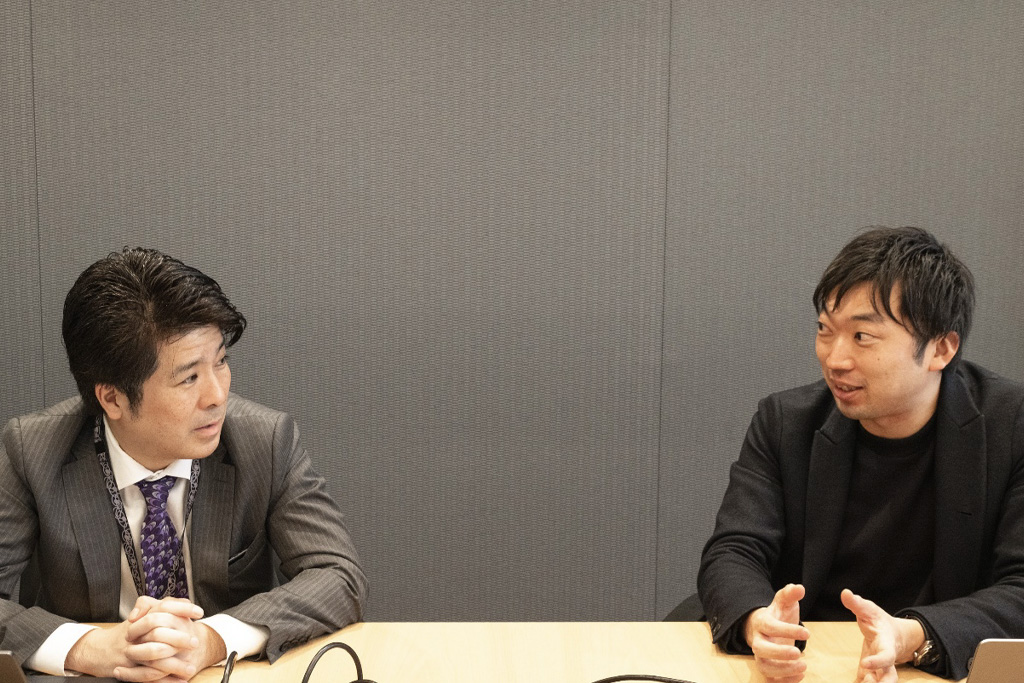
Establishing an environment where farmers who adopt mid-season drying can engage with confidence
Adachi: Including Japan, in which countries is it available?
Daikita: We currently have bases in Japan, Australia, the Philippines, and Vietnam, and are preparing to establish a base in Thailand. Within Japan, we have bases in Tokyo, Niigata, and Sapporo.
Adachi: I imagine there are many competitors domestically. How do you differentiate yourselves within that environment?
Ohkita: Our strength lies in securing sufficient farmland area in paddy fields. For instance, even if a company wants to introduce biochar credits, they often lack connections with farmers. Against this backdrop, we frequently receive requests for collaboration by leveraging our farmland network.
Furthermore, what's particularly crucial with natural domain products is prioritizing the fact that farmers' livelihoods depend on them.Mid-season drying is, simply put, "just extending the water-draining period by one week." However, farmers are constantly worried: "What if that reduces the harvest?" Therefore, we provide scientific evidence and create an environment where farmers can participate with peace of mind. Furthermore, we have the distinction of being the first in Japan to register carbon credits, giving us a strong advantage in gaining trust in this field.When competitors propose "Why not try mid-season drying?", if they cannot answer questions like "What's your track record?" or "What experience do you have?", that creates a significant gap.
Moreover, the opportunity for our mid-season drying credits to enter the market only comes once a year in agriculture. For example, even if someone wants to start mid-season drying in August, since rice planting occurs in April, missing that timing means waiting until the following year.
Adachi: It's certainly a difficult field for startups to enter.
Ohkita: Yes. It's really difficult to break into this market. On top of that, contracts with farmers are typically for eight years. So once a contract is signed, opportunities to propose replacements (contract switches) are few and far between. That means we have to develop other areas, which is quite challenging.
Adachi: Is an 8-year contract the industry standard?
Ohkita: Fundamentally, an 8-year contract is standard. When applying for J-Credits, the rule is "we will continue this for 8 years." Therefore, contracts with farmers are also fundamentally structured as "let's commit to this for 8 years."
Additionally, we operate the "Rice Farming Consortium," where various companies participate, including a certain domestic pesticide company and a certain domestic PC manufacturer.Within this consortium, we make multi-faceted proposals that benefit farmers, such as advancing agricultural DX and reducing farmers' costs through pesticide selection. Through these efforts, we aim to create systems that make farmers happier. I believe these activities represent areas with very high barriers to entry for other companies.
Adachi: How are your activities progressing in the markets of Asian countries?
Ohkita: Japan's paddy field area is about 1.4 million hectares, but across all Asian countries, it totals 96 million hectares. While we say "Japan is the land of rice," the reality is that Asian countries overwhelmingly consume more rice and also produce far greater quantities. However, when trying to create carbon credits in Asian countries, nations like Switzerland, France, Canada, South Korea, Singapore, and Australia become competitors.In other words, multilateral competition is likely to arise. But fortunately, Asian countries, local farmers, and companies very often express a desire to partner with Japan. They want to learn Japan's rice cultivation know-how. I believe the background to this is profoundly significant: Japan has long provided diverse overseas development assistance to Asian countries through ODA (Official Development Assistance) and other means.Memories remain in these Asian countries: "This irrigation channel was built by JICA (Japan International Cooperation Agency), supported by the Japanese government." That's why, when we arrive, we often hear, "We want to partner with Japan." When I'm out in the field working on agricultural projects, I frequently find myself thinking, "I'm so glad I'm Japanese."
Adachi: So the environment is already in place to effectively leverage the credit creation and know-how established in Japan's agricultural sector for credit creation overseas as well.
Ohkita: That's right. It tends to follow a pattern like, "If it can be done in Japan, a developed country, then we can do it here too." Moreover, there was already a favorable image of Japan, creating an environment where we could easily win even in competitive bids against rivals right from the start. It was precisely because of that foundation that we were able to rapidly expand our business across Asian countries. In that sense, I'm truly grateful to our predecessors.
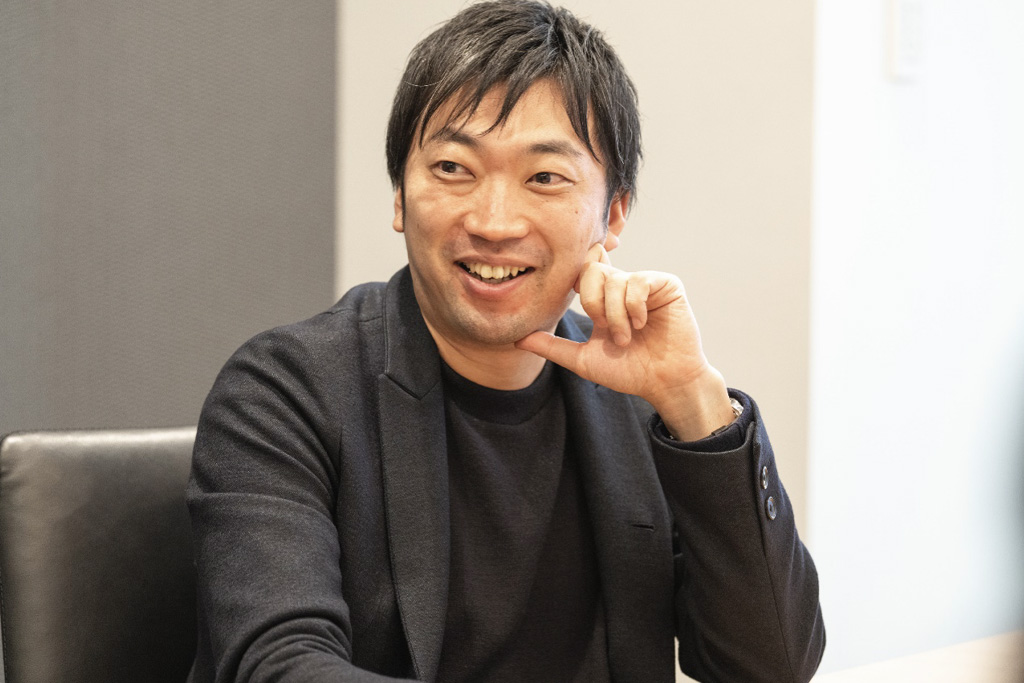
Collaboration with key "expert" partners is fundamental to our business approach.
Adachi: Are there any points you prioritize when establishing credit overseas?
Ohkita: What we value most in creating carbon credits is working alongside experts—scholars and researchers who understand the field. For example, in the Philippines, we collaborate with a university and a renowned research institute specializing in rice cultivation.Partnering with individuals knowledgeable about rice or possessing academic expertise is fundamental.
The reason is that rice varieties and climates differ completely from country to country. While it's theoretically possible to say, "Doing this will generate carbon credits," a drop in yield is the worst possible outcome for farmers. That's precisely why partnering with local universities and research institutions is an absolute requirement.We are pursuing the same approach not only in the Philippines but also in other countries like Vietnam and Thailand. Currently, we partner with a total of about 10 research institutions across three countries in the Asian region. Furthermore, we ensure collaboration with universities and research institutions strong in agriculture in each country's northern, central, and southern regions. This policy remains unchanged, and we consistently adhere to it.
Another crucial element is irrigation infrastructure for paddy field management. Collaboration with local governments and ministries managing dams and waterways is indispensable. Since decisions on waterway management and irrigation timing are necessary, we frequently partner with these administrative bodies. In essence, the collaboration between institutions responsible for water management and partners knowledgeable in agriculture and plant science who can maintain production levels is vital. We advance our projects based on this framework.
Adachi: What kind of partners are you collaborating with domestically?
Ohkita: We want to work together with farmers, so expanding farmland area is crucial. The key players here are local agricultural supply manufacturers who sell pesticides and fertilizers. They have very close relationships with farmers. We believe the key is to form partnerships with these suppliers and add value to their expertise by showing them they can generate credits through decarbonization initiatives.
Equally important is increasing the number of buyers for carbon credits. Without buyers, farmers won't see any revenue. However, it's not simply a matter of large Tokyo-listed companies with high CO2 emissions purchasing credits for offsetting. For example, credits generated in Hokkaido should be purchased by local Hokkaido companies, contributing to regional revitalization.We are also partnering with a Hokkaido bank to introduce local buyer companies and facilitate connections with farmers, aiming to create a circular economy within the region.
A concrete example is the initiative by PC manufacturer VAIO. VAIO, which has a factory in Azumino City, Nagano Prefecture, collaborates with rice farmers near the factory to generate credits. They purchase these credits themselves and have established a system to sell the PCs as "Carbon Offset PCs." This system achieves both returning value to the farmers and contributing to the region, which I think is highly ideal.
Adachi: Please also tell us about your collaboration with Yamato Transport.
Ohkita: Yes. Yamato Transport offers carbon-neutral delivery services. We're working with them to deliver rice produced by our partner farmers using Yamato's carbon-neutral delivery, positioning it as "environmentally conscious rice." Also, while still in the conceptual stage, we're considering how Yamato Transport could, for example, approach farmers during deliveries with sales pitches like, "Would you like to implement mid-season drying?"It's not just Yamato Transport; any company with connections to farmers nationwide could spark interest in carbon credits, even just by placing flyers. We're currently building a system where the company itself purchases the resulting credits.
※4 Carbon-neutral delivery refers to an initiative that achieves carbon neutrality by reducing CO2 emissions from delivery operations as much as possible and investing in equivalent climate change mitigation projects to offset any remaining emissions.
Adachi: So it's not just about connecting farmers—the company even takes on the credit aspect. It's an interesting system, like local production for local consumption.
Ohkita: That's exactly right. If we can successfully achieve this, I believe it will be a win-win situation for everyone.
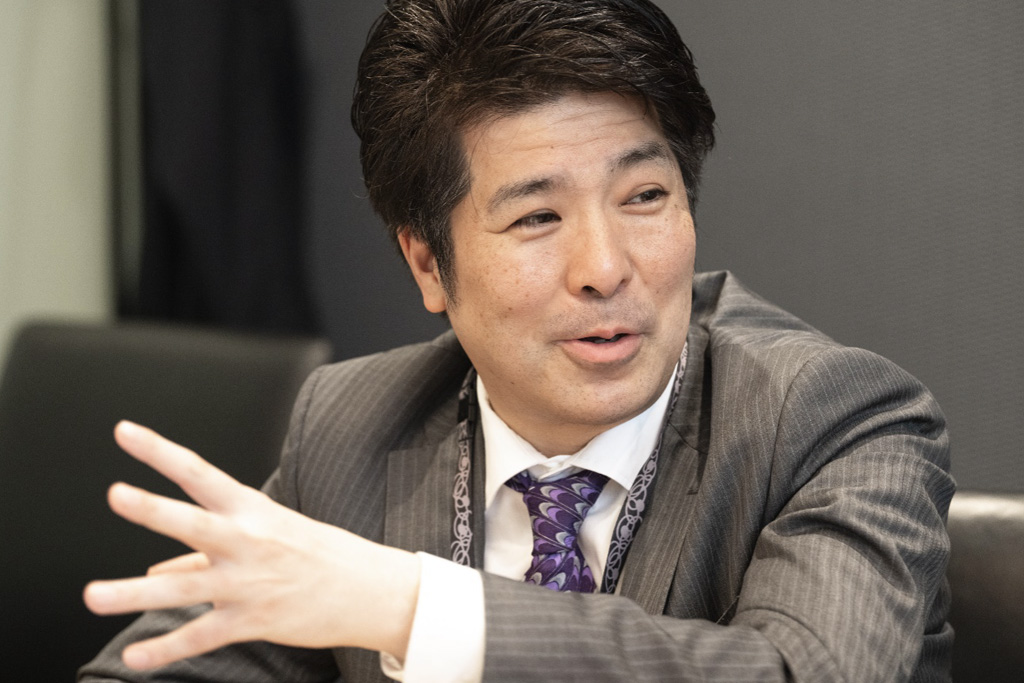
Through a system of "handing over" money, we aim to contract with 30 million farmers by 2030.
Adachi: Please tell us about your future business outlook.
Ohkita: We are driven by a desire to make primary industries happier. As part of this effort, we are currently developing initiatives utilizing carbon credits. For example, carbon credit revenue for rice farmers accounts for only about 3% of their total income. While it's certainly better than nothing, it alone is insufficient. Increasing this 3% to 5%—that is, raising the price—is important, but equally crucial is boosting crop yields, branding agricultural products, and reducing farmers' burdens within the supply chain.Essentially, our goal is to resolve as many challenges as possible for farmers, increase their income, and improve their standard of living.
Furthermore, we have set a target to contract with 30 million farmers across Asian countries by 2030. If we achieve contracts at this scale, we can directly pay these 30 million farmers.In other words, the carbon credit business model is structured not to "take" money from farmers, but to "give" it to them. However, in Asian countries, even white-collar workers often lack bank accounts. Therefore, our first step is to establish accounts accessible to them. Once this system is in place, diverse support options, including microfinance, become feasible. Moreover, 30 million accounts represent a scale comparable to Japan's megabanks.With Japan's population at approximately 130 million, this would have a comparable level of influence.
Moving forward, one of our visions is to build a system centered around carbon credits that offers solutions to farmers' economic challenges and product issues, providing support across various aspects.
Adachi: That's interesting. It sounds like a Southeast Asian version of an agricultural cooperative. By the way, is a scale of 30 million farmers realistic?
Ohkita: I believe it's entirely realistic. Japan's rice paddy area is 1.4 million hectares, but across the entire Asian region, it reaches 96 million hectares.Furthermore, while the average cultivated area per farmer in Japan is about 1 hectare, in Vietnam it's only 0.3 to 0.4 hectares—extremely small. Consequently, companies don't bother teaching farmers farming methods. The reality is that most farmers just do it intuitively, thinking, "Is this how you plant seeds?" Simply providing basic technical guidance can increase yields. It's not some grand scheme; we can create a significant impact just by addressing the most fundamental aspects.
Adachi: It's just like a home garden.
Ohkita: That's right. It's like an evolved version of home gardening, but because they're growing rice on small plots, it tends to become self-sufficient. On top of that, the scale is so small that buyers aren't inclined to seek it out. However, we can consolidate large quantities of that rice. By distributing it externally, we can change the current state of barter.First, by creating distribution channels, they can earn income and start spending money. To build this system, we're currently forming partnerships with trading companies.
Adachi: The idea is to leverage the domestic network cultivated through the Rice Consortium to create a structure akin to an Asian regional agricultural cooperative, thereby re-exporting Japanese services.
Ohkita: That's right. We're currently in the process of establishing an Asia-region Nature-Based Solutions Consortium. We're working to create a system where universities and various institutions can participate, enabling us to provide support when needed.
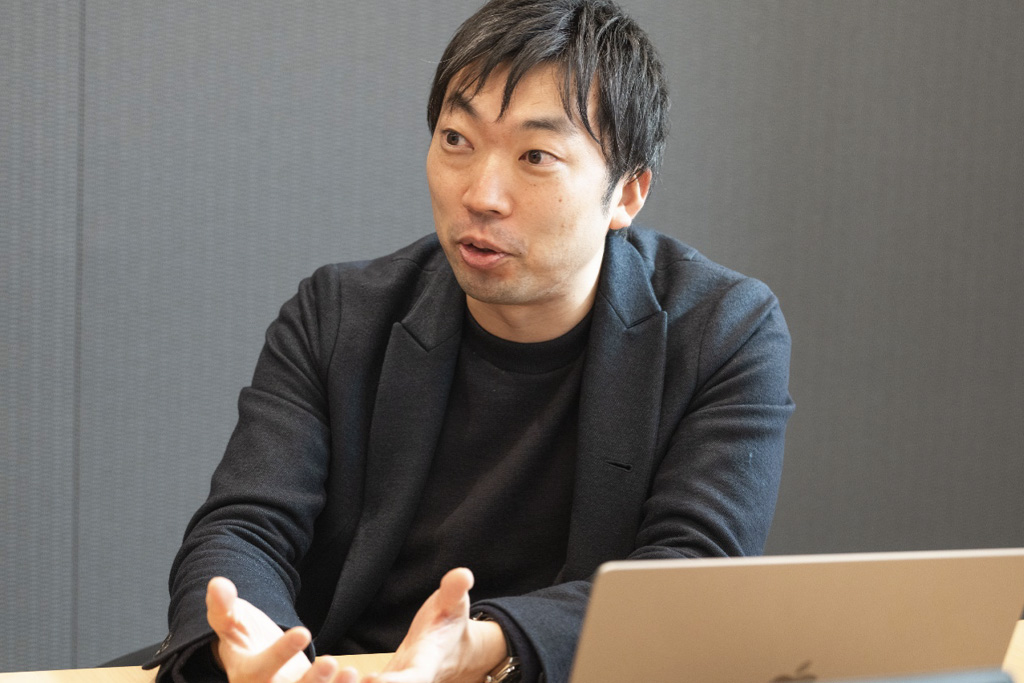
Full utilization of the Tokyo Consortium's accompanying support
Adachi: What were some of the outcomes achieved during the support period?
Ohkita: One example is our capital and business alliance with Sumishin SBI Net Bank. Sumishin SBI Net Bank has a group company called Temix Green Co., Ltd., which is engaged in forestry DX. Temix Green handles everything from forestry DX to the creation and trading of carbon credits, but they had not yet ventured into the field of agriculture. In addition, their services are provided to local governments.When making proposals to local governments, it is better to be able to offer a comprehensive proposal saying, "We can do both forestry and agriculture." Proposals focused solely on forestry would be incomplete, so we needed the agricultural field to complement that. Against this backdrop, we arrived at a capital and business alliance in the form of "Let's work together."
Adachi: How are the respective roles divided?
Ohkita: Since Temix Green is an agricultural DX company, it's mainly mutual customer referrals. Sumishin SBI, on the other hand, provides financing.
Adachi: What specific progress has been made?
Ohkita: We collaborate with Sumishin SBI Net Bank, Ehime Bank, Iyo Bank, and Ehime Prefecture. This partnership between agricultural credit and the prefecture is a first-of-its-kind initiative in Japan. Our connections with local governments are expanding in this way. We still hold regular weekly meetings to discuss new business opportunities and mutually introduce companies and local governments to each other. The synergy is truly significant and has been a tremendous help.
Adachi: As the Tokyo Consortium, we also introduce partners.
Ohkita: That's truly appreciated. Players who contact our company are typically at the staff level, and the subsequent approval process often takes considerable time.On the other hand, when referrals come from the Tokyo Consortium or banks, we can proceed directly with decision-makers from the outset, significantly accelerating the pace to partnership. That kind of sales support is truly invaluable. Furthermore, for our next funding round scheduled in May, you are actively introducing investors to us. What's more, you're connecting us with investors who align perfectly with our next vision, which is incredibly reassuring.
Adachi: I'm glad I could be of help.
Ohkita: As an environmental startup, it's been two years since we were selected for the Tokyo Consortium's Green Startup Support program. At that time, we had just finished our seed funding phase and were receiving funds from angel investors. We were still in a stage where we didn't really have the funds or the structure in place, and we faced the challenges of "how to spread green carbon" and "how to raise awareness."Amidst this, we received proposals such as, "There's this speaking event," and "There's this green/GX (Green Transformation) event, why don't you get some exposure?" Thanks to these, we were able to participate in various events. I think we were able to raise our awareness as a result. Previously, when we spoke at Morning Pitch, we also saw an increase in inquiries after our presentation. Furthermore, we were introduced to the Green Tech Forum held in Germany, not just domestically, for which we are truly grateful.
Adachi: Thank you. From a management perspective, was there any particular support that stood out as especially beneficial?
Ohkita: Having someone to bounce ideas off of is incredibly valuable. Even among fellow business owners, there's information you can share and information you can't. Consulting specialized agencies can be prohibitively expensive, so I think many struggling business owners face this dilemma. That's why having someone you can casually consult with about things like "I want to issue stock options," "I'm considering raising funds," or "I'm exploring an acquisition" is truly a lifesaver. What's more, they provide solid feedback at the level we need.It might sound presumptuous, but we genuinely feel supported by these professionals, and we're truly grateful for that.
Conversely, this support also creates a positive pressure. It would be a huge waste not to fully leverage the support provided by these professionals, especially since it's offered free of charge. That's precisely why we approach it with the mindset of making the most of it. We hold regular biweekly meetings, and each time, we find ourselves thinking, "How can we make even better use of this support?"As a result, it's also become a great catalyst for generating ideas. Furthermore, they operate like our alter egos. We've worked together since our founding days when we had only about five employees. Even then, the reassurance of having such a powerful partner allowed us to take on various challenges.
Adachi: I truly appreciate you saying that. I look forward to the future development of your business. Thank you for taking the time today despite your busy schedule.
Share the article