![[Interview] Evolving the World's "Delicious" with Cooking Robots](https://ecosystem.metro.tokyo.lg.jp/wp-content/uploads/2024/03/techmagic-topimgpc.jpg)
My grandmother sparked my interest in cooking robots.
Imura: First, please introduce your company's business overview.
Shiraki: Under our mission to "enhance the quality of human happiness through robot technology," we aim to evolve the world's "delicious" experiences and improve the quality of human happiness by developing cooking robots and industrial robots. Japan's food industry is divided into three major segments: eating out, prepared meals, and home cooking. In the eating out segment, we primarily provide cooking robots, while in the prepared meals segment, we introduce industrial robots.
Our cooking robots currently cover three types of cooking: "boiling," "stir-frying," and "deep-frying."In the "boiling" category, we have introduced pasta cooking robots to the restaurant chains 'PRONTO' and 'Ebino Spaghetti' operated by Pronto Corporation. In the "stir-frying" category, we have introduced stir-fry robots to the Chinese restaurant chain 'Osaka Ohsho'. In the "frying" category, we are advancing a joint project with KFC (Kentucky Fried Chicken).
Additionally, in the field of industrial robots, we are collaborating with Kewpie Corporation to automate portioning tasks in food factories. Approximately 600,000 people in Japan are engaged in portioning prepared foods and bento boxes, yet 83% of companies report labor shortages. Under these circumstances, we are working with Kewpie to automate the portioning of prepared foods—a task that, while the simplest, still requires human hands.
Imura: Thank you. While Japan has thousands of startups, those developing cooking robots are rare, and I believe this is a highly original service. Could you tell us about your journey to founding this company and why you decided to start a business focused on cooking robots?
Shiraki: In 2017, while working at the Boston Consulting Group (BCG), I visited my grandmother's house. She loved cooking, but I noticed she could no longer prepare meals due to her age. Living alone, she had lost the motivation to cook for herself, yet she still desired tasty, healthy meals.Witnessing this situation, I realized that if there were a world where even those who find cooking difficult could enjoy meals tailored to their preferences, it could improve the quality of life for elderly people like my grandmother. That's when I conceived the idea of a cooking robot.
Later, while developing the business plan, I felt that developing a cooking robot for individual consumers was high-risk and had a low probability of success at that stage.However, while researching the restaurant and prepared food industries, I discovered the severe labor shortage problem. Additionally, from a macro perspective, I saw the accelerating trend of AI robot technology being implemented in society. Combining these two factors, I decided to pivot towards providing cooking robot services for corporate clients first, aiming to assist businesses.
The influence of my family in fostering a venture mindset
Imura: I'd also like to ask about your career before starting your business. Who influenced your entrepreneurial mindset, Mr. Shiraki?
Shiraki: Growing up surrounded by my grandfather, father, and relatives each running their own businesses, I believe I was greatly influenced by my family. My father, in particular, was a highly entrepreneurial person who, even after the company that had been in our family for four generations went bankrupt when I was in elementary school, believed that "creating new value for society is important" and started a business again. He often said, "The interesting part of being an entrepreneur is being able to have a positive impact on many people," and I think that way of thinking had a profound influence on me.Back then, I thought that if I were to become an entrepreneur someday, I wanted to operate globally. That's why I studied abroad in Canada during high school. While attending high school there, I created an online service for dispatching tutors. That was my first business venture.
Imura: I understand you were greatly influenced not only by your father but also by your grandfather.
Shiraki: I also learned something important from my grandfather, who was a business owner himself. He always said, "The most important path is one that benefits society and people."As a child, I didn't fully grasp what that meant. But after starting my own business, I came to understand that the purpose of business isn't merely to make money; it should be to accumulate virtue for society, industry, and the company itself. I believe that if you achieve this, money will naturally follow. The primary focus should be on how to provide value to society, industry, and customers – how to accumulate virtue. This way of thinking is what I learned from my grandfather.
Imura: Does that philosophy also influence your company's mission and vision?
Shiraki: That's right. I believe this mindset must form the foundation of our management approach not only for our mission and vision, but for all decision-making. I consider long-term contributions to the company and the industry more important than mere short-term sales.
Imura: Why did you decide to work at the consulting firm BCG, even after selling the business you started as a student?
Shiraki: I joined BCG because I wanted to systematically learn strategies and problem-solving methodologies for competing in larger markets, rather than focusing solely on small businesses. By participating in numerous projects, I gained valuable insights into how to formulate management strategies and create social impact for the complex challenges faced by large corporations. I can confidently say this experience has been instrumental in managing Tech Magic.
Imura: After that episode with the elderly lady during your time at BCG, did you start your own business right after that?
Shiraki: After deciding to start a business using cooking robots, I felt I first needed to deeply understand the field. So after leaving BCG, I worked part-time at the family restaurant Gusto. This is my hidden work history (laughs).I chose a family restaurant because it incorporates all the major cooking methods: boiling, stir-frying, deep-frying, and grilling. Among them, Gusto has the most locations, so I thought I could learn a lot about operations there. I gained experience in the kitchen and then founded TECHMAGIC Inc. in February 2018.
Cooking robots solve labor shortage issues
Imura: I understand you pivoted to developing cooking robots to address the social issue of labor shortages. What aspects does your company particularly focus on when building these robots?
Shiraki: To solve labor shortages, it's crucial to develop products that achieve labor savings in whole-person increments, not just 0.5-person increments. Furthermore, to save one person, automation must cover not only the cooking processes of "boiling," "stir-frying," and "deep-frying," but also the preceding and subsequent steps involved.For example, the pasta cooking robot installed at Pronto Corporation automates this entire sequence: retrieving sauce and ingredients from the refrigerator, performing "boiling" and "stir-frying," and cleaning the frying pan after cooking. This achieves labor savings equivalent to one to two full-time employees.
Imura: The ability to reduce staffing levels and address labor shortages is a clear advantage. On the other hand, I believe cost is also a significant factor. Even if it allows for workforce reduction, companies might hesitate if the initial investment or maintenance costs are high. What are your thoughts on this point?
Shiraki: I firmly believe that effectively reducing labor costs is crucial for controlling labor expense ratios in restaurants. Let me share an example from when Osaka Ohsho introduced stir-fry robots at its Nishi-Gotanda location. After testing three stir-fry robots, the store's labor expense ratio decreased by 8.5% compared to the pre-introduction level of 30%. This resulted in a profit margin increase of approximately 10%.
Imura: That's amazing.
Shiraki: The effects of labor reduction are clearly reflected in the P&L (profit and loss statement). While the average profit margin for restaurants is generally said to be 2%, the fact that we've increased our profit margin by 10% demonstrates the contribution of the cooking robots.
Imura: That's wonderful. I also handle matching and collaboration support between large corporations and startups. However, with open innovation, it's often difficult to see how much it contributes to the P&L (profit and loss statement), and it also takes time to feel its tangible effects. I think cases like Osaka Ohsho's, where clear benefits are felt immediately after implementation, are rare.From my own sales experience, I often find that customers won't be convinced unless you present quantitative figures. In that sense, being able to show concrete numbers is extremely effective. On the other hand, I think it's difficult to say that simply introducing robots will automate all tasks. What are your thoughts on that point?
Shiraki: For example, even within the same Chinese cuisine category, different restaurants offer distinct menus, resulting in varied operations. Therefore, unlike SaaS (Software as a Service) where a single solution can be applied everywhere, our mission is to figure out how to automate the unique operations specific to each restaurant. To achieve this, expanding our product portfolio is essential.While startups are often advised to focus and prioritize, we're ignoring that theory and developing diverse solutions for a wide range of customers. There are still numerous operational challenges that customers face but haven't been solved. By expanding our product portfolio and enhancing functionality, we believe we need to develop partner robots that can be immediately effective for more customers.
Imura: I believe one key feature of your company's cooking robot is the integration of hardware and software. Could you elaborate on that?
Shiraki: Companies handling cooking robots exist worldwide. Many use robotic arms and aim to automate control through software, but we develop both hardware and software from scratch. One of our company's strengths is designing from the ground up, such as saying, "For this operation, let's integrate this hardware and software to automate this task."
In developing cooking robots, defining the scope of automation, achieving human-equivalent speed, size, and cost are crucial. Our strength lies in designing robust hardware from the ground up and equipping it with software optimized to operate within those constraints, enabling us to create entirely new operations.
Imura: Are there any business types that are particularly well-suited for cooking robots and industrial robots?
Shiraki: The fast-food industry is a good fit for our robots. Businesses that repeatedly prepare items within the same category, like stir-fried Chinese dishes, increase robot utilization rates, making them compatible with our robots. Conversely, businesses like izakayas that offer a wide variety of items in small quantities tend to reduce robot efficiency and require larger robots. Therefore, the fast-food industry is considered well-suited for automation.
Reducing pasta cooking time from 5 minutes to 1 minute
Imura: Since we've touched on the fast-food industry, I'd also like to ask about the collaborations your company is currently pursuing with Pront Corporation, Osaka Ohsho, and KFC. First, could you tell us about the robots being introduced at Pront Corporation and their features?
Shiraki: Pronto Corporation has introduced a robot called 'P-Robo'. The "P" stands for pasta, and this robot has prepared approximately 100,000 meals to date.
The workflow performed by P-Robo is as follows. First, after receiving an order from a customer, it automatically measures the sauce and ingredients, and also automatically supplies the noodles. While the noodles are boiling, the robot transports the ingredients, receives the noodles, and proceeds with cooking.Cooking times and temperatures vary by recipe and are all controlled via parameters. Once cooking is complete, the dish is transferred to the plating station, plated, and then washed. Throughout this process, the robot handles everything except plating. During development, we considered automating plating too. However, we decided against full automation. Instead, we distinguished between tasks offering high and low added value for customers, choosing to automate only the low-value-added steps.Plating affects visual appeal, so beautiful plating and topping arrangements will continue to be handled by staff.
Previously, human operation took about 5 minutes to serve customers. Introducing P-Robo reduced serving time to about 1 minute. This resulted in labor savings equivalent to 1 to 2 staff members.This difference between 5 minutes and 1 minute arises because manual operations require one person to handle all steps sequentially, making simultaneous multitasking difficult. Conversely, P-Robo employs an assembly line production method where different steps occur simultaneously at separate stations. This enables the time reduction.
Imura: Contributing to the P&L is a given, but we can also expect sales growth through improved customer satisfaction. Especially if productivity during peak hours increases, it should have a significant impact on sales. Next, please tell us about Osaka Ohsho—the robots you introduced and their results.
Automatically cook Osaka Ohsho's menu items at a high level
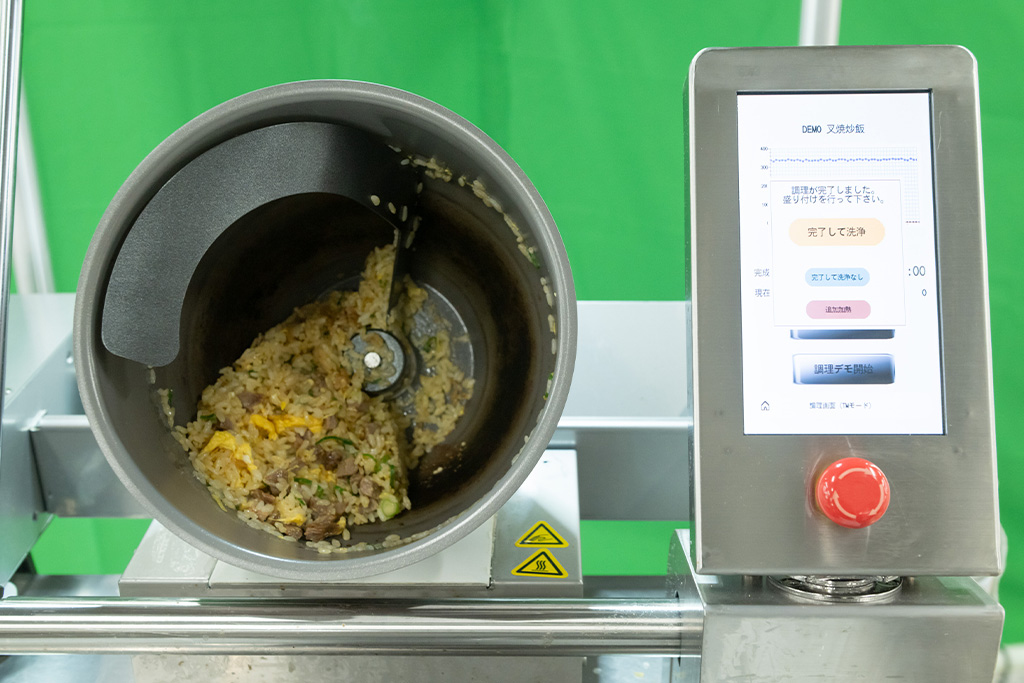
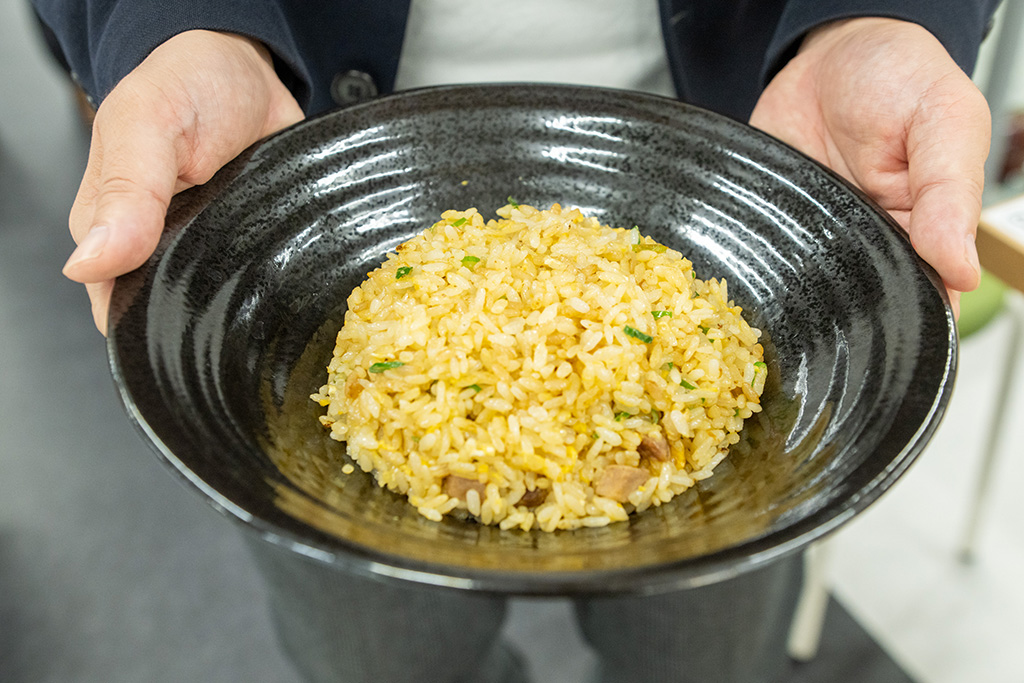
Shiraki: The P-Robo introduced to Pronto Corporation was a relatively large robot, but we felt the challenge was how to miniaturize robots. Against this backdrop, we eliminated the "boiling" function and developed a robot dedicated solely to "stir-frying." We named this new robot the I-Robo. The I-Robo's main functions are automated stir-frying, automatic cleaning after cooking, and optional automated seasoning dispensing.Similar to P-Robo, various recipes can be uploaded to the cloud and reproduced. For Osaka Ohsho, this I-Robo can reproduce all stir-fry dishes except the fluffy, soft-boiled egg for their Tianjin rice.
Osaka Ohsho has a unique culinary certification system that evaluates cooking speed and quality across three levels: Level 1 to Level 3.Level 1 is a high standard held by only 17 people out of 500, yet this stir-fry robot achieved a perfect replication of Level 1 standards in just six months. It possesses the capability to reproduce Level 1 speed and quality. Amidst challenges like the time required to train chefs, labor shortages, and an aging workforce, this allows chefs to focus on high-value-added activities, such as recipe development and replication. In other words, it contributes to building sustainable corporate systems and optimization.
Imura: So the focus is on assigning personnel to more intellectual and creative roles, placing them in appropriate positions. By the way, both Pronto Corporation and Osaka Ohsho operate chains with numerous stores. Does each store have its own POC? Or can a solution be implemented across all stores once it's decided?
※ "PoC (Proof of Concept)" is translated as "concept verification" in Japanese. This refers to a series of verification tasks conducted to confirm whether ideas or technologies intended for use in services or products are feasible.
Shiraki: Fundamentally, if it functions in one location, the same operations can be replicated at other stores. Osaka Ohsho alone operates approximately 350 stores, and we currently deploy three robots per store. Therefore, if we were to hypothetically automate all stores, approximately 1,000 robots would be in operation.
Imura: If realized, it would significantly expand our business performance. By the way, do you have plans to incorporate subscriptions?
Shiraki: We are introducing a recurring (subscription-based) model. For example, with this stir-fry robot, the monthly implementation cost is approximately ¥100,000. Since the labor cost for one employee is estimated at around ¥600,000 per month, even if you introduce three units, the operation can be managed at roughly half the labor cost.
Imura: Thank you. Next, please tell us about the KFC case study.
Shiraki: We are collaborating with KFC JAPAN to automate the preparation of French fries. This project involves developing equipment that automates the entire process, including pre- and post-cooking tasks, from ingredient supply through cooking to final packaging. The frying process carries risks of oil splatter and burns.KFC aims to provide an enjoyable working environment for its employees, and automating the French fry process is part of this effort. The project is currently in the development phase, with test implementation scheduled to begin within fiscal year 2024.
Accurately portioning potato salad, which is difficult for robots
Imura: Could you also share the Kewpie case study at the end?
Shiraki: We are working with Kewpie on a project related to the plating of prepared foods. We are developing a robot equivalent to a single worker.Its key feature is serving precision. It can accurately serve the specified gram weight within the tolerance range (minus 0 grams, plus 8%). While serving individual items like fried chicken is also seen in other companies' examples, even with sticky ingredients that are difficult for robots to handle, it can accurately serve the specified amount 99% of the time.
Imura: What products at Kewpie are utilizing this robot technology?
Shiraki: Kewpie Corporation is a major company operating approximately 80 production facilities, manufacturing products like potato salad for supermarkets and convenience stores. What we are developing is a robot specifically designed for portioning tasks at such production sites.
Imura: Unlike the three companies mentioned earlier, Kewpie has a capital alliance with your company. I imagine Kewpie has particularly high expectations for your company. Specifically, what aspects of your company are they expecting?
Shiraki: This time, we received 1 billion yen in Series C funding. I believe this investment reflects confidence in our robot technology and robot AI capabilities. We also aim to contribute to the Kewpie Group by leveraging the speed and agility characteristic of a startup.
Support Provided by the Tokyo Consortium
Shiraki: We understand that the Tokyo Consortium aims to support startups' global expansion and foster their growth into unicorn-level companies. As a deep tech company aspiring to become a unicorn ourselves, we are also challenged with how to compete globally. In this context, having the Tokyo Consortium—which has strong expertise in startups—collaborate with us provides immense reassurance. It enables us to access key personnel at companies we couldn't reach on our own, which is why we applied.
Imura: Could you tell me specifically which aspects of the support you received from the Tokyo Consortium were particularly helpful?
Shiraki: First, I feel it was beneficial to join the Tokyo Consortium. A major advantage is the access it provides to large corporations. Beyond mere introductions, their support as intermediaries—such as attending meetings and coordinating projects—was extremely helpful.
Additionally, enhancing brand recognition is crucial for startups. We greatly appreciate the networking opportunities with domestic and international startup stakeholders gained through invitations to events like City-Tech.Tokyo and CES.
The regular meetings they arranged also provided high-level advice and thorough discussions about our challenges. Having an advisor who offers perspectives distinct from those within our company or our customers is incredibly reassuring for entrepreneurs.
Why Overseas Expansion is Important
Imura: I'd like to ask about your future business expansion plans. What are your thoughts on the direction of business expansion, both domestically and internationally?
Shiraki: We aim to become the global leader in both cooking robots and industrial robots, not just within Japan. We believe this will have a significant impact on the industry. To achieve this, several key initiatives are necessary.
First, expanding our product portfolio to develop partner robots suitable for various businesses.Next, expanding digital content like recipe automation and the reproduction of artisan recipes is crucial. As this know-how accumulates, I believe the food infrastructure could gradually transform. For example, food service companies might be able to operate without physical stores. We can also envision a future where cooking robots installed in university cafeterias download recipes from Osaka Ohsho and prepare them, creating new revenue streams.
Developing a wide range of hardware products and accumulating content are crucial for establishing leadership in the global market. To achieve this, strengthening collaborations with large corporations, major food manufacturers, and major restaurant chains, while continuing hands-on initiatives at the operational level, is extremely important for our strategy.
Imura: Please tell me about the significance and importance of your company entering overseas markets.
Shiraki: It's a natural trend for the domestic market to shrink due to population decline, and low labor costs within Japan present challenges for robotics startups. However, looking overseas, labor costs in countries like the US, UK, and Australia are more than double Japan's, sometimes reaching triple. Developing high-quality products in Japan and expanding into these high-labor-cost countries is a natural progression, and I believe the cost-reduction benefits of robotics will be significant.
It is crucial to globally deploy cooking robots equipped with excellent products and content developed in Japan. While the number of players in the domestic cooking robot market is limited, multiple companies are active in the global market, with some attracting enough attention to be acquired by major corporations. Therefore, we believe it is vital for us to compete not only within Japan but especially in the American market.
Imura: Among Japanese startups, I believe few consider overseas expansion from the initial stages. Did you develop your product with overseas expansion in mind from the very beginning, Mr. Shiraki?
Shiraki: It might be related to my time living in North America during my student days, but I believe cooking robots and commercial robots have a lower language barrier than other SaaS businesses. This makes localization less necessary and product deployment easier. Furthermore, the American market has more spacious environments than Japan, so I feel there are fewer installation challenges compared to Japan.
Imura: So, in essence, you're proceeding with your business based on the premise that there's demand, your company has few challenges, and profitability is strong. Thinking about it that way, there's really no reason not to expand overseas. Finally, could you share a message for startups considering applying to the Tokyo Consortium Deep Ecosystem?
Shiraki: I mentioned that there's no reason not to expand overseas, and I also believe there's no reason not to join the Tokyo Consortium. The Tokyo Consortium's diverse network, encompassing private companies and government entities, is extremely important for startups. I look forward to the continued value it will provide.
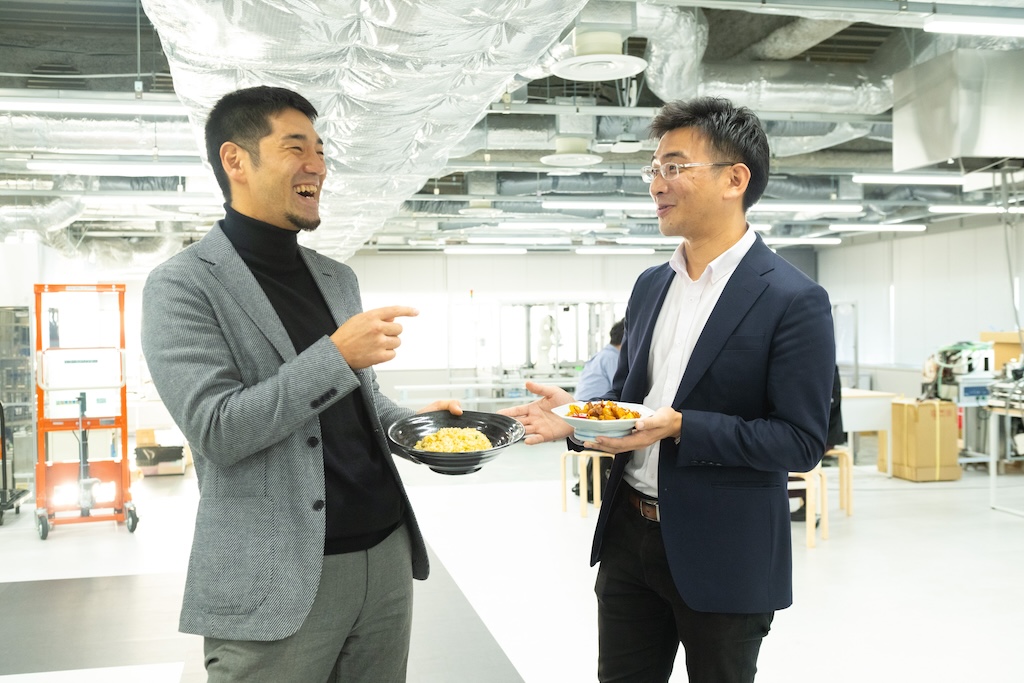
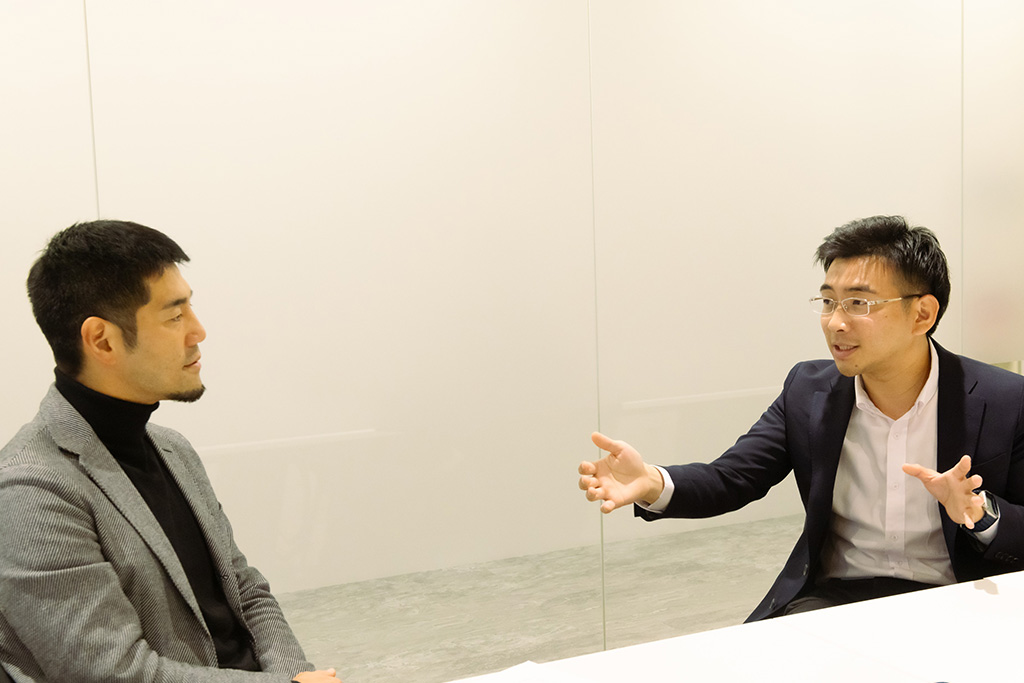
Representative Director and CEO, TECHMAGIC Inc.
Worked at Boston Consulting Group, primarily in telecommunications and manufacturing, contributing to diverse projects including new business development, global strategy, and organizational reform. Participated in the government project "Addressing Labor Shortages in Japan." Possesses expertise in digital transformation and productivity improvement through AI and robotics.
Studied independently in Canada during high school and university, and completed the Harvard Graduate School CORe program.Founded a company during university with an exit record. Founded TECHMAGIC in 2018.
Share the article