![[Interview] Inofis Inc. × Bosch Corporation: A Successful Matching Case Between a Startup and a Large Corporation](https://ecosystem.metro.tokyo.lg.jp/wp-content/uploads/2023/09/ph1-web.jpg)
※The "Deep Ecosystem" is a unique initiative by the Tokyo Consortium that selects startups poised for rapid growth with an eye toward overseas expansion, provides them with intensive support, and propels them toward unicorn-level growth.Selected companies receive support not only domestically but also with an eye toward overseas expansion. This support leverages the Tokyo Consortium's accumulated resources and network, involving diverse members including Tokyo Consortium members, domestic and international operating companies, venture capital firms, and institutional investors.
Reasons for joining the Deep Ecosystem
Suzuki: Today, we are joined by Mr. Yoda from Innofis Inc. and Mr. Abe from Bosch Corporation. We will be discussing "Successful Matching Examples Between Startups and Large Corporations Through Deep Ecosystems."
The moderator will be Suzuki Niko from the Tokyo Consortium, who is responsible for Innofis Inc.
First, could you tell us why Innofis Inc. decided to participate in the Deep Ecosystem?
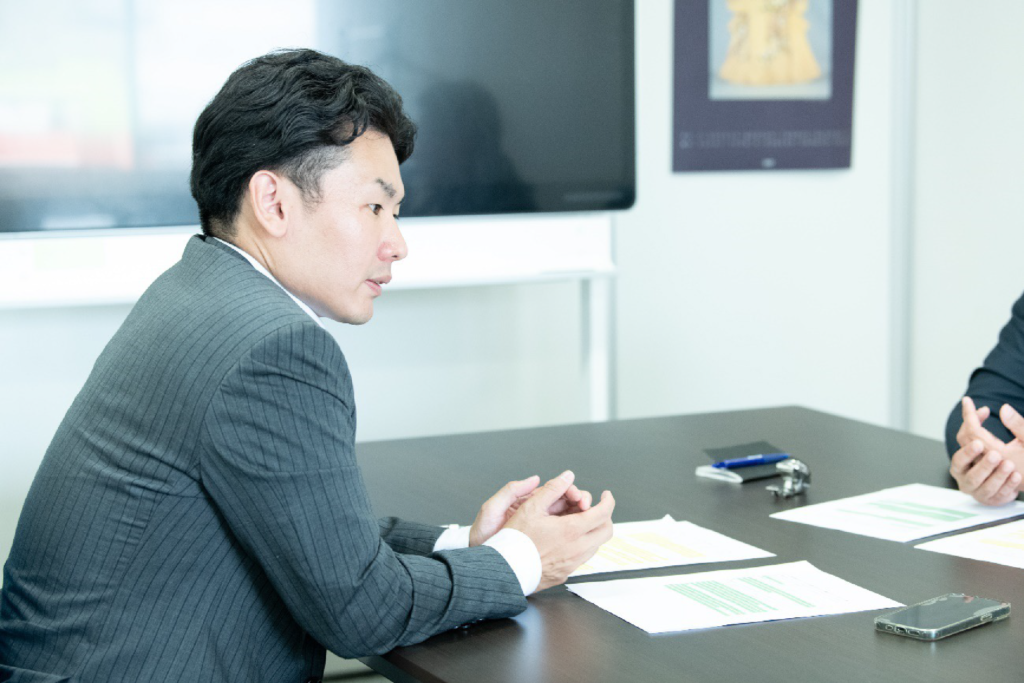
Yoda: The Deep Ecosystem was highly appealing to us because it offers startups aiming for overseas expansion and further business growth the opportunity to receive extensive advice from experts—particularly those with diverse domestic and international experience and insights—and to immediately apply that advice to their business. That's why we decided to apply and participate.
Suzuki: Once you were actually selected as a target company, what kind of support were you able to receive?
Yoda: Given our particular focus on overseas operations, we received support specifically for our international business. This support fell into three main areas. The first was "overseas business research." Since our products were originally developed for the Japanese nursing care industry, we felt there was potential for greater adoption in overseas markets, particularly within the European nursing care sector.However, we faced the challenge that conducting market research on our own was difficult. Therefore, with the assistance of the Tokyo Consortium, we conducted market research on the care industry in countries like France, Spain, Germany, and Italy. The results revealed that in France, state-run facilities similar to Japan's special nursing homes provide services comparable to those in Japan. Consequently, we are now working with local agents to approach these facilities.
Second, as in this case with Bosch, we were introduced to prominent companies within the Tokyo Consortium and received support all the way through to the actual purchase. This was incredibly valuable assistance for us. Typically, for startups alone, even if we want a large company like Bosch to make a purchase, we often lack the necessary connections and progress stalls. However, this time, being introduced by the Tokyo Metropolitan Government and the Tokyo Consortium allowed us to gain Bosch's trust and ultimately lead to the transaction.
Third is external PR. At the 'City-Tech.Tokyo' event held this past February, we were given the opportunity to present on stage, allowing us to promote our work to a large audience. We were also introduced to 'Morning Pitch,' an event attended by various major corporations, which provided us with another valuable PR platform. We are extremely grateful for this kind of support as a startup.
Through the actual support we've received from the Tokyo Consortium, we truly feel they are closely aligned with Innofis. They sincerely consider what Innofis needs right now, and they also support us with strategies like "which customer segments should we prioritize approaching to generate sales?" This has been extremely helpful in growing our revenue.
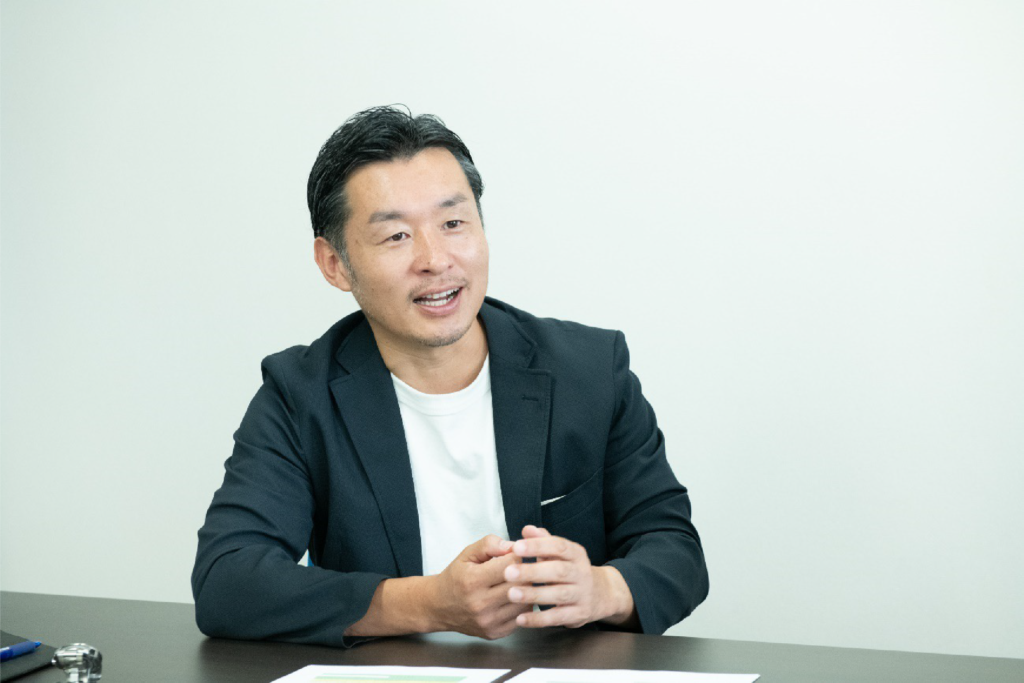
Suzuki: Thank you. Next, could you please introduce Inofis's business activities?
Yoda: Our company develops and sells Muscle Suits designed to reduce physical strain. For those unfamiliar with Muscle Suits, let me briefly explain: Needless to say, Japan faces a declining birthrate and aging population, leading to worsening social issues like labor shortages and increased caregiving burdens. Consider factories or warehouses, for example—they involve numerous heavy-duty tasks.Workplaces with heavy manual labor struggle to attract workers, and even when hired, employees often don't stay long. Meanwhile, the workers themselves age while still needing to perform these demanding tasks. Improving workplace conditions is thus a challenge many companies face. Muscle suits are emerging as one potential solution, gradually gaining adoption. We operate our business driven by the desire to help solve these societal challenges and contribute meaningfully through our muscle suits.
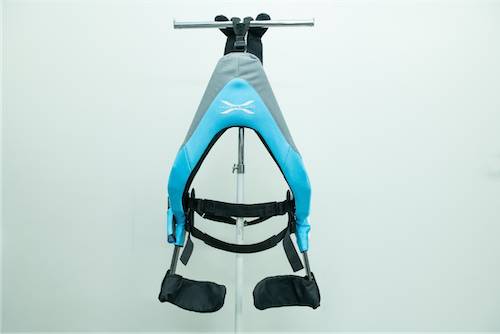
Suzuki: Next, I'd like to ask about the reasons Bosch has become a member of the Tokyo Consortium. Could you tell us the circumstances and objectives that led Bosch to join the Tokyo Consortium?
Abe: We believed startups were essential to advancing our open innovation efforts, which is why we reached out to the Tokyo Consortium, an organization rich in both experience and information.
Suzuki: For startups, I imagine it's a major concern how they can collaborate with a company like Bosch, which has sales of 10 trillion yen. So I'd also like to ask about Bosch's approach to collaboration. Could you share your methods and typical timeline for working with startups?
Abe: Our company has a collaboration program with startups called 'Open Bosch,' led by Bosch Venture Capital, the corporate venture capital arm of the Bosch Group. Thanks to this program, we can now transact with startups at a significantly faster pace. Previously, collaborations with other companies often hit snags over transaction standards and didn't always proceed smoothly.As a large corporation, even when we want to collaborate, decision-making can take time. For example, selecting vendors requires time to ensure quality assurance.
The benefit of 'Open Bosch' is that it boldly cuts through these processes. If we can properly confirm whether a startup is trustworthy, we can reach Proof of Concept (PoC) with fewer steps.The speed at which projects can start—as quickly as within weeks—was groundbreaking for us. It provides an opportunity to see the effects of a startup's ideas as soon as possible. This program itself allows us to tackle various challenges. We use it for things like improving efficiency and the environment at work sites, as in our dealings with Innofis, and we also conduct proof-of-concept experiments for more cutting-edge technologies like autonomous driving.
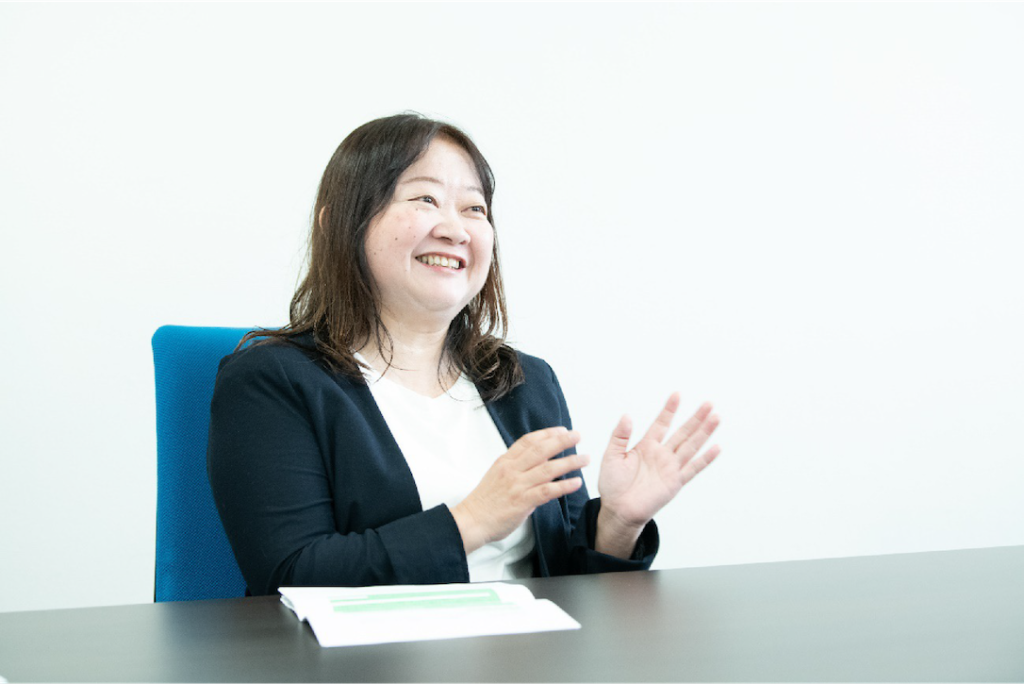
Suzuki: I understand the criteria for working with startups have been relaxed. But are there any minimum requirements they must meet to collaborate?
Abe: We don't set absolute criteria like requiring companies to be in the later stages. What matters most is whether they align with our challenges, can build a supportive relationship with us, and possess the necessary technology.
Suzuki: Bosch has far more business divisions than we might realize. It covers a wide range of fields beyond just automotive parts, which is what most people immediately think of, including energy. So I believe there's likely demand for most startups. However, for better or worse, it's not very well known. If it gains more recognition domestically going forward, I think Bosch has the environment to collaborate with many startups.With individuals like Mr. Abe engaging directly with startups, I expect we'll see more such collaborations emerge within the next few years. This should also advance Innofis' partnerships with the group companies within Bosch.
Abe: Indeed, increasing our corporate recognition is one of our challenges. We are undertaking PR activities such as setting up a showroom next to the cafe at our Shibuya headquarters.
Suzuki: The cafes in Shibuya have such a great atmosphere, don't they?
Abe: We'd be delighted to welcome more university students, members of the public, and others to visit. We're exhibiting a wide range of products and services so people can learn about, see, and touch our offerings. While nearly 90% of Bosch Japan's sales come from automotive-related products, globally, non-automotive products account for about 40% of sales. We aim to connect more deeply with customers across various fields. To achieve this, we want to increase opportunities for more people to learn about Bosch.
Why did the collaboration between the two companies succeed?
Suzuki: Now, let's move on to discussing the collaboration between Inofis and Bosch. While the Deep Ecosystem served as the catalyst for your business relationship, could you please share the specific sequence of events that led to this partnership?
Yoda: Bosch has factories not only in Japan but globally, so we were introduced to the idea that there might be tasks requiring Muscle Suits at those sites. Furthermore, Bosch also has startup support programs like 'Open Bosch,' so we were approached about potentially improving workplace environments through our products within that framework.
Abe: In the beginning, we were feeling our way around. Just as we were wondering if there was any way to break through, we contacted the Tokyo Consortium. They introduced us to Innofis, and Mr. Yoda visited our factory to propose the Muscle Suit.Feedback from the field was positive—people wanted to try it out. While we could have proceeded with just a free trial, we decided it would be better to set a reasonable period to thoroughly use the product and measure its effects. That's why we chose to use 'Open Bosch' for our transaction. Furthermore, by conducting thorough effectiveness measurements, we can share the results with our colleagues across the Bosch Group worldwide. In fact, we've already received requests for meetings from overseas colleagues.
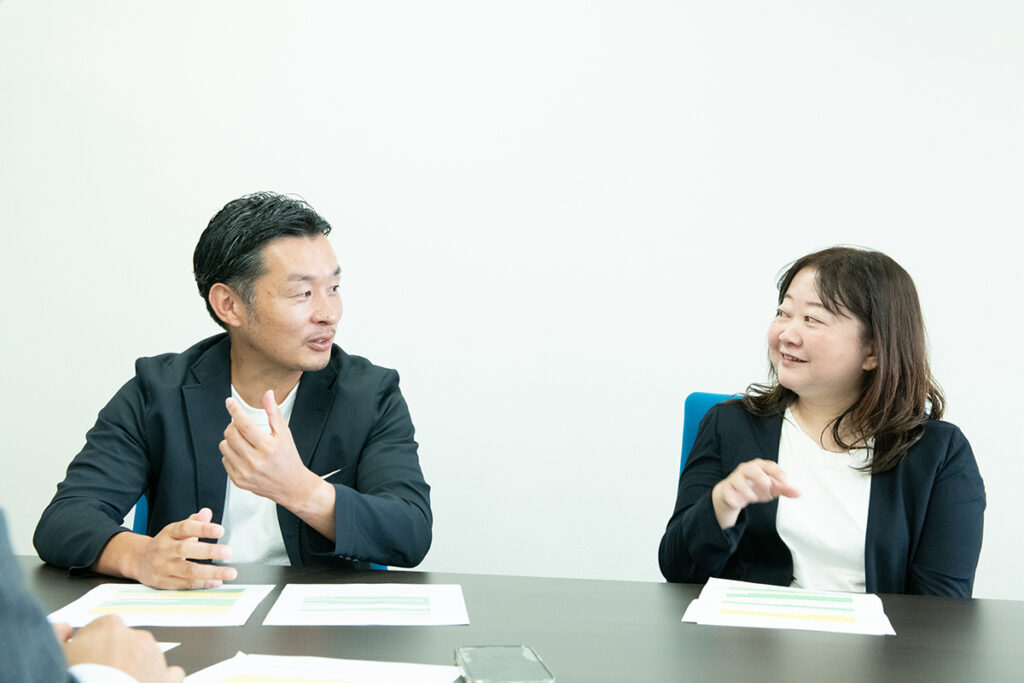
Suzuki: Bosch is a very large organization, so I believe the deal came together because Mr. Abe worked within the company to ensure things progressed properly—listening to the actual voices from the field and so on. By the way, Mr. Yoda, what did you emphasize when you first made contact with Mr. Abe?
Yoda: In Bosch's case, since they have such excellent equipment installed, we first inquired whether there were any manual handling tasks that involved using the back, and whether any workers performing such tasks were suffering from back pain. As a result, we learned that some manual handling tasks remained. We conveyed that our products might be of assistance. Our products prioritize ease of use. For example, we highlighted points such as "no electricity required," "basically maintenance-free," and "easy to put on."
Suzuki: Could you tell me specifically what kind of transactions occurred?
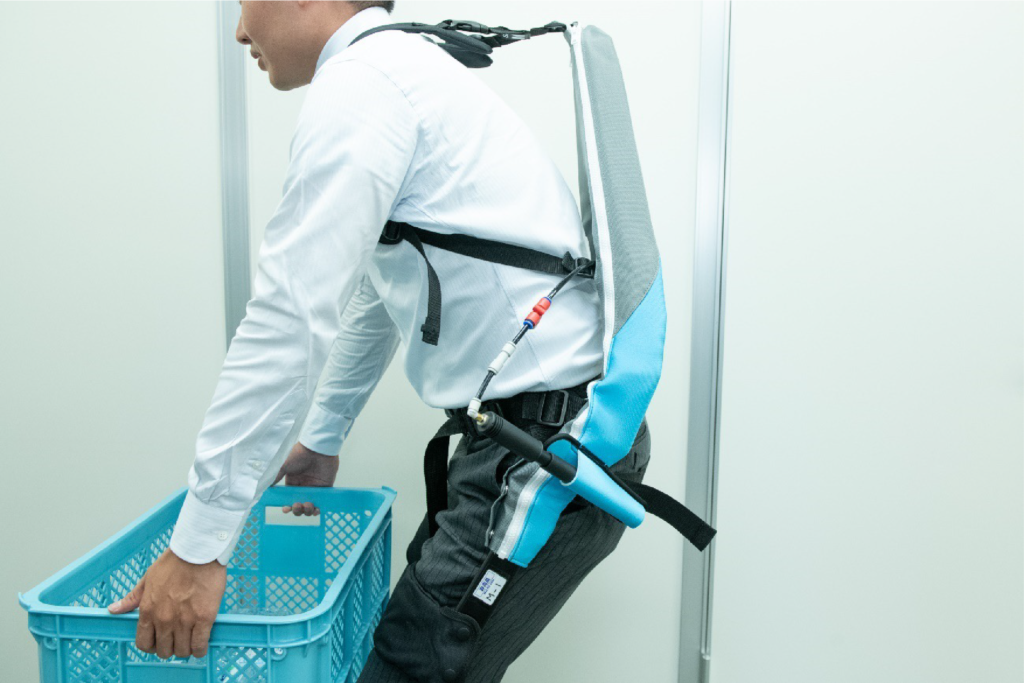
Yoda: Primarily, we introduced five units of our muscle suit products, the 'Exo-Power' for reducing lower back strain and the 'Soft-Power', at your Tochigi Plant and Musashi Plant in Saitama. We will proceed with measuring their effectiveness, and we've been told that if the results are positive, there are plans to expand their deployment in various ways.
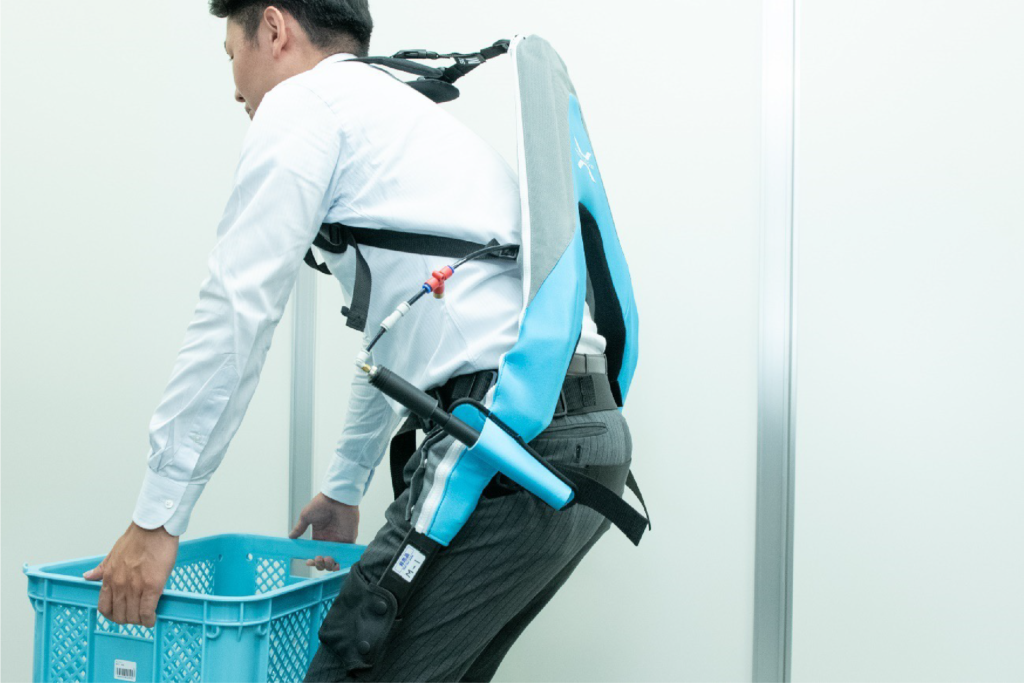
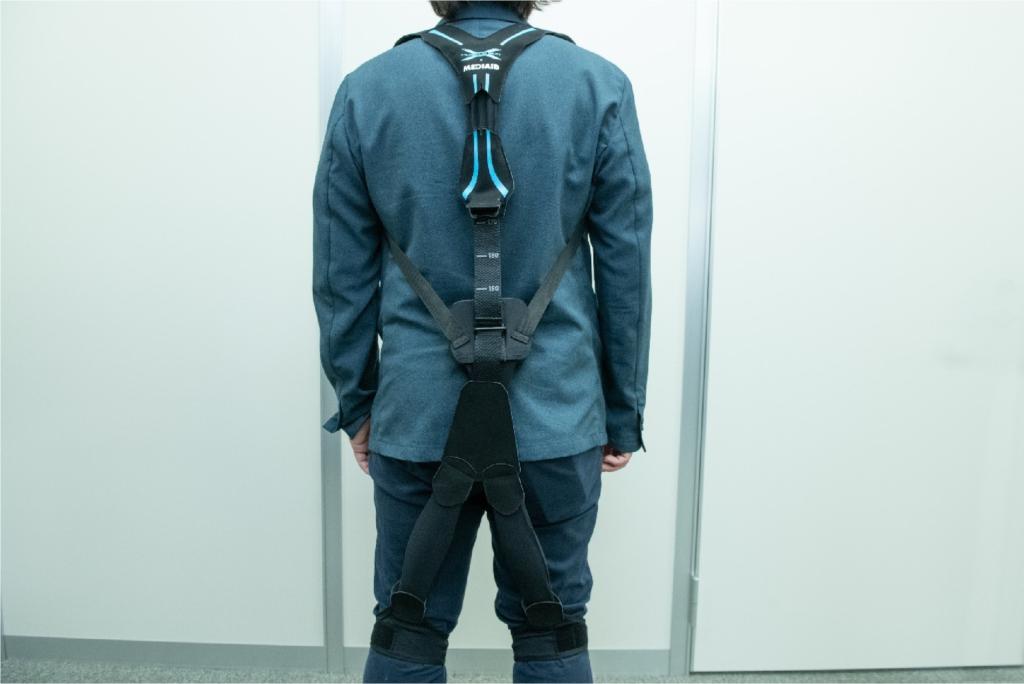
Abe: Initially, some sites were concerned about the strain on the arms. However, after visiting the sites to observe the actual work and speaking with the workers there, they suggested that products reducing the strain on the back might be preferable. It was really beneficial that they took the time to visit the sites thoroughly.
Yoda: It's important, isn't it? Initially, we planned to have you use a suit designed to reduce arm strain. But when we actually visited the site and observed the work, we noticed you weren't raising your arms very much.
Abe: While I do raise and lower my arms, since it's not an environment where I keep them raised, the strain on my lower back seems to be greater than on my arms or shoulders.
Yoda: We made a slight change based on the idea that products supporting the waist rather than the arms might be more usable.
Abe: I think it was very beneficial to hear directly from the field. Both factories are a bit far from the city center, but Inofis took the trouble to visit us. Due to the pandemic, we'd been communicating online the whole time, but we finally met in person at the factory.
Yoda: Meeting in person really changes things, doesn't it? I got a solid sense of Mr. Abe's character too. By the way, were you familiar with Inofes' products?
Abe: I first saw it at an exhibition around 2016 or 2017. When I saw it again this time, introduced by the Tokyo Consortium, I felt it had evolved significantly since my previous encounter. For example, it had been improved from the user's perspective to be more user-friendly, such as minimizing the parts that directly contact the body to reduce stress.
Yoda: After actually testing our product this time, what aspects did you find appealing?
Abe: I really appreciate how little of the back section actually touches the body. Another point is that it doesn't require charging. There's no worry about forgetting to charge it and it becoming unusable. Plus, electricity costs are very high these days, so in that regard too, I find Inofis's products very user-friendly.
Yoda: Thank you.
Suzuki: What kind of feedback are you getting from actual users?
Abe: It's been extremely well-received. At the factory where we conducted surveys, we received feedback like "The fatigue I feel in the evening is different," "It's become much easier," and "I want to keep using it." The areas where people feel pain vary—some experience lower back pain, others knee pain—but it seems fatigue tends to set in more easily during the late afternoon.
Suzuki: Yeah, I guess fatigue does start to build up, doesn't it?
Abe: With the aging workforce at the site, we're hearing voices saying, "Even if there's no pain now, wouldn't it be better to use it from a preventative standpoint?" That's the challenge I'm currently facing and would like to discuss.
Yoda: For example, if someone wants to prevent back pain, we also have entry-level suits available. Starting with those might be a good option. Since fatigue can build up from repetitive tasks and gradually lead to back pain, reducing that accumulated fatigue is also important.
Suzuki: I hope both companies can build a lasting relationship. Could you briefly share your thoughts on the future?
Abe: When I visited the factory in Ibaraki and mentioned that "we're conducting trials like this at other plants," they expressed interest in trying it themselves.Since we have other factories, we hope to be able to test it there as well. We also hope to introduce it to factories in other countries. Bosch is a global company where "horizontal deployment" across a wide range is easy. There are already departments in Europe showing interest, and the rapid "horizontal deployment" of good ideas is one of our strengths at Bosch. We look forward to providing Innofis with feedback on our usage results and working together to solve challenges in the future.
Yoda: Thank you very much. We've implemented this at two factories this time. First, we will strive to ensure it proves useful at these two facilities. Furthermore, since Bosch operates globally, we also hope it will be beneficial at factories both in Japan and overseas.
Suzuki: Thank you. Today, we heard various insights from your frontline perspective on successful matching between startups and large corporations through the Deep Ecosystem.The Tokyo Metropolitan Government aims to "establish Tokyo as a global hub city for startup ecosystems, thereby strengthening international competitiveness, fostering the creation and growth of startups, and ultimately achieving sustainable economic development for Tokyo." It has expressed a strong commitment to promoting activities that implement innovation from startup ecosystems into society and give back to the region. What are your thoughts on this point?Specifically, do you feel that deep ecosystems are effective in bridging startups and large corporations? Also, how would you like to utilize them going forward?
Yoda: For startups facing shortages of people, resources, and capital, we are truly grateful for support opportunities like the Deep Ecosystem. It's invaluable to gain access to companies that would be difficult to reach independently. Furthermore, introductions from entities like the Tokyo Metropolitan Government and the Tokyo Consortium significantly enhance the sense of security and trust our clients feel.
With limited personnel and time, we must continuously improve sales efficiency. The program provides practical support, starting with thorough analysis to determine the most effective approach for increasing revenue.
Then there's the PR platform. Building awareness is a crucial theme for our company moving forward, so having access to this PR platform is truly appreciated. In that sense, I believe the Deep Ecosystem is an excellent program. We hope to continue receiving your support while expanding our overseas operations.
Abe: Our Japanese subsidiary operates with a limited number of staff. While it's important to build things solely with our own capabilities, I always think that going forward, we should leverage our strengths while drawing on the power of other companies and startups to create something new. It's not easy to encounter excellent startups like Innofis, so I look forward to continued opportunities for meaningful connections through the Deep Ecosystem.
Director, Innofis Inc.
After handling sales and agency consulting at Recruit Co., Ltd., he obtained an MBA in the UK. Subsequently, at Avergence Inc. and YCP Solidiance, he engaged in strategic planning and hands-on execution support for domestic and international listed companies. Since joining Innofis Inc. in 2018, he has served as the head of domestic and overseas operations.
Sachie Abe
, Bosch Corporation Joined Bosch Corporation in 1996. Worked in the Overseas Sales Department and Marketing Department of the Chassis Systems Division. Transferred to the Head Office Marketing Department (covering the entire automotive sector) in 2007. Has been responsible for Business Development at the Head Office since 2016.
Share the article