1. Overview
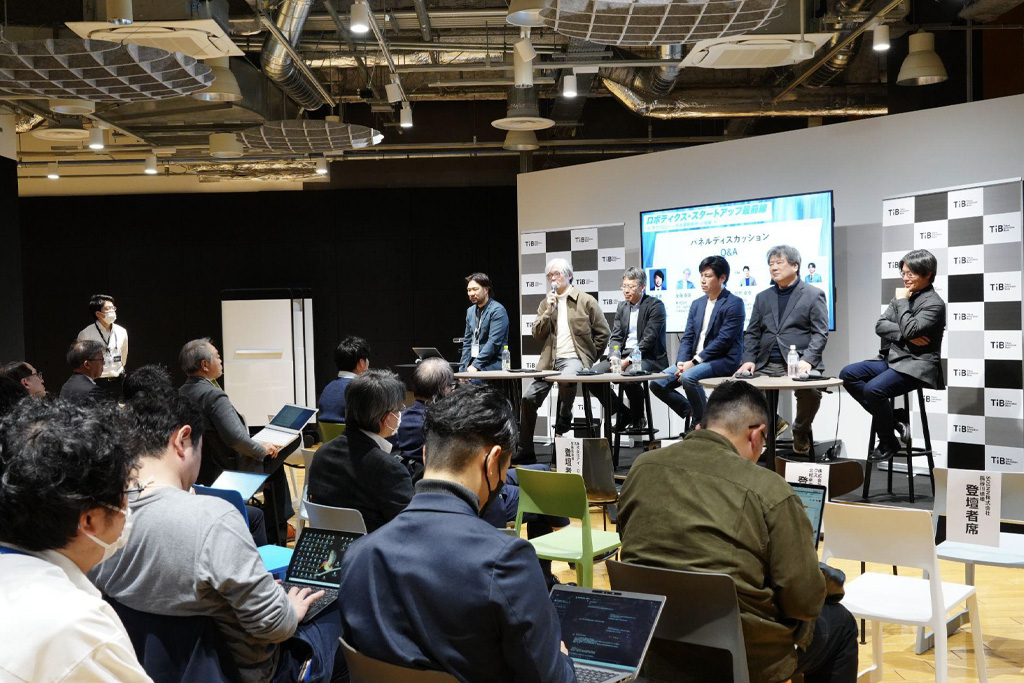
The Startup Ecosystem Tokyo Consortium held the deep tech event "Frontiers of Robotics Startups: Technology × Tackling Social Challenges" on Friday, February 16, 2024, as part of its University Working Group activities.
We invited four leading robotics startups—iRobotics Inc., Aerocense Inc., Senshin Robotics Inc., and SOINN Inc.—along with Professor Masaharu Tsujimoto from Tokyo Institute of Technology. Together, we examined the current challenges and outlook for robotics startups and explored pathways forward.
2. Greetings
Tokyo Consortium Secretariat Yosuke Morimoto (Tohmatsu Limited Liability Audit Corporation)
The Tokyo Consortium provides a platform to promote collaboration among industry, academia, government, and finance. Working with public institutions such as the Cabinet Office and the Tokyo Metropolitan Government, it develops initiatives addressing societal and urban challenges. Through a two-stage approach—surface ecosystem and deep ecosystem—it fosters ecosystem development while also supporting startup growth.This event focuses on the robotics field, which is expected to see global market growth and expanding demand. We have invited robotics startups selected for our Deep Ecosystem program.
3. Toward Building an Ecosystem for Robotics Startups
Professor Masaharu Tsujimoto School of Environment and Society, Tokyo Institute of Technology Deputy Director, Research and Industry-Academia Collaboration Headquarters
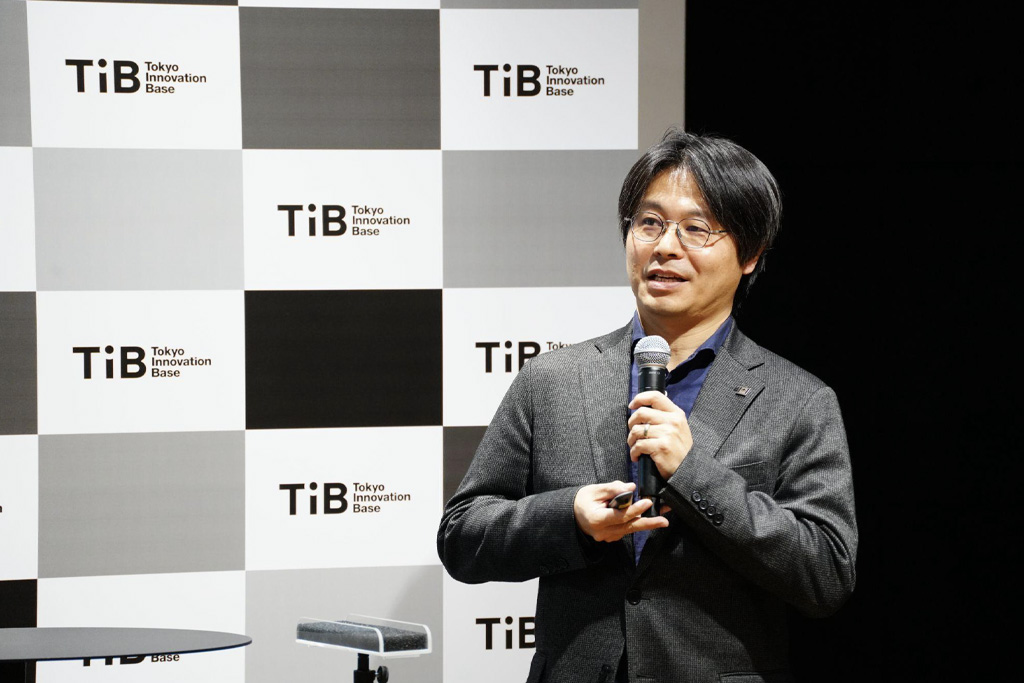
The concept of an ecosystem emphasizes the inclusion of complementary stakeholders (complementors).
From this perspective, it is crucial to understand how your local product is perceived by others.Consumers evaluate not just the product itself, but the entire system supporting it. This means that not only the quality of the product, but also the presence or absence of issues within the entire system influences customer evaluation.
Furthermore, government policymakers play a crucial role in ecosystems, alongside business players. The difficulty in building ecosystems lies in uniting diverse people with differing beliefs and cultures. In ecosystems, both detailed knowledge of the field and an understanding of the big picture are essential.
Fundamentally, Japan's ecosystem level continues to lag globally. This stems from the fact that while its technology is not inferior, university research fails to make a significant impact on society.
Consequently, overseas expansion is emerging as a key challenge. Even with a good product, success will be difficult without effectively integrating into local ecosystems abroad.
4. Panel Discussion
We held a panel discussion with four leading robotics startups and Professor Tsujimoto on social challenges, industry challenges, and future prospects.
【Presenting Companies】
I Robotics Inc. Representative Director and CEO Mr. Yoshiyasu Ando
Aerosen Inc. Director Mr. Satoru Shimada
SENSIN Robotics Inc. Representative Director and CEO Mr. Takuya Kitamura
SOINN Inc. Representative Director and CEO Mr. Osamu Hasegawa
Tokyo Institute of Technology School of Environment and Society Professor Mr. Masaharu Tsujimoto
【Moderator】
Mr. Takanori Date Manager, Startup Business Division Deloitte Tohmatsu Venture Support Co., Ltd.
① Regarding the challenges felt on-site
Mr. Ando (hereafter referred to without honorifics): While we face issues like aging infrastructure and labor shortages, we cannot immediately transition to mechanization. This is because compliance with safety standards and cost considerations present significant hurdles. Merely listening to customers' current challenges risks overlooking the root problems. Therefore, it's crucial to engage in a collaborative listening process with our clients, working hand-in-hand to identify their needs and then create the optimal solution.
Mr. Shimada (hereinafter referred to without honorifics): Implementing new systems changes how people work on the ground. Even when the benefits are clear, making immediate changes is quite difficult.
Mr. Kitamura (hereinafter referred to without honorifics): Since frontline staff often lack the authority to decide on new technology adoption, the top priority is finding someone in upper management who understands the value.
Mr. Hasegawa (hereinafter referred to without honorifics): Even when proposals are met with enthusiasm, implementation often doesn't follow through. It's regrettable that overseas technologies end up being adopted instead.
Mr. Tsujimoto (hereinafter referred to without honorifics): Decision-making issues at implementation sites occur across all industries. How to get things moving quickly requires a different approach for each company.
② Regarding domestic issues
Ando: I believe that what changes the world isn't being forced from above, but rather reaching a state where you have to do it.
Shimada: I think Japan's drone regulations are simple and easy to understand. I believe Japan could even lead the world in this area.
Kitamura: The issue is whether we can take risks. The Chinese government actively supports various trials, recognizing that innovation requires sacrifice. I hope Japan won't just rely on past precedents but will actively try to implement things.
Hasegawa: I feel raising awareness is crucial. Our technology gained recognition after winning UPGRADE with TOKYO in 2022.
Tsujimoto: Policy can also serve as an engine for innovation, and I feel its impact is significant in new fields.
③ Overseas Expansion
Ando: Japan excels at manufacturing, but it still lacks the fertile ground for innovation. We should first build that foundation before aiming for overseas expansion.
Shimada: Manufacturing becomes challenging when expanding overseas due to various regulations. Having networks to penetrate foreign ecosystems is crucial.
Kitamura: Japan is often called a "pioneer in challenges," and we must turn this into an advantage. Japan leads in many fields. I believe we should effectively utilize ecosystems and go overseas as a team to promote our products.
Hasegawa: We're currently preparing for overseas expansion, including acquiring patents and trademarks. An American company approached us for investment, but they said they couldn't invest unless we moved our headquarters to the US. This kind of thing becomes a hurdle to entering the ecosystem. We're considering how to proceed.
Tsujimoto: When fostering industries and entering overseas ecosystems, thorough specialists are absolutely essential. I don't think the Japanese government's rotation of responsible officials is good. I believe situations are occurring both domestically and internationally where, no matter how capable someone is, they simply can't break into that ecosystem.
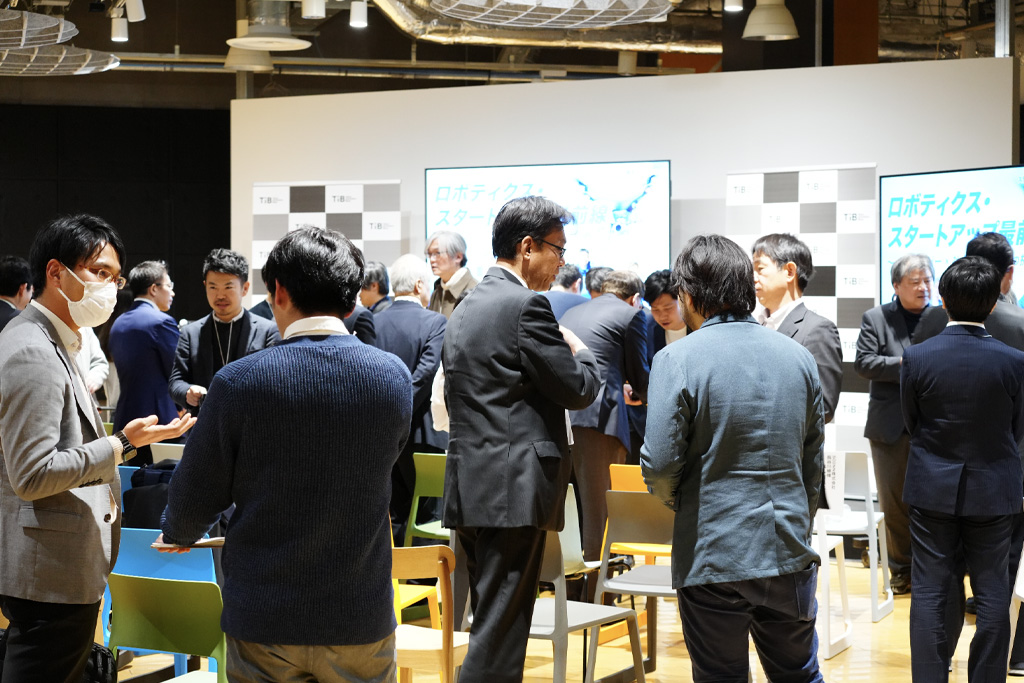
5. Networking Event / Business Card Exchange
Feedback from working professionals in the audience included: "It was extremely valuable to have leaders at the forefront of startups gather and share the challenges they faced in the past. Those looking to start a startup gained beneficial guidance. We hope such experiences will be shared with the younger generation."
The Tokyo Consortium will continue to fully support entrepreneurs to foster startups from Tokyo that will be the pride of the world. We sincerely appreciate your continued support.
Share the article