
■ Overview
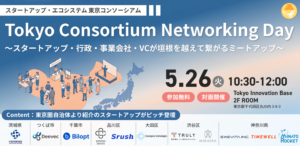
On Wednesday, September 2, 2026, the Tokyo Consortium hosted the “Tokyo Physical AI Summit: The Cutting Edge of Industrial Implementation Redefined by Manufacturing and AI” at the Tokyo Innovation Base (TIB). This event was held as a side event of the “TECHNIUM Global Conference 2026” and as a pre-event for the “Global Startup EXPO 2026.”
This event was organized with the aim of fostering a startup ecosystem throughout the Tokyo metropolitan area by facilitating matchmaking and the formation of alliances between startups in the “physical AI” field—originating from universities and research and development organizations and currently in the business expansion phase—and large corporations, venture capital firms (VCs), corporate venture capital (CVCs), and other entities.
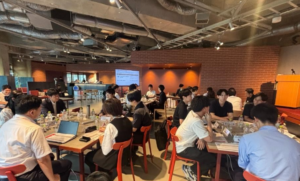
A total of 119 people attended the event, with participants from operating companies and VC/CVC firms accounting for about 60 percent of the total, reflecting a high level of interest in business partnerships and investment in the physical AI sector.
The event featured a pitch session by six startups originating from universities and research and development organizations, as well as panel discussions involving startups, venture capital firms, corporate venture capital (CVC) arms of large companies, and support organizations. It also provided opportunities for networking among participants and pre-scheduled one-on-one meetings, creating a vibrant environment for building new partnerships.
■Panel Discussion: “The Essentials of Physical AI Co-creation: What Kind of Collaborative Framework Unlocks the Potential of Startups?”
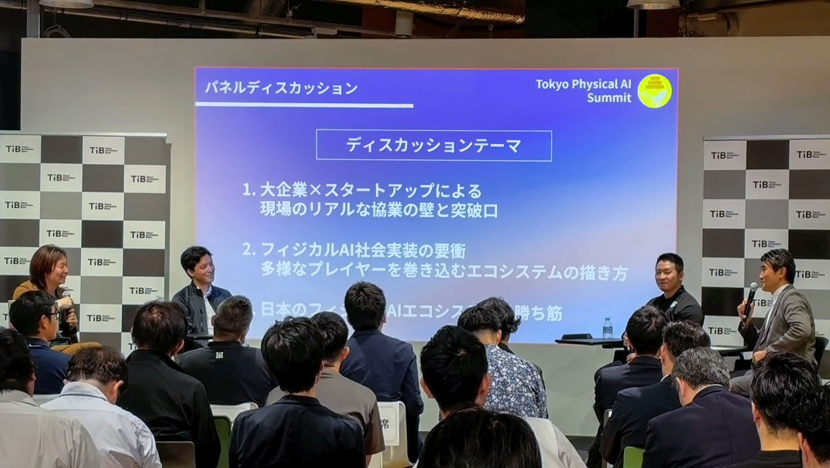
During the panel discussion, Tomotaka Goji of The University of Tokyo Edge Capital Partners, Inc., Masayuki Shimizu of Toyota Invention Partners, Inc., and Masaya Asou of LexxPluss, Inc. took the stage. With Hironobu Higashi of Japan Research Institute, Ltd. serving as moderator, they engaged in a discussion on the theme of “Co-creation Between Established Companies and Startups.”
During the discussion, it was emphasized that, in order to advance the social implementation and global expansion of physical AI, it is important not only to focus on technological innovation but also to accurately identify actual on-site needs and foster collaboration between startups and large corporations from the earliest stages. Furthermore, participants discussed the need to deepen collaboration with domestic and international supply chains and companies while leveraging Japan’s strengths in high quality and manufacturing infrastructure.Furthermore, opinions were expressed regarding the need to review regulations, such as laws and ordinances, as well as internal corporate systems and processes, in order to create an environment that supports the societal implementation of physical AI.
In addition, the discussion touched on the importance of viewing government support and expanded procurement opportunities as tailwinds, and of the public and private sectors working together to foster the growth and global expansion of startups in the physical AI sector.
Following the session, Mr. Higashi, who serves as the General Director, gave a presentation on the “Global Startup EXPO 2026,” which is affiliated with this event.
We will provide details on the panel discussion in a report to be published separately.
■ Pitches by Startups Originating from Universities and Research and Development Organizations (in order of appearance)
During the pitch session, six startups originating from universities and research and development organizations—all of which are leading pioneering initiatives in the field of physical AI—took the stage to present their core technologies, the challenges they aim to solve, and their needs for collaboration with large corporations.
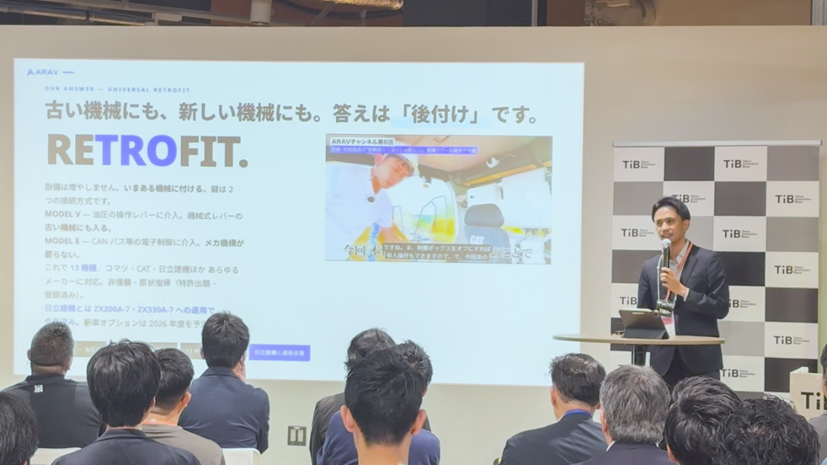
ARAV Co., Ltd.
The presenter introduced technology that enables remote operation and autonomous driving by utilizing retrofit devices for existing construction machinery, and discussed initiatives aimed at addressing labor shortages and hazardous work at outdoor sites such as civil engineering and gravel processing projects. The presenter expressed hope for collaboration with companies that own construction machinery, trading companies, sensor manufacturers, and others.
commissure, Inc.
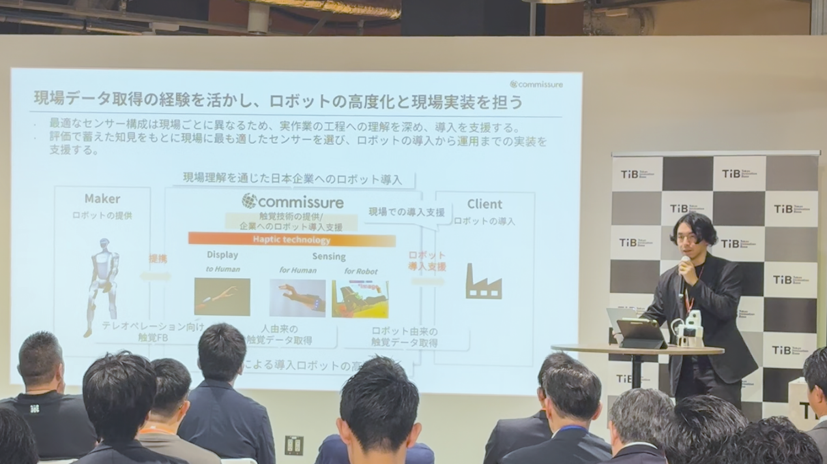
Regarding the project to support the implementation of physical AI based on haptics and body informatics, the presenter outlined a series of initiatives ranging from workforce development for robotics adoption to the collection of on-site data and actual implementation. Looking ahead, the presenter mentioned that they are exploring partnerships with companies that operate sites where data can be collected.
HarvestX , Inc.
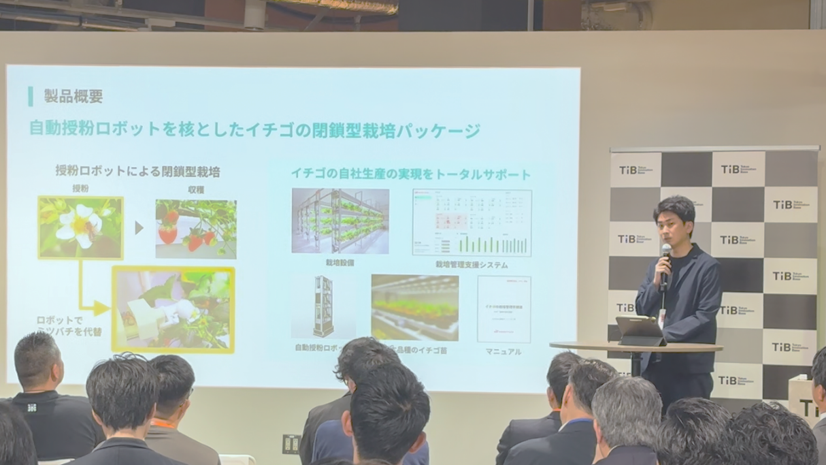
Regarding a fully automated agricultural system that integrates engineering and agricultural science, the presenter discussed initiatives such as automated strawberry pollination using robots and the provision of complete production equipment packages. The presentation also covered future prospects for automating harvesting and thinning, as well as plans for overseas expansion in collaboration with a general trading company.
XELA Robotics , Inc.
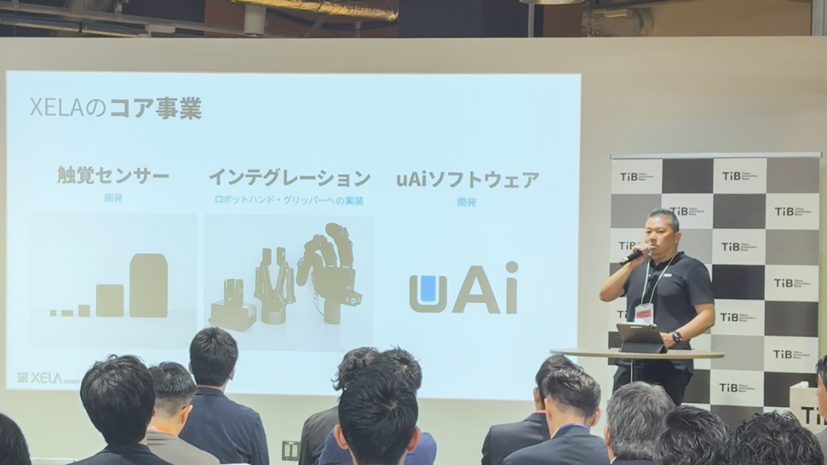
The presenter introduced a thin, high-density tactile sensor that gives robots human-like tactile perception and discussed its potential applications in flexible object grasping technology—an area of manufacturing and logistics that has traditionally been difficult to automate—as well as its potential use in agriculture. Looking ahead, the presenter highlighted the need to secure funding for mass production and the development of tactile data analysis software.
Kisui, Inc.
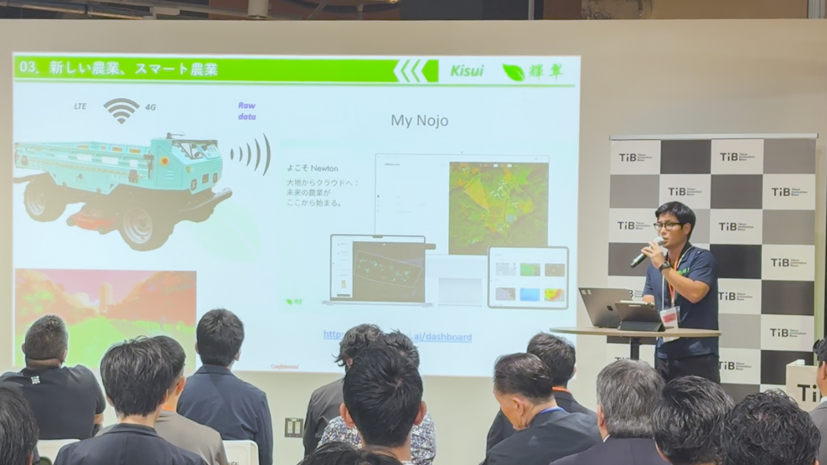
The presenter introduced “Adam,” an unmanned, autonomous agricultural robot capable of operating on sloped terrain, and discussed initiatives aimed at automating agricultural tasks such as transport, mowing, and pesticide application, as well as collecting farm data. Looking ahead, the presenter expressed hope for collaboration—not only in terms of funding and technology to support mass production and overseas expansion—but also for partnerships with commercial entities that can jointly advance sales and implementation.
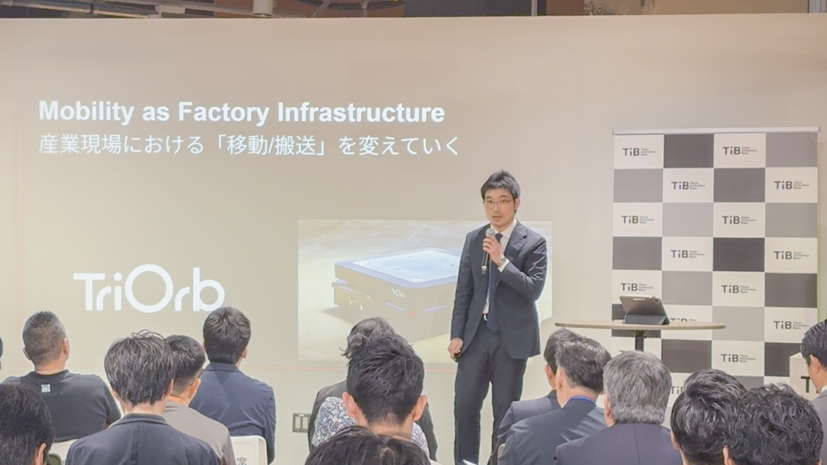
TriOrb, Inc.
The presenter introduced an omnidirectional mobility platform featuring a proprietary spherical drive mechanism and discussed its potential for reducing labor requirements in material handling operations in confined spaces and on rough terrain, as well as for enhancing the flexibility of manufacturing lines. Looking ahead, the presenter highlighted a need for collaboration with manufacturers facing challenges in inter-process material handling and with companies interested in developing new robots that utilize this mechanism.
■ Networking / One-on-One Meetings
On the day of the event, in addition to lively networking among participants, more than 15 one-on-one meetings were held between the presenting startups and investors and established companies, during which concrete ideas and discussions regarding investment and collaboration took place. Furthermore, the event served as a catalyst for the scheduling and arrangement of more than 20 additional meetings at a later date, leading to the establishment of ongoing relationships.
In the post-event survey, more than 70% of respondents rated the pitches and panel discussions as “very satisfied” or “satisfied,” indicating that the event was highly regarded by participants. Furthermore, many respondents expressed an interest in “exploring collaboration” or “considering investment” with the participating startups. As a result, the event not only fostered relationships among participants but also served as an opportunity to create new partnerships and business opportunities between the participating startups and established companies and investors.
■ Summary
This event served as a valuable opportunity for startups with proprietary technologies in the field of “Physical AI”—an industry area where Japan is focusing its efforts—to come together with established companies and venture capital firms seeking collaboration opportunities or funding, and to share challenges and possibilities for industrial implementation.The Tokyo Consortium will continue to accelerate the growth of startups while consistently providing platforms for strong collaboration and co-creation with established companies, investors, local governments, and startup support organizations. Through these efforts, we will promote the societal implementation of innovation and the development of the startup ecosystem in the Tokyo metropolitan area.
The Tokyo Consortium also provides information on the startups that presented at this event. If you are interested, please feel free to contact the secretariat.
Share the article